
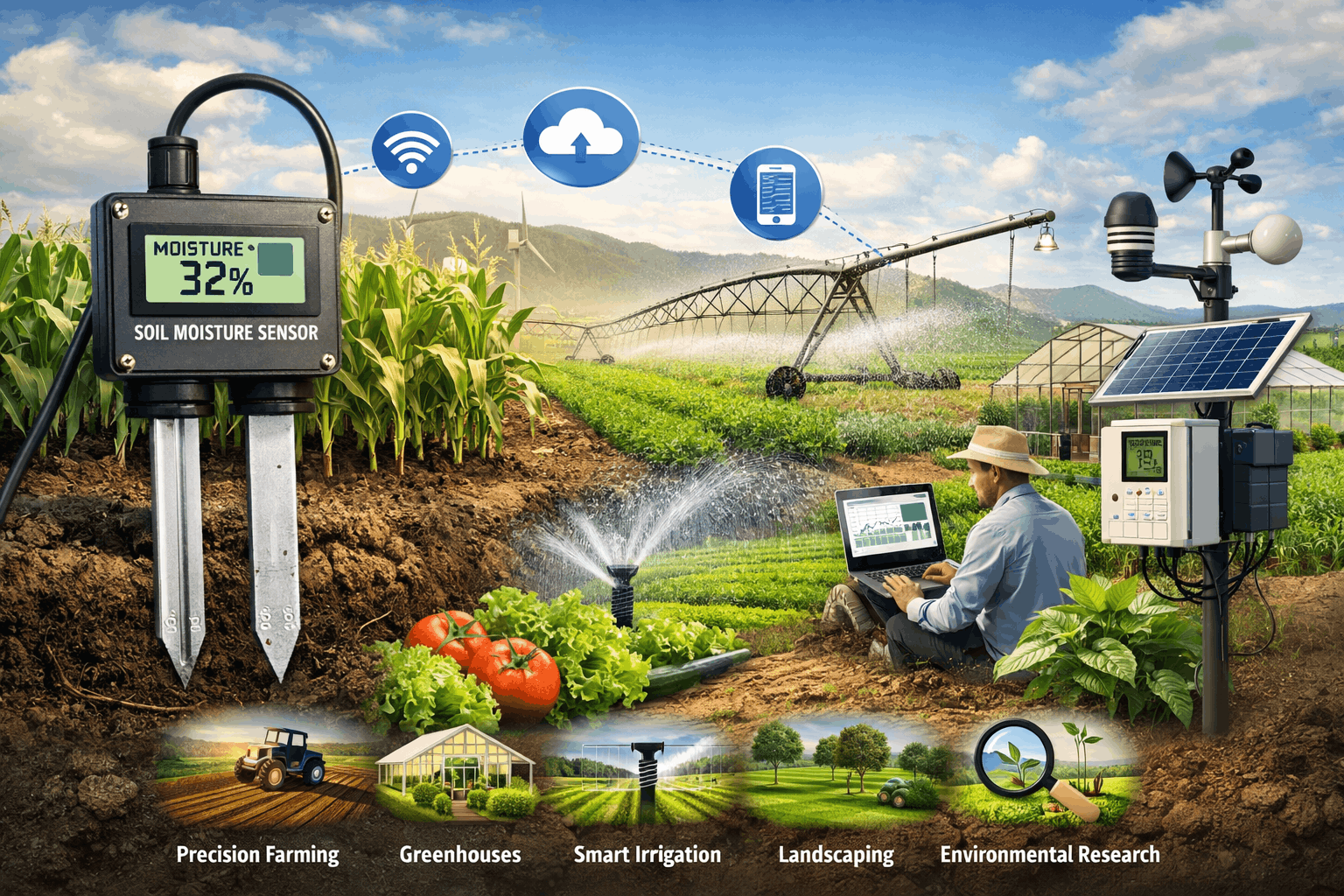
A Complete Guide for Smart Irrigation and Precision Farming | Sensor Mart
Efficient water management is a challenge in farming, landscaping and environmental monitoring. Soil Moisture Sensor
- Much water is a waste
- Little water can harm crops and plants.
A Soil Moisture Sensor is really helpful here.
It checks how wet the soil is, so plants get the right amount of water.
At Sensor Mart we have soil sensing solutions that help farmers, researchers and agricultural professionals use water better and grow crops.
In this guide we will look at what a Soil Moisture Sensor’s
how it works
its benefits,
where its used,
and why its key in modern farming systems, with Soil Moisture Sensors.
We will explore Soil Moisture Sensors in detail.
What is a Soil Moisture Sensor?
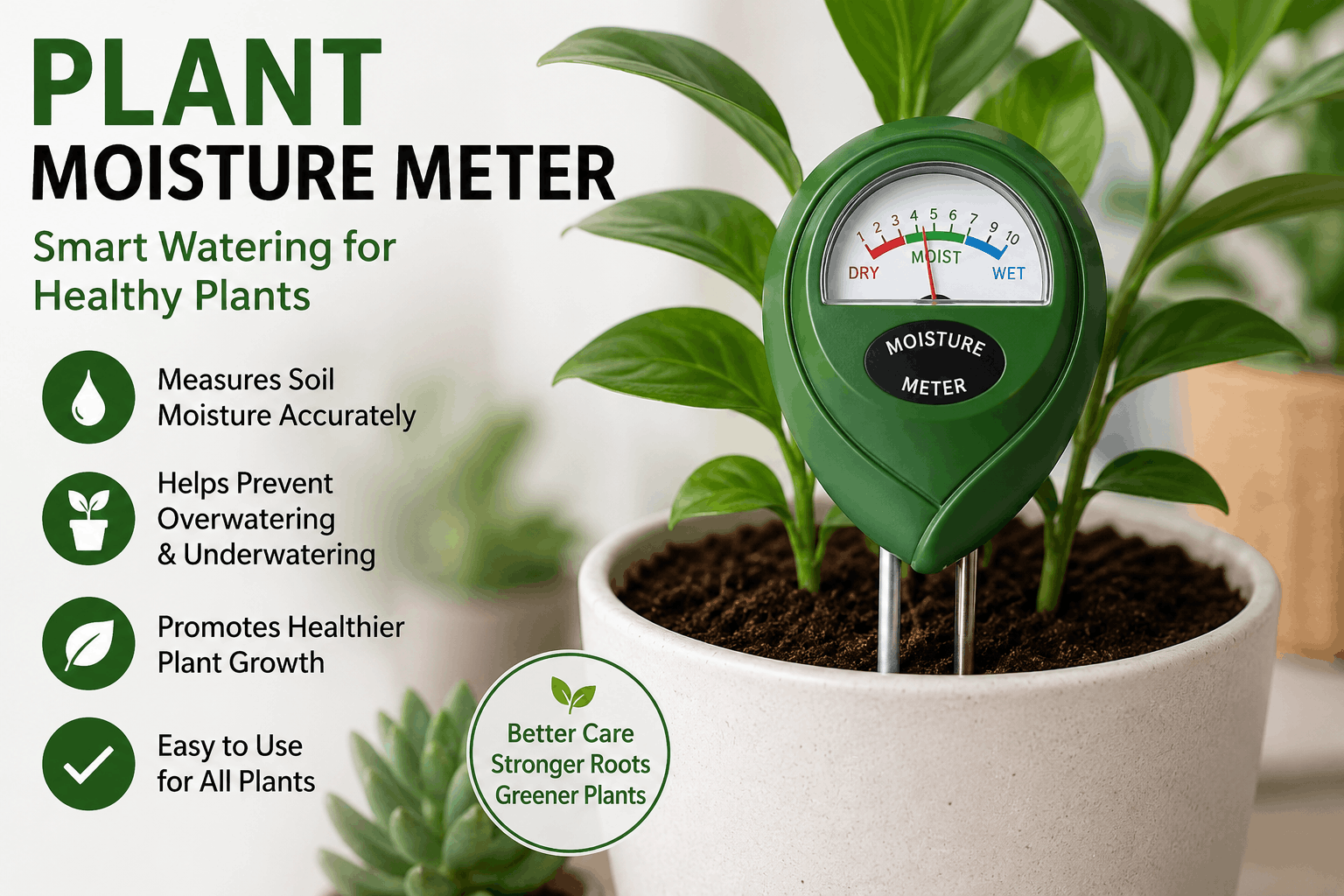
Soil moisture sensors are electronic instruments that give a reading about how much water is in a specific area of soil. They provide a reading of dry, moist or wet soils so users can monitor soil moisture levels. Data is gathered in real-time from the soils; this data is then sent to either a data logger, monitoring system or controller.
Soil moisture sensors are used in many different activities. Examples include;
- Agricultural production and precision farming
- Horticulture and greenhouses.
- Smart irrigation systems
- Environmental research
- Landscaping & turf grass management.
With accurate soil moisture data available to; farmers and irrigation managers they can make better decisions about when to water their crops.
How Does a Soil Moisture Sensor Work?
A Soil Moisture Sensor estimates the quantity of water present in the soil by measuring the volume of water contained within that soil type. There are many ways to measure soil moisture using different technologies, however the most frequently used technologies include:
1) Capacitive Sensors:
Capacitive sensors measure the change in the dielectric constant of a material, as in the case with a soil; therefore, by measuring the change in dielectric constant between wet and dry soils, we can estimate how much water there is in the soil.
2) Resistive Sensors:
Resistive sensors measure the electrical resistance between two or more probes inserted into the soil, thus providing us with the ability to determine how much moisture is in any given area due to the conductivity of wet soil versus that of dry soil.
3) Time Domain Reflectometry (TDR):
TDR sensors are the most precise way to measure how much water is present in a given area of soil and use the properties of electromagnetic waves to do this. At Sensor Mart, the soil moisture sensors designed to provide accurate, reliable, immediate and real-time data will help people to optimize their irrigation processes in order to use less water.
Key Benefits of Using a Soil Moisture Sensor
1. Watering only when needed prevents too much or too little irrigation because of soil moisture sensors.
2. Efficient irrigation can greatly decrease the amount of water used so it’s essential where there’s a limited availability of water.
3. To keep plants healthy and maximize agricultural production because of the use of proper moisture levels.
4. The savings associated with using less water, electricity and labor will reduce a farmer’s operational costs when they no longer use unnecessary irrigation.
5. All forms of modern sensors are providing farmers with continuous data monitoring through use of data loggers or smart systems.
6. Proper moisture level management creates a better soil structure and more nutrients to be available for crops.
Applications of Soil Moisture Sensors
Agriculture and Precision Agriculture
Farmers use water sensors in the soil to improve the productivity of their crops while using less water, as well as to help manage their irrigation system.
Greenhouses
People who grow plants in greenhouses depend on soil moisture sensing to keep their crops in optimum moisture conditions.
Smart Irrigation Systems
Automated irrigation systems that supply water to plants based on an automated response to the moisture conditions of the soil have soil moisture sensors incorporated into them.
Landscaping and Lawn Management
Golf courses, public parks, and home gardens are all provided with healthy grasses, plants, and trees by using soil moisture sensors.
Environmental Science
Soil moisture data is used by scientists for climate studies, the study of the properties of soils, and monitoring of the health of the ecosystem.
Features of Advanced Soil Moisture Sensors by Sensor Mart
Accuracy and durability of a Soil Moisture Sensor are important criteria for its selection. Sensor Mart solutions were designed with current technology and industry demands in mind. The key features of these sensors are:
- Great Precision and stability
- Real-time soil moisture data collection
- Corrosion-resistant sensors
- Long sensor life
- Compatibility with data loggers and weather stations
- Low-level power consumption
Both Agricultural and research will find these sensors suitable for soils monitoring. Therefore, these sensors are an excellent option for soil moisture detection.
Why Choose Sensor Mart for Soil Moisture Sensors?
Selecting the right sensor provider is essential for obtaining reliable data and long-term performance. Sensor Mart offers high-quality environmental monitoring equipment designed for professional use. Blogger
Reasons to choose Sensor Mart include:
- Advanced sensing technology
- Reliable and durable sensor designs
- Solutions suitable for agriculture, research, and smart cities
- Compatibility with weather stations and data loggers
- Technical support and expert guidance
With accurate soil moisture monitoring solutions, Sensor Mart helps users make data-driven irrigation decisions and improve overall resource efficiency.
Future of Soil Moisture Monitoring
Soil moisture sensors are gaining intelligence and connectivity as smart farming, and agriculture continue growing. The new modern sensor has the capability of integrating with the following systems:
– Cloud based (Remote) Monitoring Systems
– Wireless Sensor Networks
– Smart Irrigation Controllers
– Agricultural Data Analysis Platforms
This means that farmers and other people involved within the agribusiness industry can remotely monitor their soil conditions and manage their irrigation systems more effectively.
As the technology continues to develop, soil moisture sensors will be one of the most important tools to help improve global food production and conserve water worldwide. More blog
FAQs
1. What is the main purpose of a Soil Moisture Sensor?
A Soil Moisture Sensor measures the water content in soil and helps determine when irrigation is required for plants or crops.
2. Where are Soil Moisture Sensors commonly used?
They are widely used in agriculture, greenhouses, landscaping, smart irrigation systems, environmental monitoring, and research applications.
3. How accurate are Soil Moisture Sensors?
Modern sensors, such as those provided by Sensor Mart, are highly accurate and designed to provide reliable real-time soil moisture data.
4. Can Soil Moisture Sensors help save water?
Yes. By measuring soil moisture levels, these sensors help ensure irrigation is applied only when needed, reducing water waste.
5. Are Soil Moisture Sensors suitable for automated irrigation systems?
Yes, they can be integrated with automated irrigation systems to control watering schedules based on real-time soil moisture data.
6. Why should I choose Sensor Mart Soil Moisture Sensors?
Sensor Mart offers advanced, reliable, and durable soil moisture monitoring solutions designed for agriculture, research, and environmental applications.


Leave a Reply