
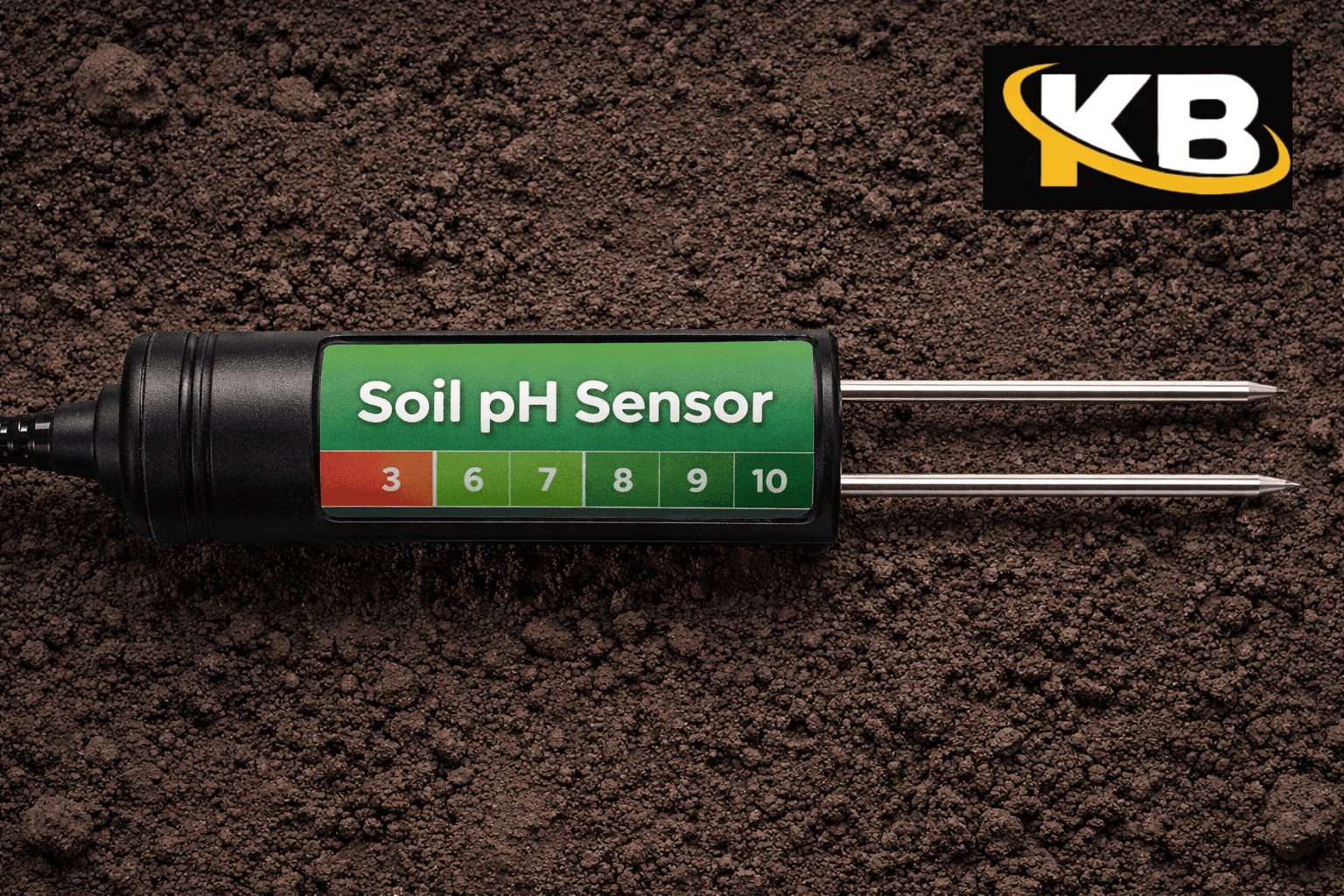
It is important to maintain optimal soil conditions as a way of maintaining healthy plant growth, enhanced crop yields and effective methods of farming. A pH level of soil is one of the most important determinants of soil health. This is where a Soil pH Sensor will seize to be a very important tool.
At Sensor Mart we offer powerful and efficient soil monitoring systems that allow farmers, researchers and other agricultural experts to make wiser decisions depending on real-time information.
What is a Soil pH Sensor?
Soil pH Sensor is an instrument that is used to estimate the acidity/alkalinity of the soil. The pH scale ranges from 0 to 14:
Below 7 → Acidic soil
7 → Neutral soil
Above 7 → Alkaline soil
Crops have varying pH requirements when they are growing. Through a Soil pH Sensor, users are able to monitor the soil conditions in the most accurate way and adjust it. Our product
Why is Soil pH Important?
Soil pH directly affects:
- Nutrient availability
- Microbial activity
- Plant root development
- Fertilizer efficiency
When the level of pH is either excessively high or excessively low, plants cannot absorb other important nutrients, such as nitrogen, phosphorus, and potassium even in cases when they are available in the soil.
A Soil pH Sensor supplied by Sensor mart will help in making sure that your soil is in the range that is the best to support your crops.
How Does a Soil pH Sensor Work?
A Soil pH Sensor is a device that measures the level of activity of hydrogen ions in the soil. It typically includes:
- A hole drilled into the ground.
- Measuring electrodes of electrical potential.
- An instrument to indicate the readings, such as a display or data logger.
- The sensors of Sensor Mart are advanced and offer:
- Real-time monitoring
- High accuracy readings
- Simple connectivity to the IoT systems.
- Long-lasting and weather-proof designs.
Soil pH Sensors have the following significant characteristics.
In selecting a Soil pH Sensor, it should have the following features:
1. High Accuracy
Right readings are critical in correct soil management. Sensor Mart is a device that is precise in the measurement of pH.
2. Real-Time Monitoring
The current sensors can be monitored continuously to enable the user to react promptly to any change.
3. Durable Design
The sensors are designed so as to be resistant to extreme environmental factors like moisture, temperature variation and soil pressure.
4. Easy Installation
The Soil pH Sensors are mostly user-friendly and do not need a lot of maintenance.
5. Data Integration
Higher models are compatible with data loggers, mobile apps, or cloud applications to be more analytical.
Uses of Soil pH Sensors.
1. Agriculture
Farmers involve the use of Soil pH Sensors so as to ensure that the soil is in the right condition to support crops such as wheat, rice, vegetables, and fruits.
2. Greenhouses
Monitored fields involve a high level of monitoring of the pH of the soil to maintain the growth of the plants.
3. Landscaping and Gardening
Soil pH Sensors enable gardeners to have healthy lawn, flowers, and ornamental plants.
4. Environmental Studies and Research.
These sensors are used to research the soil and environmental variations of scientists and researchers.
5. Smart Irrigation Systems
Soil pH Sensors are used in conjunction with the automation systems in order to optimize the irrigation and fertilization process.
The advantages of Soil pH Sensors.
There are several benefits associated with the use of a Soil pH Sensor by Sensor Mart:
Greater Crop Yield: Have the proper soil conditions to grow plants better.
Effective use of Fertilizers: Do not use excess or less fertilizers.
Cost Savings: Minimize the input costs that are unneeded.
Healthier Soils: Have healthy soil nutrients.
Data-Driven Decisions: Farm with the right data.
Advice on the Effective use of Soil pH Sensors.
In order to achieve the highest performance out of your Soil pH Sensor:
Put the probe into the damp soil appropriately.
Wipe sensor with every usage.
Periodically calibration of the sensor.
Do not test in poorly moist or rocky soil.
Repeat numerous times to be precise.
Sensor Mart manufactures user friendly Soil pH Sensors that can be easily handled and are effective in their operation. Check out our blogger
Why Sensor Mart in Soil pH Sensors?
Sensor Mart is one company that is reputed in the area of environmental and agricultural sensors. This is what makes customers come to us:
- Good products of high quality and durability.
- Advanced sensor technology
- Competitive pricing
- Excellent customer support
- Large diversity of sensing solutions.
Sensor Mart provides the ideal Soil pH Sensor to suit your needs regardless of whether you are a farmer, a researcher or a agribusiness owner.
Conclusion
Soil pH Sensor is a crucial device in the current agriculture and environmental control. It assists in keeping the soil at the correct proportion, enhances crop yield and promotes sustainable agricultural activities.
Under the guidance of sophisticated solutions offered by Sensor Mart, it is possible to keep the soil conditions under control with the help of data and make suitable decisions to achieve better results and performance. More Blogs
FAQs
1. What is the optimal soil pH of crops?
The majority of crops can be cultivated on the soil with a pH level of 6.0 to 7.5, although it may be different depending on the type of plants.
2. What is the frequency of checking pH in soil?
Soil pH is advised to be checked after 2 4 weeks or before planting new crops.
3. Is it possible to use Soil pH Sensor on any kind of soil?
Yes, Soil pH Sensors can work in most soils, but can fail in narrowly dry soils or rocky soils.
4. Are Soil pH Sensors to be calibrated?
Yes, it is essential to make regular calibration in order to have accurate readings and reliable performance.
5. What is the depth of inserting Soil pH Sensor?
At the root level (usually 5 to 15 cm deep), plant the probe in order to obtain the highest reading accuracy.
6. Why would I select Sensor Mart Soil pH Sensors?
Sensor Mart is a manufacturer of Soil pH Sensors that are precise, durable and user friendly to the user in agricultural, research and smart farming uses.



Leave a Reply