
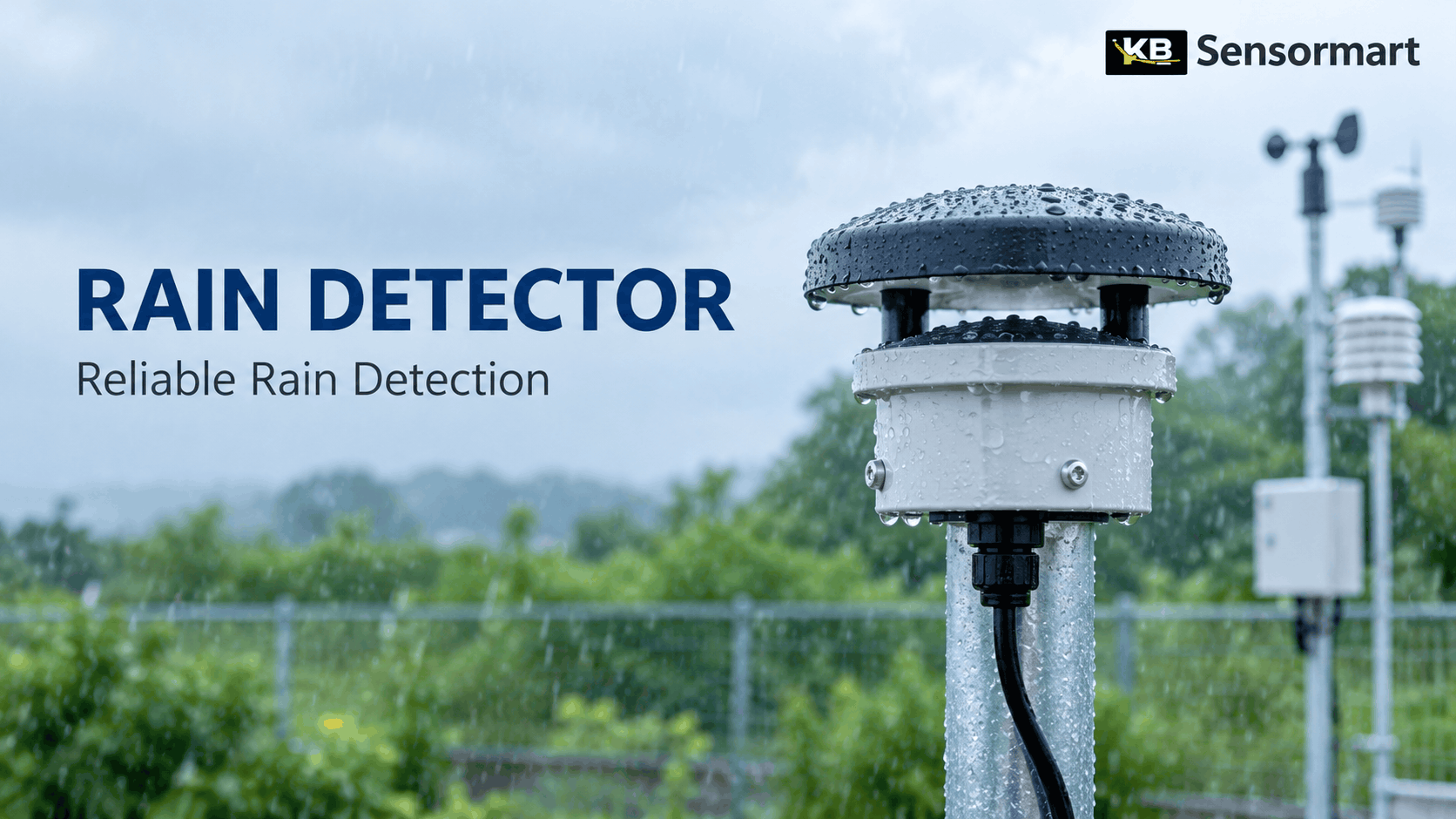
A rain detector is a small device that senses water drops and sends a signal. That signal can close a window, switch off a sprinkler, or tell a weather station that it is raining. It sounds simple, and it is. But there are many types, and picking the wrong one wastes money. In this blog, I will keep things easy.
You will learn how it works, where people use it, and how to choose one. You will also see a quick table, some honest tips, and answers to common questions. Whether you run a farm, a factory, a school lab, or a smart home, this guide is for you. Take your time and read at your own pace. Let us start with the basics. No tough words, I promise. Ready? Let us begin. Best sensor updates
How Does a Rain Detector Work?
Think of a rain detector as a tiny watchman. It sits outside and waits for water. When drops land on its surface, something changes, and the device notices that change. Most models have a flat board with thin metal lines on it. When the board is dry, no current flows between the lines. When water falls on it, the drops connect the lines, and a small current flows. The rain detection sensor reads that current and turns it into a signal. Some models work in a different way.
The tipping bucket type is a simple device that collects rainwater in a small cup. When enough water is collected in the cup, it tips over and counts as one tip. Each tip is equivalent to a certain amount of rainwater collected by the device over time. Other models work with light, where light is transmitted through a glass mechanism, and the amount of rain is determined by changes in light properties.
You get a clear yes or no, or a number, that a machine or a person can use. That is why a rain detector sensor is a key part of many weather and control setups.
Where Do People Use Rain Detector Sensors?
A rain detector sensor helps in many places, from big farms to small homes. Here are the most common uses.
- Farming and irrigation: A rain sensor for automatic systems can switch off sprinklers the moment rain starts. This saves water, protects crops from too much moisture, and cuts the power bill for the farmer.
- Weather stations: A rain sensor for weather monitoring records when rain starts, how long it lasts, and how much falls. Schools, researchers, and city teams use this data to track trends and plan ahead.
- Smart homes: Link the sensor to a window, skylight, or awning. When the first drops fall, the window closes by itself. You come home to a dry room, even if you forgot to check the forecast.
- Roads and railways: Teams place sensors near bridges, tunnels, and tracks. When rain begins, the system can turn on warning lights or slow signals. That small alert can stop a big accident on a wet day.
- Factories and solar plants: Outdoor machines and solar panels need care in the rain. A sensor tells the control room when water arrives, so staff can cover stock, pause open work, or plan cleaning later.
- Vehicles and boats: Cars use a rain sensor to start the wipers on their own. Boats and small ships use it to close hatches and warn the crew. It is a simple tool that adds comfort and safety.
Rain Detector Guide: How It Works and How to Choose One Sensor Types Compared in Simple Words
Not every rain sensor works the same way. This table shows the main types so you can compare them easily.
| Type | How it works | Best for | Good point | Watch out |
| Rain detection board | Drops join two metal lines and pass a small current | Windows, sprinklers, home use | Low cost and easy to fit | Needs cleaning and can rust over time |
| Tipping bucket | A small cup fills, tips, and counts each tip | Weather stations, research | Gives exact rain amount | Needs a level spot and a clean funnel |
| Optical sensor | Light bounces in glass and drops change the beam | Cars, solar plants, smart systems | Quick and works without moving parts | Costs more than a basic board |
| Capacitive sensor | Water changes the electric field on the surface | Outdoor automation, industry | Long life and good in dust | Needs setup and testing |
| Radar sensor | Sends radio waves and reads how raindrops change the signal | Weather networks, industry | Very precise and no moving parts | Higher price and needs expert setup |
| Combo weather sensor | Combines rain, wind, and temperature in one body | Compact weather stations | Saves space and wiring | Harder to repair one part alone |
Still hesitant? A basic board works for general alerts. However, if you want precise rainfall measurements, choose a tipping bucket model. One tip from my experience: decide on your budget and purpose before checking the ‘Best for’ column. If your purpose is included in the list, then you are making the right choice!
How to Pick the Right Rain Detector
Buying a sensor can feel hard at first. Follow these three simple tips, and you will make a smart choice.
Know Your Main Goal First
Begin with one question. Are you interested only in knowing whether rain took place or do you want to find out the amount of rain? A simple yes/no notification is enough to make you close windows or stop sprinklers. However, for meteorological records, farming, and research purposes, precise numbers are very important. You have to be honest here. When you understand what you need, then half of your decision is already made, and you avoid overpaying for unnecessary functionalities.
Check Where and How You Will Install It
Make sure to observe the placement of the sensor. This sensor has to encounter rain, sun, dirt, wind, and be durable enough to survive. Ask for information about the outer material, degree of protection against water penetration, and just how the cable is going to be long. This would help to know what kind of output is provided (like relay or digital output), so that the controller also understands it. Using the right sensor will save you from the trouble of fixing things later on.
Buy From a Maker You Can Trust
A cheap sensor that fails in one season costs more in the end. Pick a maker that tests every unit, uses good parts, and packs items safely. Ask for a data sheet and a clear warranty. A brand like sensormart builds sensors in India with strict checks, so you know what you are buying. Good support after the sale also matters, because you may need help with setup or tuning.
Why Choose Sensor Mart for Rain Detection?
Sensor Mart is a major manufacturer and exporter of meters, gauges and industrial measuring devices. Its office is located in Roorkee, Uttarakhand. The company has been engaged in the manufacture of devices since 2016 and the product line comprises a variety of measuring devices like a 3D ultrasonic anemometer, radar sensor, soil monitor, water level sensor, tipping bucket rain gauge.
Each product goes through thorough quality control and all components are sourced from credible suppliers. Each order is packed in durable boxes for safety. The company founders have hands-on experience. Here’s how the company installs its first day sensor of rain.
The signal comes alive in seconds, and that small moment is very satisfying. After that, it quietly does its job in the background, rain after rain. Pair it with wind and soil sensors from sensormart, and you get a full picture of your site from one source. Whatever your goal is, the team is happy to explain the options in plain words.
Final Thoughts on Choosing Your Sensor
Rain is easy to ignore until it ruins your plans. A smart sensor takes that worry away. It watches the sky when you cannot, and it acts the moment the first drops fall. In this blog, we looked at how a rain detector works, where people use it, the main types, and how to choose one with care. The big idea is simple. Know your goal, check your setup, and buy from a maker you trust.
FAQs About Rain Sensors
1. What is a rain detection sensor used for in daily life?
It senses water and sends a signal. People use it to close windows, stop sprinklers, record weather data, and warn control rooms when rain starts.
2. How does a rain sensor know that it is raining outside?
Water drops land on its surface and change an electric signal or a beam of light. The sensor reads that change and sends an alert right away.
3. Can a rain sensor measure how much rain has fallen?
Yes, but only some types can. A tipping bucket sensor counts each small tip of water, so it gives you the exact amount of rain.
4. Is a rain sensor for automatic systems hard to install?
Not really. Most models need a flat spot, a few wires, and a quick test. Follow the data sheet, and keep the sensor away from trees and roof drips.
5. How often should I clean my rain sensor?
Check it once a month. Wipe dust, leaves, and bird droppings off the surface with a soft, damp cloth. A clean sensor gives faster and more correct readings.
6. Can I use a rain sensor for weather monitoring at home?
Yes. A rain sensor for weather monitoring works well on a roof or in a garden. Pair it with wind and temperature sensors for a fuller view.
7. Does heavy rain or dust damage the sensor over time?
A good sensor is built for the outdoors, with a sealed body and a tough surface. Still, check the water protection rating before you buy.
8. Does Sensor Mart supply rain sensors outside India?
Yes. Sensor Mart is an exporter and supplier for global markets, and it packs every order in secure boxes to avoid damage during delivery.
9. Can a rain sensor really save me money?
Yes. It stops sprinklers during rain, so you use less water and power. It also protects stock and open work from sudden wet weather, which cuts losses.
10. What should I ask before I buy a rain sensor?
Ask about the output type, power need, water protection rating, warranty, and support. Also ask for a data sheet so you can compare it with your controller.



Leave a Reply