
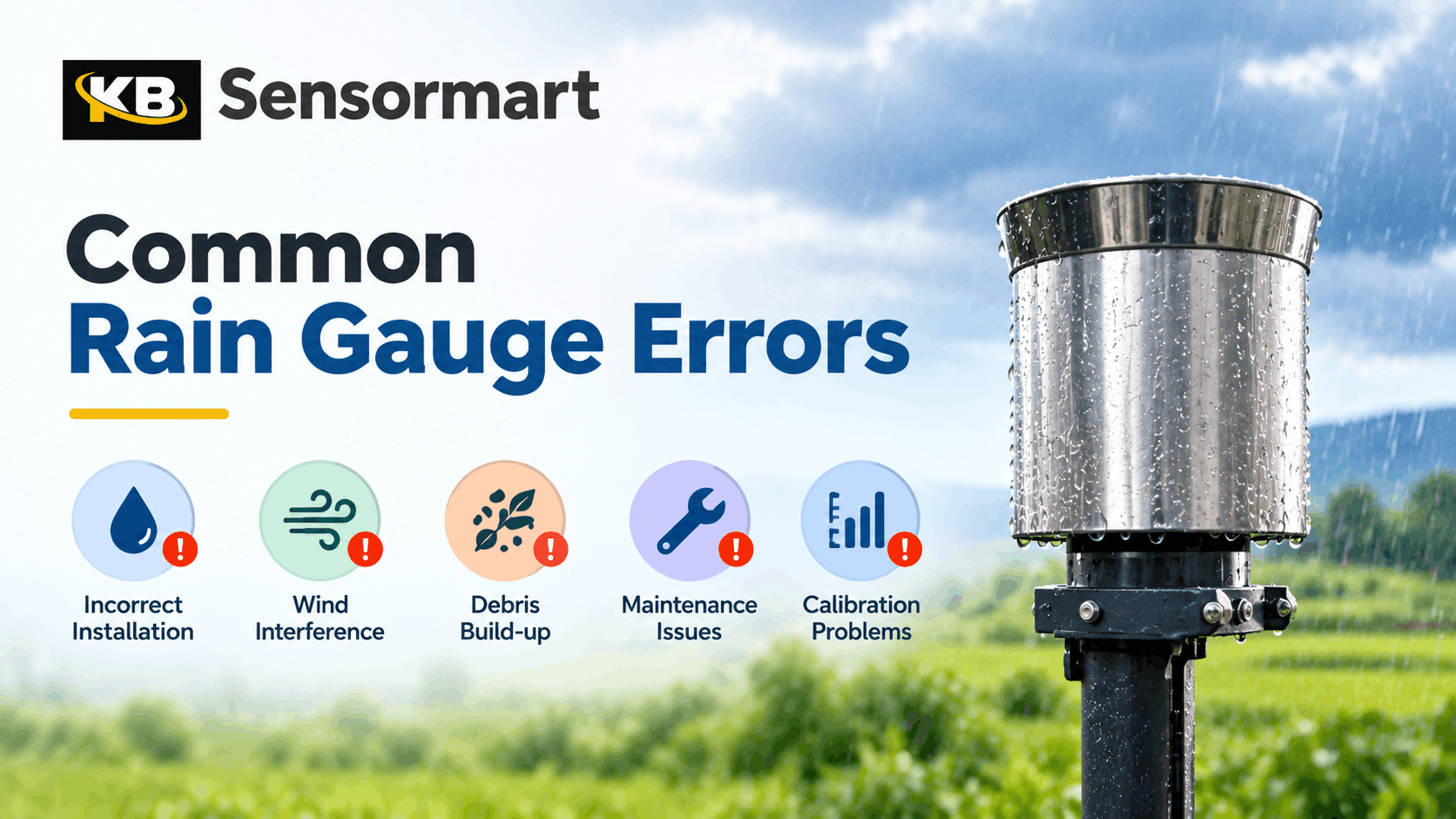
Ever checked your rain gauge after a storm and thought, “That number just doesn’t look right”? You’re not alone. Farmers, weather watchers, and researchers deal with this all the time. A few drops of dirt or a tiny tilt can throw off your whole reading, and you’d never even know it. Common Rain Gauge Errors
The good news? Most common rain gauge errors are easy to spot once you know what to look for, and even easier to fix. In this guide, we’ll walk through the mistakes that mess up your rainfall data, share simple fixes, and show you how to keep your readings accurate all year long. Got questions along the way? You can reach out to our team at Sensor Mart anytime on WhatsApp or Instagram — links are waiting for you at the end of this post.
Let’s get your rain gauge working the way it should.
Why Your Common Rain Gauge Errors Keep Going Wrong
Rain gauges may seem plain, but there are several issues that build up quickly. Rain gauges that are placed near a wall, tree or building may be exposed to splashback or lose some of the rain due to wind, thus affecting the readings. Dust and leaves can easily settle in the collector too undetected especially during the dry periods in between rain events.
Another negative effect that affects the reading of rain gauges is temperature changes: frost or condensation may collect in the tube on a frosty morning fooling the sensor into thinking rain has fallen. Over time, the materials from which such devices have been made can degrade, the tipping buckets can stop working, and calibration can drift away from the appropriate one.
None of this means your gauge is broken. It usually just means it needs a little attention. Understanding why errors happen is the first step toward rain gauge troubleshooting that actually works, instead of guessing and hoping the next reading looks better.
Common Rain Gauge Errors You Should Watch For
Knowing the usual suspects makes troubleshooting so much faster, so here’s what tends to go wrong most often.
- Blocked rain collector: Leaves, dust, and bugs settle into the funnel and slow down or stop water from reaching the measuring chamber, leading to lower readings than what actually fell.
- Debris inside rain gauge: Small particles inside the tipping bucket mechanism cause it to stick, tip too slowly, or miss tips completely during heavy rainfall events.
- Incorrect rainfall readings: Uneven ground, tilted mounting, or wind gusts near the gauge push rain sideways instead of straight down into the collector.
- Rain gauge overflow issues: During very heavy storms, the collection chamber fills up faster than it can drain, causing the gauge to underreport total rainfall.
- Sensor calibration drift: Older gauges slowly lose accuracy as springs weaken or magnets shift, giving readings that creep further from reality each season.
- Wildlife interference: Birds, insects, and small animals sometimes nest in or near the gauge, blocking the opening or damaging internal parts.
Rain Gauge Maintenance Tips That Actually Work
A little routine care goes a long way, so here are simple habits worth building into your schedule.
Clean the Collector Every Two Weeks
Dust and small debris build up quietly, especially during dry weeks. Wipe down the funnel and check the collection chamber every couple of weeks. This one habit alone prevents most blocked rain collector problems before they start.
Check the Mounting Position
Make sure your gauge sits level and away from walls, fences, or trees. A tilted gauge or one blocked by nearby structures gives readings that don’t match what’s actually falling. Use a small level tool to double-check placement.
Inspect the Tipping Mechanism
Gently move the tipping bucket by hand every month to feel for stiffness or sticking. If it doesn’t swing smoothly, clean out debris inside rain gauge parts and check for rust or worn hinges that need replacing.
Recalibrate Once a Season
Even well-built gauges drift over time. Pour a measured amount of water through the gauge and compare it to the reading. If the numbers don’t match closely, it’s time for calibration to restore rainfall measurement accuracy.
Rain Gauge vs Other Rainfall Measuring Tools
Choosing the right tool matters just as much as maintaining it, so here’s a quick side-by-side look at your options.
| Tool | Accuracy | Maintenance Needed | Best For |
| Tipping Bucket Rain Gauge | High | Moderate, needs cleaning | Farms, weather stations |
| Weighing Rain Gauge | Very High | Low | Research, long-term studies |
| Manual Cylinder Gauge | Moderate | Very low | Home gardens, basic checks |
| Radar-Based Sensor | High | Low, remote monitoring | Large fields, wide coverage areas |
Each tool has its place. If you want steady, low-effort accuracy for daily or seasonal tracking, a well-maintained tipping bucket gauge from a trusted supplier like Sensor Mart usually gives the best balance of cost and precision.
How to Fix Rain Gauge Errors Fast
When something feels off, work through these steps before assuming the gauge needs replacing.
- Stop and inspect first. Look inside the funnel and chamber for leaves, dirt, or insects before touching any settings.
- Clean thoroughly. Rinse the collector with clean water and a soft brush, then dry it fully before putting it back together.
- Test the tipping action. Manually tip the bucket a few times to confirm smooth, even movement without sticking.
- Check the level. Use a small spirit level to make sure the gauge sits perfectly flat on its mount.
- Recalibrate with measured water. Pour a known amount through the gauge and compare the reading to catch any drift.
- Replace worn parts. Swap out cracked funnels or stiff hinges rather than letting small damage cause repeated incorrect rainfall readings.
Common Rain Gauge Errors
A farmer, one of our customers who operates a medium-sized wheat field nearby a river basin, found that his rainfall measurements were less than those of the closest weather station. With the help of our team, he quickly discovered the reason: the collector had been filled with dried mud coming from the ground. Developing a simple schedule for clearing the collector and raising the gauge above the ground resolved the problem in a week by matching rain measurements from the station.
Conclusion
Rainfall measurement problems happen often, but fixing them is not hard. The most common causes of these issues are that the collector is obstructed, the mount is tilted, or the equipment simply needs cleaning. If you keep up with maintenance and have the appropriate equipment for your rainfall measurement, your rain gauge will work properly every time.
If you’re dealing with common rain gauge errors that won’t go away, or you’re ready to upgrade to a more reliable sensor, Sensor Mart is here to help. We manufacture precision rain gauges and weather instruments built for accuracy and long-term use, right here in Roorkee, India.
Frequently Asked Questions
1. What are the most common rain gauge errors?
The most common rain gauge errors include improper installation, blocked funnels, debris buildup, wind interference, poor leveling, and lack of regular cleaning. Sensormart recommends routine maintenance for accurate rainfall readings.
2. Why does my rain gauge show incorrect rainfall readings?
Incorrect readings can happen if the rain gauge is tilted, clogged, or installed too close to buildings or trees. Keeping it level and in an open area improves accuracy.
3. How often should a rain gauge be cleaned?
A rain gauge should be cleaned at least once a month and after heavy storms. Removing leaves, dust, and insects helps maintain reliable measurements.
4. Can wind affect rain gauge accuracy?
Yes. Strong wind can reduce the amount of rain collected by the gauge. Installing it in a suitable open location with proper mounting helps minimize wind-related errors.
5. What happens if the rain gauge is not level?
A tilted rain gauge can collect rain unevenly, leading to inaccurate measurements. Always check that the gauge is properly leveled during installation.
6. How do I know if my rain gauge is blocked?
If rainfall readings suddenly become lower than expected, inspect the funnel and collector for leaves, dirt, insects, or other debris that may be blocking water flow.
7. Where is the best place to install a rain gauge?
Install a rain gauge in an open area away from trees, walls, roofs, and other structures that can block or redirect rainfall.
8. Can heavy rain damage a rain gauge?
A quality rain gauge is designed to handle heavy rainfall, but regular inspections are important to check for cracks, loose parts, or clogged components after extreme weather.
9. How can I improve rain gauge accuracy?
Keep the gauge clean, level, securely mounted, and installed in the correct location. Regular maintenance is the best way to improve long-term accuracy.
10. Why choose Sensormart rain gauges for reliable rainfall measurement?
Sensormart rain gauges are designed for dependable rainfall monitoring with durable construction, precise measurement, and easy maintenance, making them suitable for agriculture, weather monitoring, and environmental applications.
Contact Information +91-9719411764, +91-7017880914 sales@sensormart.co.in kuchhalbrothers@gmail.com




Leave a Reply