
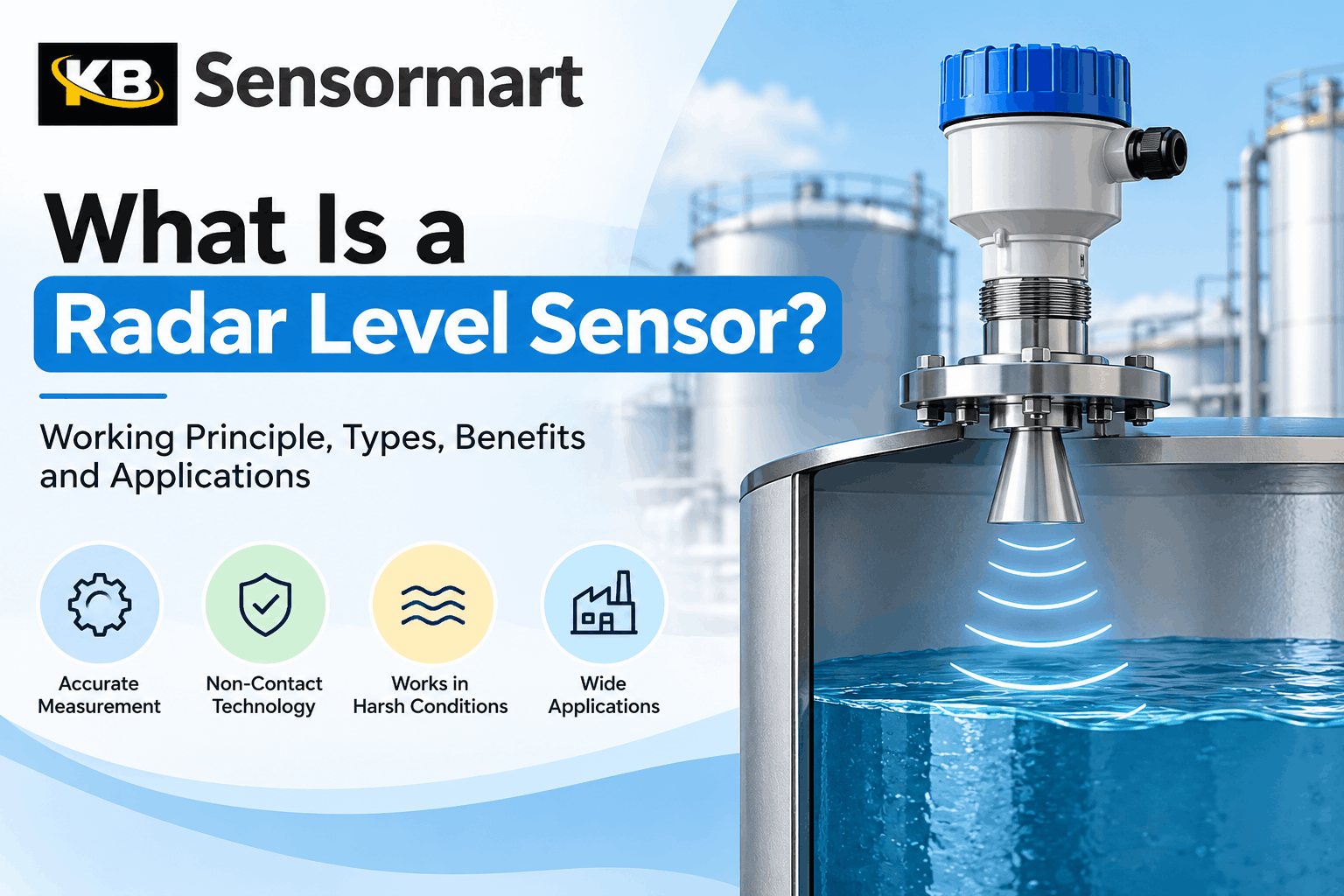
What Is a Radar Level Sensor? Have you ever wondered how big tanks know how much water, oil, or grain is inside them without anyone opening the lid? Measuring deep liquid tanks by hand is messy, unsafe, and wastes lots of valuable time for workers. That is why smart factory managers use modern tools to check fluid height automatically every single day. If you want to make your daily tank checks super easy and clean, visit sensormart today to see our top tools!
Understanding modern tools helps you pick the right gear for your personal workspace or factory. So, What Is a Radar Level Sensor? Put simply, it is a smart tool that uses invisible radio signals to check how full a container is without ever touching what is inside.
At sensormart, we build super tough measurement tools right in Roorkee, Uttarakhand, India. Since 2016, our hard-working team has crafted top-quality meters for farms, factories, and water plants all across the world. Let us look at how these neat tools work and why you might need one!
Understanding How Radar Level Measurement Keeps Your Factory Tanks Safe
Checking deep tanks manually with old dipsticks causes big spills, bad accidents, and messy cleanups for your plant crew.
- No direct contact: The tool sits safe above the Liquid Level Monitoring area, so harsh chemicals cannot eat away at sensitive parts.
- Works through steam: Thick smoke, hot steam, and dusty air will not stop invisible microwave beams from reading true fluid heights.
- Super high accuracy: Modern 80 GHz Radar waves give exact numbers every second, stopping overflow disasters before they can ever happen.
- Zero moving parts: Because nothing spins or shakes, the whole device lasts many years without needing constant repair or part replacement.
- Safe for workers: Employees never have to climb dangerous tall ladders in rain or wind just to check liquid tank levels.
How Radar Level Sensor Works To Read Liquid Heights
Knowing how these smart tools measure stuff makes picking the right equipment very simple for your daily operational setup.
If you want to know How Radar Level Sensor Works, think of how bats fly around at night without bumping into walls. The sensor shoots out invisible high-frequency radio waves down toward the surface of your material. These harmless waves travel at the speed of light through open air, hit the liquid, and bounce right back up to the sensor head.
After that, the tool measures the exact time it took for the wave to bounce down and back up. Since light moves at a set speed, a fast computer inside calculates the empty space left in your tank. This process is called Microwave Level Measurement, and it gives super fast updates on digital screens.
Whether you need Bulk Solid Measurement for heavy grain silos or smooth water storage checks, the calculation stays exact. Every Industrial Radar Level Sensor made by sensormart uses this fast radio wave bounce to give you instant, accurate readings every single day.
How Different Radar Sensors Compare For Your Measurement Needs
Picking the best tool type depends entirely on what kind of material you store inside your big industrial tanks.
| Sensor Feature | Standard Non-Contact Radar | Guided Wave Radar | Old Ultrasonic Meter |
| Material Touch | Never touches liquid | Cable touches material | Never touches liquid |
| Steam Effect | Ignores heavy steam completely | Ignores heavy steam completely | Steam blocks sound waves |
| Best Used For | Hot acids, oils, and deep tanks | Sticky liquids and narrow pipes | Clean water in cool rooms |
| Maintenance Need | Almost zero cleaning required | Clean cable once a year | Wipe face clean often |
Steps To Install An Industrial Radar Level Sensor Properly
Installing your new measuring tool correctly ensures you get perfect, reliable data from the very first day you turn it on.
Pick A Clear Spot
Mount the sensor away from filling pipes and metal ladders. Clear paths let radio waves bounce back without hitting bad metal hurdles.
Keep Tool Level
Use a small bubble level to keep the sensor top straight. Straight beams shoot directly down so your Radar Level Sensor Working system stays accurate.
Fasten Bolts Tight
Tighten every mounting screw gently using hand tools. A solid hold prevents hard tank shakes from loosening your Industrial Radar Level Sensor unit over time.
Wire Power Safely
Connect power cables carefully by following the clear color manual. Good electrical joints protect your sensitive Radar Level Measurement equipment from power spikes.
Test First Reading
Turn on the screen and compare the digital number to a manual tape test. Proper setup keeps your daily Liquid Level Monitoring running smoothly.
Tips For Keeping Your Radar Level Sensor Working Perfectly
Taking care of your equipment guarantees years of trouble-free service without annoying false alarms or broken digital readings.
Clean Sensor Face
Dust and sticky splashes can coat the bottom lens over many months. Wipe the flat plastic face gently with a soft damp cloth during regular maintenance rounds. Keeping the lens clear helps your Industrial Radar Level Sensor send out crisp radio signals every single second.
Check Wire Seals
Rain and moisture like to sneak into loose cable entry points on outdoor tanks. Tighten plastic glands and check rubber gaskets on your Industrial Radar Level Sensor box. Keeping water out ensures reliable Radar Level Measurement during heavy summer rainstorms.
Inspect Tank Nozzle
Smooth out rough welds or tall pipe necks where the sensor attaches to the tank roof. Internal metal edges can scatter radio signals and mess up Radar Level Sensor Working routines. Clean nozzle designs protect your overall Microwave Level Measurement quality.
Verify Signal Setup
Check your digital screen settings once every year to make sure no settings shifted. Make sure the tank height numbers match your real container size for accurate Bulk Solid Measurement. Good settings make How Radar Level Sensor Works feel totally effortless.
Real Stories From Our Hands-On Sensor Testing Field
A few months ago, a heavy chemical factory in India called our team for urgent help. They were storing thick, hot acid in huge outdoor tanks, and their old float switches kept melting every two weeks! The workers had to wear heavy safety suits just to fix broken parts, which was dangerous and very slow.
We brought out a new sensormart 80 GHz Radar unit to test on top of their main tank. We mounted the sensor high above the acid so it never touched a single drop of liquid. When we turned the power on, the digital screen instantly displayed the exact fluid height down to the millimeter!
The factory manager was so relieved because his team did not have to climb dangerous tanks anymore. Another customer used our gear for Bulk Solid Measurement in a dusty grain silo. Even when dry flour filled the air like thick fog, the radar beam cut right through without a single hiccup.
These real field tests prove that picking quality tools built by sensormart saves time, money, and stress. Our dedicated team in Roorkee carefully inspects every unit before shipping it out to ensure it works great for your business!
Conclusion
Finding the right way to track tank heights does not have to be confusing or hard. Now that you know What Is a Radar Level Sensor?, you can see how radio waves make level checks simple, safe, and accurate. Avoiding messy spills and dangerous ladder climbs keeps your daily work moving smoothly while protecting your entire crew.
Here at sensormart, we take great pride in making reliable sensing gear for every industry. Operating out of Roorkee, Uttarakhand, India, our experienced team crafts high-quality rain gauges, weather tools, ultrasonic meters, and radar sensors designed to last. We test every product thoroughly and pack everything securely so your order arrives safe and ready to work.
Frequently Asked Questions (FAQs)
1. What Is a Radar Level Sensor used for in modern factories?
It measures how full liquid or solid tanks are using radio waves. It helps factories prevent overflow spills without touching the materials inside.
2. How Radar Level Sensor Works when heavy steam fills the tank?
Radio waves pass right through thick steam, dust, and vapor without stopping. This allows the tool to read exact heights even in hot environments.
3. Why is 80 GHz Radar better than older radar tools?
Higher frequency beams are much narrower and focused. They avoid internal tank obstacles like ladders, agitator blades, and pipes for cleaner readings.
4. Can an Industrial Radar Level Sensor handle sticky or corrosive liquids?
Yes, because the tool sits outside the liquid on the tank top. Since no parts touch the fluid, sticky or burning chemicals cannot damage it.
5. How does Radar Level Sensor Working compare to ultrasonic sensors?
Ultrasonic tools use sound waves that get blocked by dust, foam, and temperature shifts. Radar uses radio waves that ignore air changes completely.
6. Where can I use Microwave Level Measurement in my business?
You can use it in water treatment tanks, diesel storage, chemical vats, food processing units, and grain silos for instant height checks.
7. Is an Industrial Radar Level Sensor hard to install on old tanks?
Not at all. You simply bolt it onto a standard tank top flange or threaded hole, wire the power, and calibrate the height settings.
8. What Is a Radar Level Sensor advantage for grain silos?
It measures powdery solids like flour, cement, or grain easily. Dust clouds inside the silo will not block or confuse the radio signals.
9. How often do I need to service my Radar Level Measurement gear?
Very rarely because there are no moving parts to wear out. A quick visual check and lens wipe once a year is usually all it needs.
10. How does Liquid Level Monitoring help save my business money?
It stops expensive liquid spills, prevents pumps from running dry, and automates stock checks so workers spend time on other important tasks.
Contact Information +91-9719411764, +91-7017880914 sales@sensormart.co.in kuchhalbrothers@gmail.com




Leave a Reply