
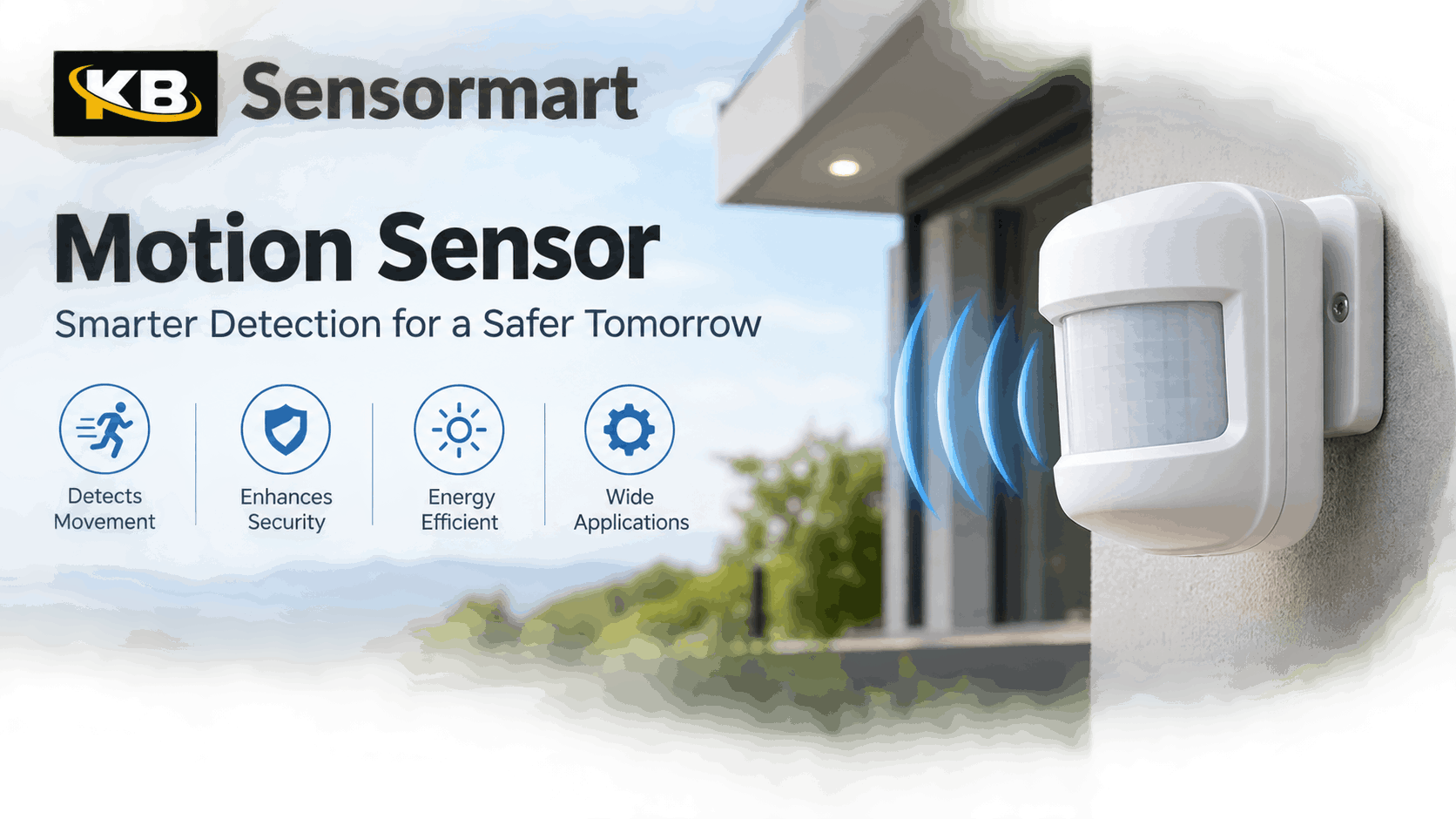
Have you ever entered a room, and the lights turned on seamlessly without the need for a switch? This is the magic of a motion sensor. Yes, this piece of technology has made a huge difference in the way factories, homes and offices operate every hour of every day.
If you are reading this article, it is arguably safe to assume that you need a motion detector for your next project, factory, or smart building. That’s excellent because you are at the right place. Just stay with us for two minutes, and you will learn how it works, which type of detector to buy, and where your motion detector can be purchased.
A motion sensor is a small device that detects movement in a space and sends a signal to trigger an action — turning on a light, sounding an alarm, or starting a machine. Simple idea, big impact. Below, we’ll walk through everything you need to know, in plain and simple words, so you can make a smart buying choice without the tech jargon headache. more blogs .
What Is A Motion Sensor And How It Works
Consider a motion sensor to be equivalent to an eye which never closes. The sensor constantly monitors its area and responds as soon as something happens. Usually, motion sensors work according to the principles of infrared light, sound waves, or microwaves. The most popular type is a Passive Infrared sensor (also known as a PIR sensor) which senses a body heat of any living creature moving around.
Let’s see how it works in practice. The moment a person enters the room, the monitoring system spots the sudden change in temperature or motion in that area. An electric signal is then sent to the connected system (lighting system, alarm system, camera, etc.) which happens instantly.
This technology is called Human Motion Detection, and it serves as a basis for modern security systems. There are infrared motion detectors of PIR type combined with microwave detectors in the market.
Why Every Industry Needs Motion Sensor Today
Motion sensors aren’t just for homes anymore. Every industry — from farming to factories to weather stations — leans on them to work smarter and safer. Here’s why they matter so much right now.
- Factories use an Industrial Motion Sensor to track machine movement, catch faults early, and keep workers safe from moving parts on the production line.
- Smart offices install sensors to turn lights and AC off automatically, which cuts electricity bills and supports greener, more sustainable building practices.
- Security teams rely on motion detection to spot break-ins fast, sending instant alerts before real damage or loss can happen.
- Weather and research stations use sensors to monitor wildlife, soil movement, and site activity without needing a person on watch.
- Warehouses use motion tech to count foot traffic, manage storage zones, and improve how staff move through busy spaces.
This wide use is exactly why so many businesses now search for a dependable Motion Sensor Manufacturer India trusts, instead of settling for cheap imports that fail within months. Quality matters, especially when a sensor is protecting people or expensive machines.
Types Of Motion Sensor You Should Know
Not all motion sensors are built the same, and picking the wrong one can cost you time and money. Here’s a simple, easy-to-read table comparing the main types so you can choose with confidence. wikipedia .
| Sensor Type | How It Detects Motion | Best Used For |
| Passive Infrared Sensor (PIR) | Senses body heat changes | Homes, offices, security lights |
| Microwave Sensor | Sends out radio waves and reads the bounce back | Large open areas, warehouses |
| Dual Tech Sensor | Combines PIR and microwave for fewer false alarms | High-security zones, factories |
| Ultrasonic Sensor | Uses sound waves to detect movement | Small rooms, tight indoor spaces |
| Occupancy Sensor | Detects presence and stays on while someone is in the room | Meeting rooms, storage areas |
Each type has its own strength. A basic Passive Infrared Sensor works great for simple home use, while a dual-tech setup fits better in a factory where false alarms just aren’t an option. An Occupancy Sensor is a smart pick for rooms where people stay for a while, since it won’t switch off the lights while someone’s still working.
When you’re shopping for an Industrial Motion Sensor, always check the detection range, the response speed, and how well it handles dust, heat, or moisture. Industrial spaces are tough environments, and a sensor built for a living room simply won’t survive out there. This is where working with a trusted supplier really pays off.
How To Pick The Right Motion Sensor
Choosing a motion sensor doesn’t have to be confusing. Follow these simple tips below, and you’ll land on the right choice for your space, budget, and goals.
Check The Detection Range First
Every space is different, so measure the area you need covered before you buy anything. A small office room needs a short-range sensor, while a warehouse floor needs one with a wider reach. Getting this wrong means blind spots or wasted coverage, so always measure twice.
Match The Sensor To Your Environment
Outdoor sensors need to handle rain, dust, and heat, while indoor ones don’t. If you’re setting up an Industrial Motion Sensor on a factory floor, look for a rugged build that resists vibration and temperature swings. Cheap indoor-only sensors just won’t hold up outside.
Think About Power And Wiring
Some sensors run on batteries, others need a wired connection. Battery models are easier to install but need regular checks, while wired ones offer steady, long-term power. Pick based on how often you can maintain the site and how critical constant uptime really is.
Buy From A Trusted Source
This step matters more than people think. Searching to Buy Motion Sensor Online from a random seller can mean poor support and no warranty. Always choose a supplier who tests every unit and stands behind their product with real customer service.
Ask About Certification And Testing
A solid sensor should come with quality checks and testing proof. Ask your supplier how each unit is tested before shipping. This one question alone can save you from installing a batch of sensors that fail within the first few months of use.
Why Sensor Mart Is Your Trusted Motion Sensor Supplier
Here’s where our story fits in. Sensor Mart has been building precision sensing tools since 2016, right out of Roorkee, Uttarakhand. We didn’t start as a big company — we started as a small, focused team that wanted to build sensors people could actually trust, and that mission hasn’t changed one bit.
We’re not just another name in the market. As a serious Motion Sensor Supplier India businesses turn to again and again, we build every unit with care, test it under real conditions, and pack it to survive the journey to your door. Our range goes beyond motion sensors too — we also make tipping bucket rain gauges, 3D ultrasonic anemometers, radar sensors, and soil and water level sensors, all designed for tough, real-world use.
Conclusion
As of now, you are well aware of the working of motion sensors, the type of sensors which can suit your space, and the significance of finding the correct supplier. It’s not merely buying some gadget but also choosing a gadget that provides maximum security, conserves energy, and functions smoothly on a daily basis.
At Sensor Mart, we have built up this trust over all these years by way of supplying a motion sensor at a time. We have been helping both small and large businesses looking for the best solution without causing confusion or putting any sort of pressure on them. Each motion sensor is tested by us and only after packing it properly does it leave our facility located in Roorkee in Uttarakhand.
Frequently Asked Questions
1. What is a Motion Sensor?
Motion sensors detect motion in an area and also activate actions like turning lights on and off, honking an alarm, and starting an appliance, thus both saving energy and improving safety.
2. How do Passive Infrared Sensors Work?
Passive Infrared Sensors detect minute temperature differences from people and animals and send a signal when they detect movement nearby.
3. How are PIR Sensors Much Different from Microwave Sensors?
PIR Sensors sense body heat while Microwave Sensors emit waves and detect their reflection which makes the latter devices more effective in bigger areas.
4. Can an Industrial Motion Sensor Work in Outdoor Conditions?
Yes, a good industrial motion sensor is made of strong materials resistant to dust and rain, thus suitable for harsh environment and outdoor conditions.
5. Is it Safe to Purchase Motion Sensors Online?
Not necessary always. It is important to check other people’s experiences regarding this purchase and look for warranties.
6. In What Way is Sensor Mart Different from Other Suppliers?
Sensor Mart tests every unit, utilizes modern manufacturing methods and packaging carried out by the specialists in Roorkee, India.




Leave a Reply