
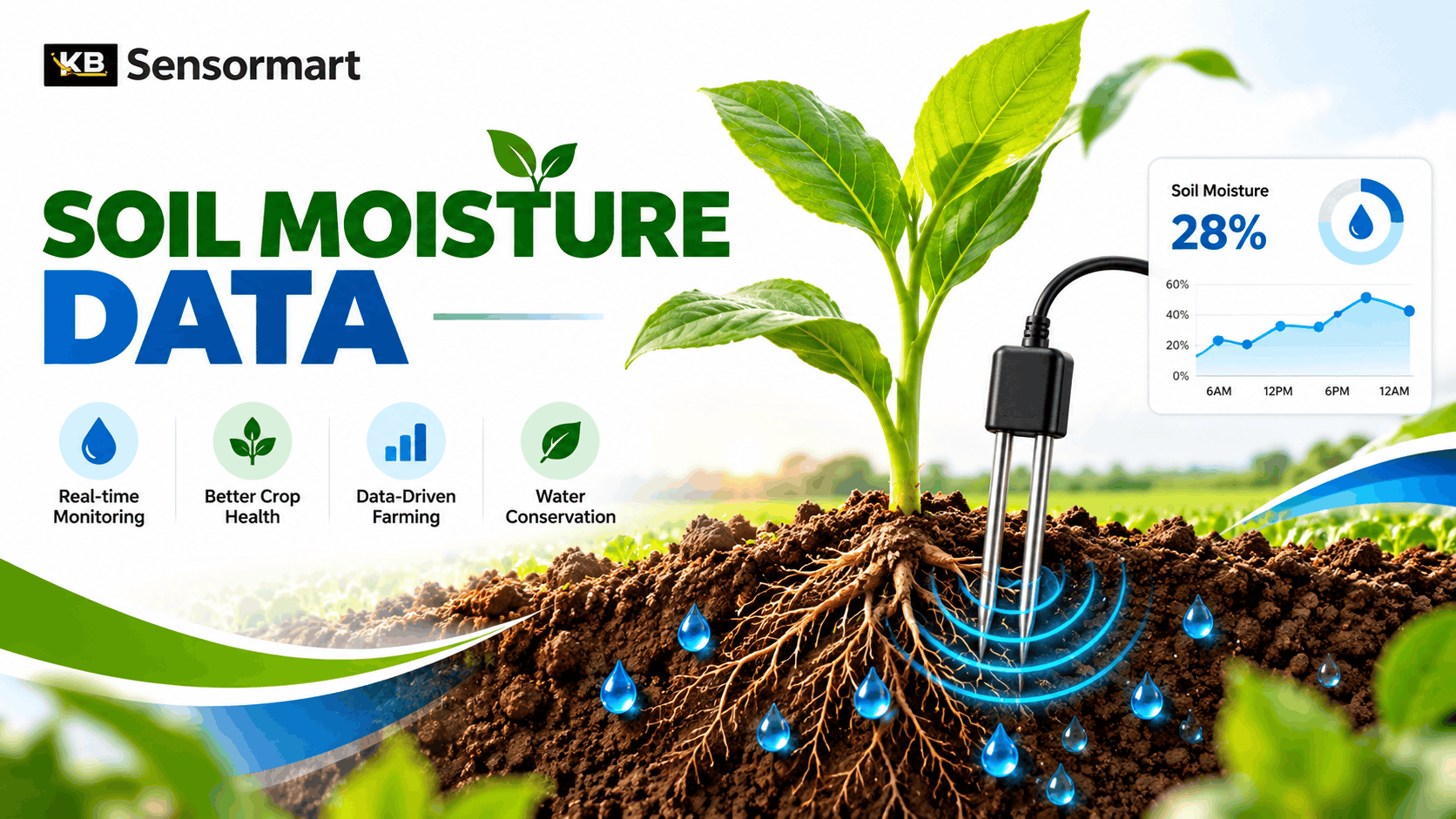
Ever watered a field and wondered if the plants really needed it? Most farmers have. You pour water, cross your fingers, and hope for the best. But the soil never tells you what it feels. That is where soil moisture data helps. It shows how much water sits in the ground, right now, at the root. If you want to stop guessing, explore the soil sensors at sensormart and see what fits your field.
Too much water drowns roots. Too little water dries them out. Both cost you money, and both hurt your crop. Plants feel it first, but you only see the damage weeks later. A good reading tells you when to start the pump and when to switch it off. You save water, power, and time. Simple as that.
In this blog, we will keep things easy. You will learn what the numbers mean, why they matter, and how to use them. We will also compare old methods with sensors, walk through a simple setup, and look at mistakes people make. By the end, you will know how to begin, even if you have never touched a sensor before. Grab a cup of tea and let’s get going.
What Soil Moisture Data Really Tells You
Soil moisture data is a number that shows how wet your soil is. Most sensors give it as a percentage. A reading of 30 percent means water makes up about 30 percent of the soil. Sounds simple, right? It is.
But the number alone is not the whole story. Sandy soil dries fast and holds little water. Clay soil holds water for days. So 25 percent in sand may mean the plant is thirsty, while 25 percent in clay may be just fine. That is why you should learn your own field’s numbers first.
Most crops like a middle range. Too low, and the plant wilts. Too high, and the roots cannot breathe. Your goal is to keep the reading in that happy middle. It is the plant’s comfort zone.
A soil moisture monitoring system reads these numbers all day and night. It can send them to your phone, so you do not need to walk the field in the heat. Over a season, the numbers form a story. You will see how fast your soil dries after rain, and how long water lasts after you irrigate. That story helps you plan better, one week at a time.
Why Irrigation Needs Soil Moisture Data
Here are the main ways this data helps your farm and your wallet every single season.
- Saves water: When you water only after the reading drops, you stop wasting water. Farms in dry areas often see big savings, and your borewell or canal supply lasts much longer through summer.
- Healthier roots: Roots need both air and water. Soil moisture data for irrigation helps you stop before the ground turns soggy, so roots keep breathing and plants grow strong, green leaves instead of turning yellow.
- Lower power bills: Pumps run only when the field needs them. Less pumping time means less diesel or electricity, and the pump lasts longer because it is not working for no reason.
- Better yield: Steady moisture keeps plants calm. They are not stressed by dry spells or flooded roots, so flowers and fruits set well, and the harvest is bigger and more even across the field.
- Less guesswork: You no longer depend on how the soil looks on top. The surface can be dry while the roots sit in damp soil. A sensor checks at root depth, where it counts.
- Saves your time: Instead of walking every acre each morning, you check your phone. Alerts tell you which block needs water, so you can spend your day on other work or rest.
Manual Checks Versus Sensors: Which Works Better
A quick side-by-side look shows how the old way stacks up against a modern soil sensor setup. wikipedia
| What You Compare | Hand Test | Soil Moisture Sensor |
|---|---|---|
| Accuracy | Changes from person to person | Gives a steady number every time |
| Depth | Only the top few inches | Reads at root level |
| Time needed | Walk the field daily | Check your phone |
| Night checks | Not possible | Works all day and night |
| Records | Rarely written down | Saved automatically |
| Early warning | You see trouble late | Alerts before plants suffer |
| Cost | Free, but costs water | Small cost at the start, saves later |
The hand test is not bad. Farmers have used it for years, and it still helps as a quick check. But your hand cannot feel what is happening two feet down. A soil moisture sensor for smart irrigation can. It sits in the ground and sends a number whenever you want it.
Think of it like a kitchen thermometer. You can guess if the chicken is cooked by looking at it, or you can use a thermometer and know. Both can work. One is just safer and gives you a real number.
For small kitchen gardens, the hand test may be enough. For farms, orchards, and greenhouses, sensors pay back fast. If you run a nursery or a polyhouse, where a dry day can ruin a tray of seedlings, sensors are even more useful. Many growers use both. They keep the hand test for a quick feel and let the sensor handle the numbers.
How to Start Smart Irrigation Water Management
Follow these three easy steps and you can set up a working system, even without any special training.
Step 1: Pick the Right Spots
Walk your field and find places that show the whole picture. Choose one spot in a high area, one in a low area, and one in the middle. Soil changes from patch to patch. Put the sensor close to the roots and away from rocks. If you grow tall trees, use two depths. Mark each spot so you can find it later. A small flag works well. This gives you a fair view of the field.
Step 2: Install and Connect the Sensor
Dig a small hole at root depth. Push the sensor in firmly so soil touches it on every side. Air gaps give wrong readings. Fill the hole and press the soil down gently. Then connect the sensor to your logger or controller. Check the output type first, like RS485 or analog, so it matches your device. Keep the wires safe from rats and tractors. Test it once by reading the number before you leave. Gentle hands protect the probe.
Step 3: Set Water Limits and Alerts
Now tell the system when to start and stop. Pick a low limit, where plants begin to feel thirsty, and a high limit, where soil is full. When the reading drops below the low limit, the pump starts. At the high limit, it stops. Check the numbers for two weeks and adjust. Small changes work better than big jumps. This is the heart of smart irrigation water management, and it gets easier each week.
Common Soil Moisture Monitoring Mistakes to Avoid
A farmer who tried this for the first time shared a simple lesson. “I trusted one sensor in one corner,” he said. “My low patch stayed soggy for weeks, and I never knew.” After he added two more sensors, he saw the full picture and fixed the problem in days. He now checks his phone over morning tea, and he says the pump now runs far less than before.
His story is common. Even good tools fail when they are used the wrong way. Watch out for these six slips:
- Using only one sensor. One spot never speaks for the whole field. Start with at least three, placed in different areas.
- Skipping the check. Soil types differ, so compare the readings with your own soil before you trust them fully. A short test run tells you a lot.
- Placing it too shallow. Roots often drink deeper than you think, so match the depth to your crop. Ask your supplier if you are unsure.
- Leaving air gaps. Loose soil around the probe gives low and jumpy numbers. Press the soil in well.
- Forgetting it after setup. Look at your soil moisture data every week, and change your limits as the seasons change.
- Ignoring rain. After a heavy shower, pause the schedule. Otherwise the pump keeps running on wet soil. Set a rain hold if your controller has one.
Fix these six, and most of your trouble goes away. A small habit of checking beats a big repair later.
FAQs on Soil Sensors and Smart Watering
1. What is soil moisture data?
It is a reading that shows how much water is in your soil at a given moment, usually as a percentage. Farmers use it to decide when to water and when to stop. It also shows trends over time.
How does a soil moisture sensor work?
The probe goes into the ground and checks how the soil responds to a small electric signal. Wet soil responds differently from dry soil, and the sensor turns that difference into a moisture reading. No special skill is needed to read it.
Can I use a soil moisture sensor in a small garden?
Yes. Even one sensor in a backyard garden or a few pots can show when plants really need water, and it helps you stop overwatering. It is a cheap way to learn.
How many sensors does one field need?
It depends on field size and soil type. A good starting point is three sensors per similar patch of land, placed in a high spot, a low spot, and the middle. More sensors give a clearer picture.
Does a soil sensor work with drip irrigation?
Yes. Drip, sprinkler, and even flood systems can all use sensor readings to start or stop the pump, as long as the controller accepts the sensor’s output type. Ask your supplier about wiring first.
How deep should I place the sensor?
Place it where most roots sit. For vegetables, that is often six to twelve inches. For orchard trees, use two sensors, one shallow and one deep. Check your crop guide if you are unsure.
How often should I check the readings?
Check them at least once a week, and more often during hot spells or after heavy rain. If your system sends alerts, you only need a quick look each day. Write the numbers down if you like.
Do I need to check the sensor against my soil?
Most of the time, yes. Soil type changes the readings, so it is smart to compare the sensor’s numbers with real soil conditions for your field and adjust the limits once. It is a one-time job and worth the effort.
How long does a sensor last in the field?
It depends on the build, the soil, and the weather. A sturdy, well-sealed probe with good cable protection can serve for many seasons if you handle it with care. Rinse and store it safely in the off-season.
Where can I buy reliable soil sensors in India?
sensormart is a manufacturer and supplier from Roorkee, Uttarakhand, and it makes soil and water level sensors along with other weather and industrial instruments. You can reach the team through the website and ask which sensor suits your crop.
Conclusion: Let Your Soil Do the Talking
Water is too precious to guess about. When you read soil moisture data every week, you stop wasting it, and your plants thank you with strong roots and good harvests. You do not need a big budget or a lab degree to begin. Start with a few sensors, learn what your soil is telling you, and grow from there. It is really that simple.


Leave a Reply