
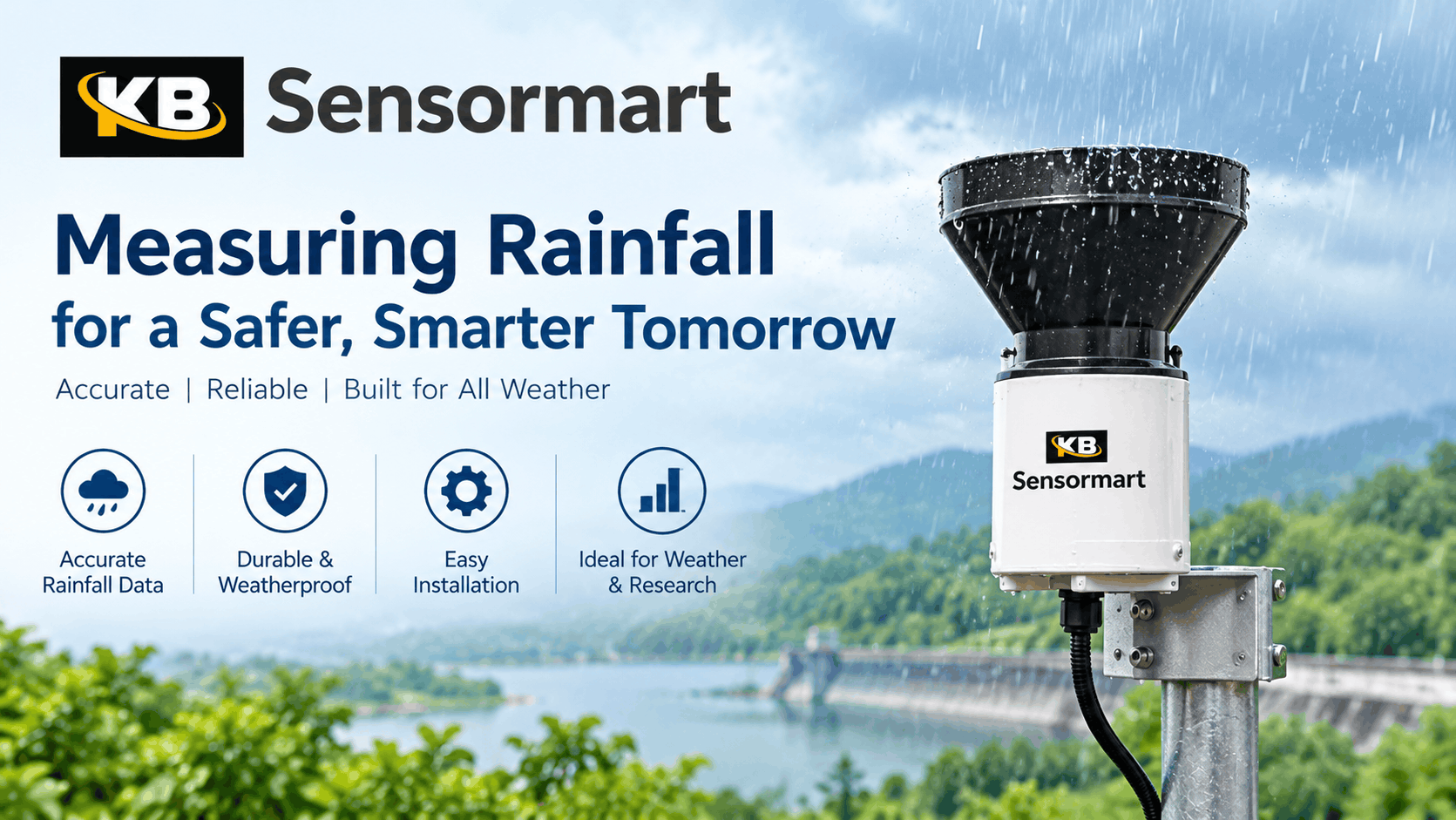
Too much rain floods a field. Too little rain kills a crop. Either way, you pay for not knowing. That is why measuring rainfall with care is the first step to smarter plans. Want tools you can trust? Talk to Sensormart today and ask for a free quote.
Maybe you run a farm. Maybe you manage a city drain, a school weather club, or a hill road. Rain touches all of them. A good Rainfall Measurement System tells you how much fell, when it fell, and how hard. You stop guessing and start acting.
In this blog, we keep it simple. You will learn how measuring rainfall works, what tools are out there, how to set one up, and which mistakes to skip. We also share a short story from the field and answers to common questions. Let us dive in. And yes, you can do this without being a weather expert. Simple tools do the job.
Sensormart is a maker of gauges, meters, and industrial sensors in Roorkee, Uttarakhand. We have built sensing tools since 2016, including tipping bucket rain gauges, so we know what works in real weather. Read on and pick the right setup with confidence. Look all sensors in one
Why Measuring Rainfall Matters More Than Ever
Rain is the base of almost every water plan. Farmers use it to pick sowing dates. It also tells them when to spray and when to harvest. Cities use it to size drains. Dam teams use it to guess how fast a lake will fill. If the numbers are wrong, every plan after them is wrong too.
For years, people used a plain jar and wrote the number in a notebook. A jar misses fast storms, night rain, and the time the rain began. It also cannot tell you how hard the rain fell.
That is where measuring rainfall with modern tools helps. A good Rainfall Measurement Instrument records every drop, logs the time, and sends the data to your phone. This is precipitation monitoring you can trust day and night.
It also saves money. Good Rainfall Measurement means you water only when needed and spend less on repairs after floods.
It also builds a record over time. After a few seasons, you can see patterns. You learn which months are wet, which are dry, and how storms are changing. Strong Rainfall Measurement data helps with crop plans, flood alerts, and even insurance claims.
Types of Rainfall Measuring Equipment Compared
This simple table compares common rainfall measuring equipment so you can pick the tool that matches your site and budget.
| Gauge type | How it works | Best for | Watch out for |
| Manual gauge | Rain fills a tube that you read by eye | Homes, schools, small farms | Needs a person every day |
| Tipping bucket | A tiny bucket tips with each small amount of rain | Farms, cities, weather stations | Can read low in very heavy rain |
| Weighing gauge | Weighs the water it collects | Research sites and snow | Costs more |
| Optical gauge | A light beam senses falling drops | Roads and airports | Lens needs regular cleaning |
For most farms and cities, a tipping bucket gauge is a smart start. It gives steady rainfall data collection with no one standing in the rain. Each tip equals a small, fixed amount of rain, often 0.2 mm, and the logger counts the tips.
The logger also notes how fast the tips come. That gives you rainfall rate measurement and rainfall intensity measurement in one tool. Our team at Sensormart makes tipping bucket rain gauges and can help you choose the right Rainfall Measuring Equipment for your site.
Choosing the right gear depends on your budget and your rain levels. For a school or garden, a manual gauge is enough. For a farm or city, pick a Rainfall Measurement Instrument with a logger. Good measuring rainfall starts with the right gauge, and good Rainfall Measurement starts with a clear need.
How to Install a Rain Gauge Correctly
Follow these three easy steps to set up your Rainfall Measurement Instrument for clean, honest readings from day one.
Step 1: Pick an Open Spot
Choose open ground, away from trees, walls, and roofs. A good rule is to keep the gauge at least twice the height of the nearest object away from it. Otherwise, wind and drips change what the gauge catches. Keep it about a meter above the ground, so splash from the soil does not jump in. Think of it like finding a quiet room before a phone call. This one choice does more for measuring rainfall than any fancy feature.
Step 2: Level It and Fix It Firmly
Mount the Rainfall Measurement Instrument on a solid pole or a flat slab. Place a small spirit level on top. Even a slight tilt changes how rain moves inside the funnel. Tighten every bolt so wind cannot shake it, because good measuring rainfall needs a steady base. A loose mount shakes the bucket and adds false tips. If you use a tipping bucket gauge, check that the bucket swings freely and that the wires to the logger are snug.
Step 3: Test and Clean on a Schedule
Pour a known amount of water slowly into the funnel and check the reading. If it is off, adjust it or call your supplier. Then clean the funnel and screen every month, because leaves, dust, and insects block the flow. Good Rainfall Measurement needs this small habit. It takes only five minutes, and it keeps your numbers honest all year long. Write each test date in a small log book.
Top Benefits of a Rainfall Measurement System
A solid Rainfall Measurement System pays off in many ways. These are the gains people notice first.
- Smarter farm decisions: Good Rainfall Measurement tells you how much rain fell before you irrigate, spray, or sow. You save water and money, and your crops get what they need, when they need it, without waste.
- Early flood warning: When rainfall intensity measurement shows a sudden jump, alerts can go out before drains overflow. Cities and villages get precious extra time to clear roads and move people and animals to safety.
- Better water storage plans: Dam and tank managers use rain records to guess how fast storage will fill. They can release water early or hold it back, based on facts instead of worry, and they face fewer last-minute surprises.
- Proof for claims and reports: Saved records from a Rainfall Measurement System show what really fell on your land or site. That helps with crop insurance, project reports, and talks with local offices when questions come up.
- Less manual work: A Rainfall Measurement System with a data logger removes daily trips to read a jar. Staff spend time on real work, and nobody has to stand in a storm to write a number.
- Clear weather trends: A few seasons of data from your Rainfall Measuring Equipment show wet months, dry spells, and shifting storm habits. You can plan ahead with real patterns, which beats gut feeling every time.
Common Mistakes That Spoil Your Rain Data
Most bad numbers come from small setup errors. Here are five mistakes we see again and again when people start measuring rainfall.
- Placing the gauge under trees or a roof edge. Drips and shade ruin the numbers, so choose open ground.
- Never cleaning the funnel. Leaves and insects block the flow of any Rainfall Measuring Equipment, so clean it every month.
- Ignoring the level. A tilted gauge reads wrong, so check it with a spirit level.
- Trusting one gauge on a big site. Rain can differ across a hill, so use more than one point on large land.
- Skipping test checks. A quick test with known water once a year keeps the data honest.
Here is a story that shows why this matters. One farm owner we know kept a plastic jar on his shed wall. He wrote down the rain once a day. After one storm, he was sure he got 80 mm. A tipping bucket gauge later showed the real number was close to half of that, because the jar sat under the roof edge and caught extra drips.
He moved the gauge to open ground, and his water plan finally matched his fields. He now checks the gauge every morning with his tea. A simple Rainfall Measurement Instrument in the right spot saved him a lot of water. That is the power of honest Rainfall Measurement: you act on what fell, not on what you thought fell.
Final Thoughts
Rain does not wait for you to be ready. It shows up, it leaves, and it changes your whole season. The only way to stay ahead is to know what fell and how hard. That is the real gift of measuring rainfall with the right tool.
You do not need a huge setup to begin. Start with one good Rainfall Measurement Instrument, a clear spot, and a simple log. Check it, clean it, and learn from it. A small Rainfall Measurement System today will teach you more than a year of guessing. Add more points later if your land is big, and keep growing your data. Honest Rainfall Measurement is the base of every good water plan, so start while the season is still young.
FAQs on Measuring Rainfall
1. What is measuring rainfall?
Measuring rainfall means finding out how much rain falls in a place over a set time, usually in millimeters, using a gauge that records each shower and storm.
2. What is a rainfall measurement system?
It is a full setup with a rain gauge, a data logger, and a way to send readings to a phone, so your Rainfall Measurement is easy to review.
3. Which rainfall measurement instrument is best for farms?
A tipping bucket gauge suits most farms. It records on its own, needs little care, and gives you steady readings day and night without anyone standing in the rain.
4. How does a tipping bucket rain gauge work?
Rain flows into a small bucket. When it fills to a fixed amount, it tips and sends a signal. The logger counts each tip as a small amount of rain.
5. What is rainfall intensity measurement?
It tells you how hard rain falls, usually in millimeters per hour. This rainfall rate measurement helps you spot heavy bursts that cause floods or soil loss.
6. How accurate is rainfall measuring equipment?
Good gauges can be accurate to a small fraction of a millimeter per tip. Setup, cleaning, and test checks matter as much as the gauge.
7. Where should I put a gauge for measuring rainfall?
Pick open ground, away from trees, walls, and roofs. Keep your Rainfall Measuring Equipment level, fixed firmly, and about a meter above the ground, so splash stays out.
8. How often should I clean rainfall measuring equipment?
Check it once a month and after dust storms or heavy leaf fall. A clean funnel and screen keep the water flowing, the bucket moving, and the readings clear.
9. Can I see rainfall data collection on my phone?
Yes. A gauge with a data logger and GSM or other links can send readings to an app or web page, so your precipitation monitoring runs from anywhere with a signal.
10. Can Sensormart help me choose a rainfall measurement instrument?
Yes. Share your site, budget, and need, and our team will suggest a fitting Rainfall Measurement System, plus clear tips on setup and care for your land.
Final Thoughts
Rain does not wait for you to be ready. It shows up, it leaves, and it changes your whole season. The only way to stay ahead is to know what fell and how hard. That is the real gift of measuring rainfall with the right tool.
You do not need a huge setup to begin. Start with one good Rainfall Measurement Instrument, a clear spot, and a simple log. Check it, clean it, and learn from it. A small Rainfall Measurement System today will teach you more than a year of guessing. Add more points later if your land is big, and keep growing your data. Honest Rainfall Measurement is the base of every good water plan, so start while the season is still young.
Ready to take the next step? Message us on WhatsApp at [9719411764] or follow us on Instagram at [https://www.instagram.com/sensormart/] to see our latest work. We reply fast, and we are always happy to chat about your weather needs.


Leave a Reply