
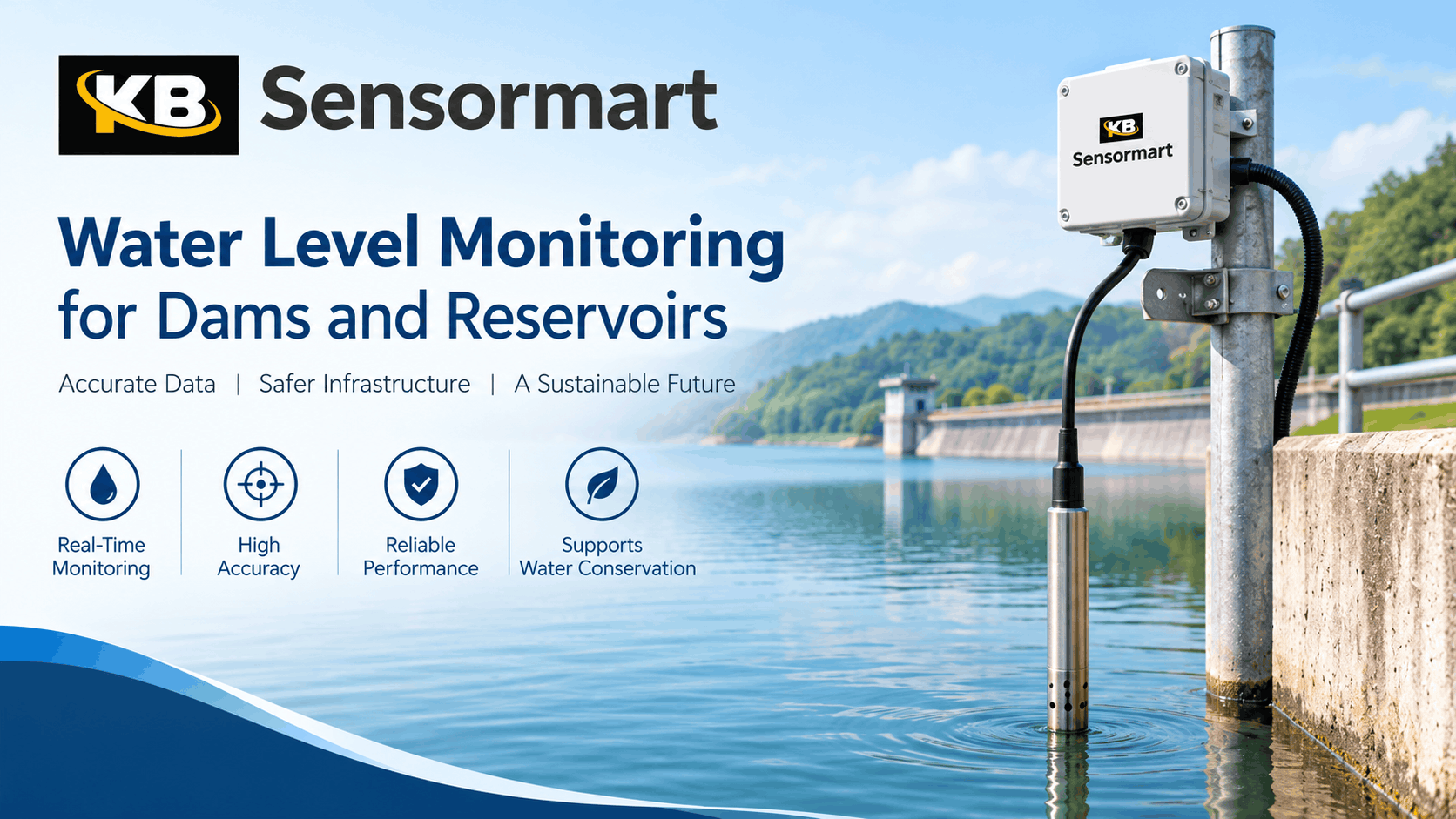
A dam does not warn you before it gets too full. By the time you see the water rising, it may already be late. That is why smart teams now use Water Level Monitoring for Dams and Reservoirs instead of only walking the bank with a measuring stick. Want a setup you can trust? Talk to Sensormart today and ask for a free quote. Visit uttrakhand
Think about a heavy rain night. Rivers swell. Gates must open at the right time. If the data comes late, people downstream pay the price. A good Water Level Monitoring System gives you a fresh number every minute, day and night. You never have to guess.
In this blog, we keep things simple. You will learn how these systems work, which sensors fit best, and which mistakes to skip. We also share a short field story and answers to the questions people ask us most. Let us start with why this matters.
Sensormart is a maker of gauges, meters, and industrial sensors in Roorkee, Uttarakhand. We have built sensing tools since 2016, so we know what works on real sites. Read on, and you will feel ready to pick the right setup for your dam or reservoir.
Why Dams Need Better Water Level Checks
Every dam has a safe level. Go above it, and the wall faces more stress. Go too low, and towns lose drinking water while farms lose their supply. So the water level is the most important number at any dam. That one habit of watching it protects towns, farms, and the dam itself.
Old methods used a staff gauge and a person with a notebook. That works on calm days. But storms come at night, roads get blocked, and readings get missed. Two people can even read the same scale and write two different numbers.
This is where Water Level Monitoring for Dams and Reservoirs changes the game. Sensors read the level all day and send the data to a phone or screen. Alerts go out when the water crosses a set line. Engineers can open gates early instead of late.
It also helps with planning. With months of saved data, you can see how fast the reservoir fills each season. A solid Reservoir Water Level Monitoring plan lets you set releases for farms, power, and city supply. Good data means fewer surprises. A Dam Water Level Monitoring System often pays for itself the first time it saves you from a late call.
How Dam Water Level Systems Actually Work
Here are three simple steps that show how a Dam Water Level Monitoring System takes a reading and shares it.
Step 1: The Sensor Reads the Level
A water level sensor for dams sits above or inside the water. An ultrasonic one sends a sound wave down. The wave hits the surface and bounces back. The sensor counts how long that trip took. Less time means the water is closer to the sensor. This is basic water level measurement, and it needs no touch with the water at all. Many dams pick this style because it needs very little care.
Step 2: The Logger Stores and Sends the Data
A small data logger collects each reading. It adds the time and date, then sends the number out. Most dams use GSM, 4G, or radio, because running wires across hills is hard. A solar panel keeps it powered. If the network drops, the logger saves the data and sends it later, so nothing is lost. That is what lets Water Level Monitoring for Dams and Reservoirs work in far-off places.
Step 3: The Screen Shows Alerts
The data lands on a dashboard you can open on a phone or laptop. You set warning levels, like yellow and red. When the water crosses one, the Dam Water Level Monitoring System sends an SMS or a call. This is how water level detection turns into real action. The right person gets the message in seconds, even at 2 a.m.
Best Water Level Sensors for Dams
This quick table compares common water level sensors so you can see which one fits a dam or reservoir best.
| Sensor type | How it works | Best for | Watch out for |
| Ultrasonic | Sends a sound wave and times the echo | Open reservoirs, spillways, canals | Thick fog and strong wind |
| Radar | Sends a radio wave to the water | Big dams with waves or rough weather | Higher price |
| Pressure (submersible) | Feels the weight of the water above it | Stilling wells and narrow tubes | Needs a cable and regular cleaning |
| Float | Rides up and down with the water | Simple on and off alerts | Moving parts can jam |
For most open reservoirs, an Ultrasonic Water Level Sensor is a strong first pick. It is easy to fit on a bridge or pole, and it needs little care. If your dam sees high waves or heavy fog, radar can be steadier. Pressure sensors work well in narrow wells.
Top Benefits of Reservoir Water Level Monitoring
Good Reservoir Water Level Monitoring gives dam teams real gains daily. These are the biggest benefits people notice first.
- Early flood warning: A Dam Water Level Monitoring System spots a fast rise in water and sends an alert at once. Teams get extra hours to open gates, warn villages downstream, and move people and cattle to safe ground.
- Better water planning: Daily records show how fast the reservoir fills and drains. Managers can plan releases for farms, towns, and power plants with real numbers instead of rough guesses, which cuts waste during dry months.
- Lower site visit costs: A Water Level Monitoring System means fewer trips, less fuel, less travel time, and less risk for staff during storms. Crews only go out when a sensor flags a real problem.
- Stronger safety records: Every reading from a Dam Water Level Monitoring System is time-stamped and saved. If an audit or review comes up, you can show proof of what the level was and when your team acted on it.
- Cleaner leak checks: A slow, odd drop in level with no gate release can hint at seepage. A steady Water Level Monitoring System catches that trend early, long before it turns into a costly repair.
- Easy data sharing: Local officials, farmers, and power teams can all see the same numbers on one dashboard. Everyone works from one truth, and fewer calls and arguments follow.
Common Mistakes to Avoid When Installing Sensors
Most problems start on install day, not later. Here are five mistakes we see again and again with Water Level Monitoring for Dams and Reservoirs.
- Mounting too close to a wall. Echoes from the wall can fool an ultrasonic sensor, so keep a clear gap.
- Ignoring the blind zone. Every sensor has a short dead range, so mount it above the highest water level.
- Skipping surge protection. Lightning hits dams often, so protect the power and signal lines.
- Forgetting to calibrate. Check the first readings against a staff gauge and fix any gap.
- Choosing only the lowest price. A cheap unit can cost more once repairs and missed alerts start.
Here is a story that shows why this matters. One field team we know checked a staff gauge twice a day. During a wet week, a night storm lifted the level by almost a meter in three hours. Nobody was there to see it, and nobody could drive up the hill in the dark.
After they fitted a sensor with SMS alerts, the next storm sent a warning at 2 a.m., and the gates opened on time. The Dam Water Level Monitoring System did not stop the rain. It just gave them time. A tidy Water Level Monitoring System and a smart Water Level Sensor for Dams turned a scary night into a calm one. That is the real value of Reservoir Water Level Monitoring: time to act.
Final Thoughts
Dams hold back a lot of water and a lot of trust. When the level moves fast, you need facts, not guesses. That is the whole point of Water Level Monitoring for Dams and Reservoirs. Sensors never get tired, never miss a night shift, and never write a wrong number in a notebook.
Start small if you need to. Pick one good sensor, a solid logger, and a clear alert plan. Test it, learn from it, and grow from there. A simple Water Level Monitoring System in place today is worth far more than a perfect plan next year. Strong Reservoir Water Level Monitoring is built one step at a time, and every good Water Level Sensor for Dams is a step in the right direction.
FAQs on Water Level Monitoring for Dams and Reservoirs
1. What is water level monitoring for dams and reservoirs?
It means using sensors to read the water height all day, send the data online, and warn teams when the level gets too high or too low.
2. How does a dam water level monitoring system work?
A sensor reads the water height, a logger sends the number by GSM or radio, and a dashboard shows it. Alerts go out when set limits are crossed.
3. Which water level sensor for dams is the best?
For Water Level Monitoring for Dams and Reservoirs, ultrasonic suits most open lakes, radar suits rough weather, and pressure sensors fit narrow wells. Your site decides the final pick.
4. Why is a dam water level monitoring system important?
Water Level Monitoring for Dams and Reservoirs warns of floods early, helps plan water release, lowers site visits, and keeps clear safety records for audits and reviews.
5. How accurate is an ultrasonic water level sensor for dams?
Most give readings within a few millimeters to a few centimeters, based on range and weather. Good mounting and calibration keep the numbers steady over time.
6. Can a water level sensor for dams work in bad weather?
Yes. Radar sensors handle fog, rain, and steam well. Ultrasonic ones can work too, but strong wind and thick fog may need extra care, shielding, or a different mount.
7. How often should a water level monitoring system take readings?
Many sites log every one to five minutes. During floods, you can raise the rate to every few seconds so no quick rise gets missed.
8. Does reservoir water level monitoring need power lines?
No. A solar panel and a small battery run most Water Level Monitoring for Dams and Reservoirs setups in remote places. The logger also saves data if the network drops.
9. How do I pick a supplier for water level monitoring for dams and reservoirs?
Look for clear specs, tested quality, safe packing, and good support after the sale for any water level monitoring system you buy. Ask to see past work too.
10. Can Sensormart help with reservoir water level monitoring at my site?
Yes. Share your dam size, range, and network needs, and our team will suggest a fitting sensor and setup, plus tips on mounting and alerts.
Ready to take the next step? Message us on WhatsApp at [9719411764] or follow us on Instagram at [https://www.instagram.com/sensormart/] to see our latest work. We reply fast, and we are always happy to chat about your weather needs.


Leave a Reply