
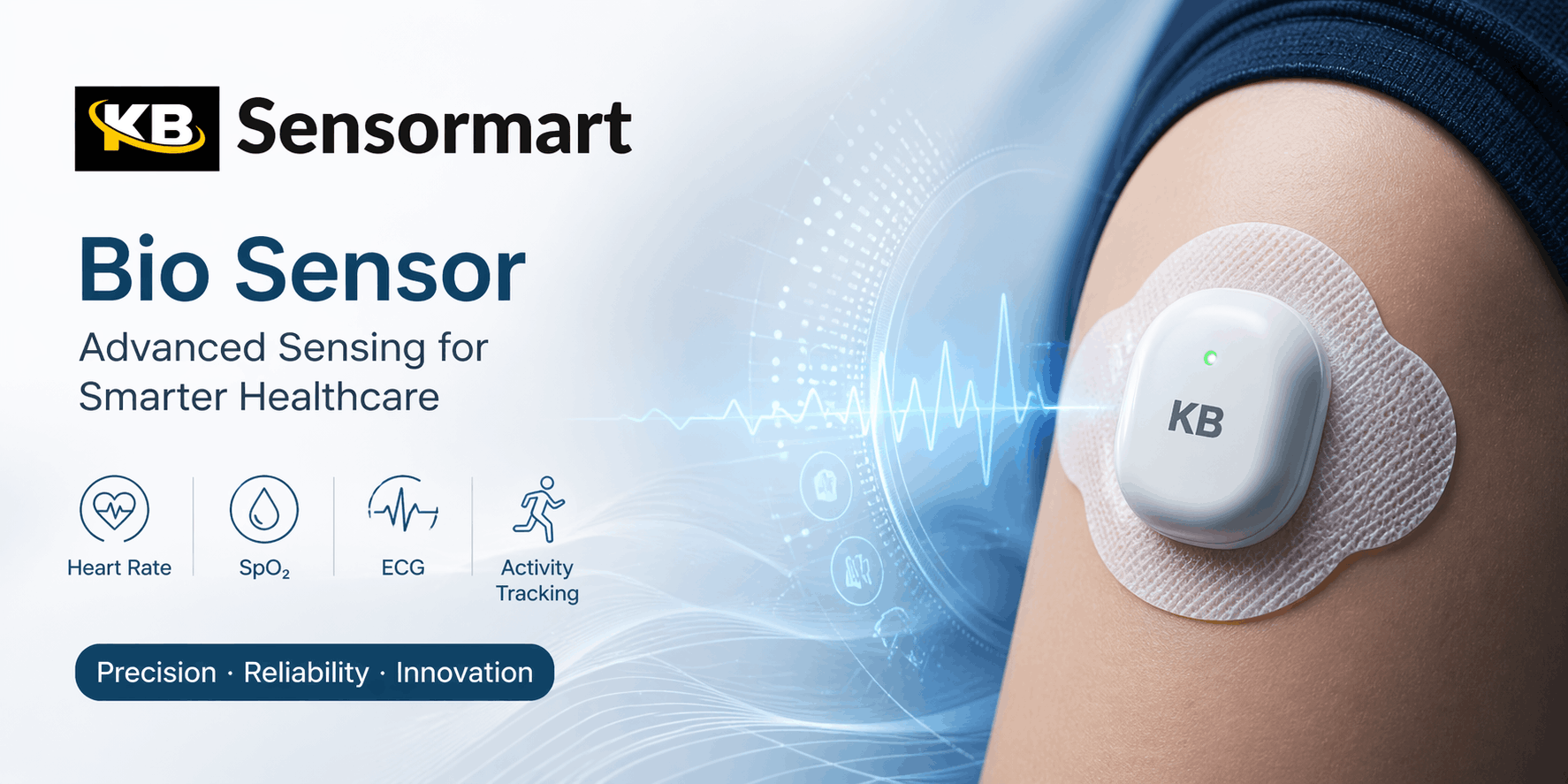
In a world driven by smart health monitoring, instant diagnostics, and precision technology, the bio sensor stands out as a groundbreaking innovation. From modern medical devices like continuous glucose monitors to portable environmental testing kits, every modern bio sensor bridges the gap between biological processes and digital data processing.
At SensorMart, we provide high-precision electronic components, micro-transducers, and specialized testing modules. Whether you are a biomedical engineer, a technology enthusiast, or a researcher, understanding how a bio sensor operates can open new doors to health tech and automated sensing solutions.
In this guide, we will break down what a bio sensor is, how it works, its main types, real-world applications, and why sourcing top-tier components from SensorMart makes all the difference. more blogs
What is a Bio Sensor?
A bio sensor (or biological sensor) is an analytical device that combines a biological sensing element with a physicochemical detector to identify specific chemical or biological substances.
+-------------------+      +-------------------+      +-------------------+      +-------------------+
|     Analyte       | ---> |    Bioreceptor    | ---> |    Transducer     | ---> |  Signal Processor |
| (Target Molecule) |      | (Enzyme, DNA, etc)|      | (Electrical/Opt)  |      |   & Display Read  |
+-------------------+      +-------------------+      +-------------------+      +-------------------+
Unlike basic chemical detectors, a bio sensor leverages natural biological recognition mechanisms—such as enzyme-substrate reactions, antibody-antigen binding, or DNA hybridization—to achieve extreme specificity. When the target molecule (analyte) binds with the biological element, a reaction occurs. The device then translates this biological event into a readable electrical, optical, or thermal signal.
At SensorMart, our advanced bio sensor module components ensure low limit-of-detection (LOD), high repeatability, and fast signal acquisition.
Key Components of a Bio Sensor
Every high-performing bio sensor consists of three core components working in sync:
- Bioreceptor (Biological Sensing Element): This part directly interacts with or binds to the specific target analyte. Common biological elements include enzymes, antibodies, nucleic acids (DNA/RNA), whole cells, or tissues.
- Transducer (Detector): The transducer converts the biological interaction into a measurable signal. Transducers can be electrochemical, optical, piezoelectric, or thermal.
- Signal Processor & Display System: This component amplifies, filters, and processes the transducer’s raw signal, displaying the result as a clear numerical value or graphical readout on a screen.
When building custom sensing arrays, engineers rely on SensorMart to supply robust signal conditioning ICs and low-noise transducers for accurate bio sensor development.
How Does a Bio Sensor Work?
The working process of a bio sensor follows a simple step-by-step sequence:
- Sample Introduction: The biological sample (such as blood, saliva, water, or food extract) is placed on the bio sensor surface.
- Selective Recognition: The bioreceptor on the bio sensor surface selectively recognizes and binds only to the target analyte, ignoring surrounding contaminants.
- Physicochemical Change: The binding event triggers a reaction—generating electrons, light emission, heat, or mass alteration.
- Transduction: The physical transducer converts this chemical or physical variation into a proportional electrical voltage or current.
- Data Output: The electronic processor measures the signal magnitude, calculates the analyte concentration, and presents the output on an LCD screen or mobile application.
Major Types of Bio Sensors
Depending on the transduction mechanism and biological elements used, a bio sensor can be categorized into several distinct types:
| Bio Sensor Type | Transduction Mechanism | Primary Uses |
| Electrochemical Bio Sensor | Measures changes in electric current, voltage, or resistance | Blood glucose monitoring, lactate detection |
| Optical Bio Sensor | Measures light absorption, fluorescence, or surface plasmon resonance (SPR) | Pathogen detection, drug discovery |
| Piezoelectric Bio Sensor | Measures changes in acoustic frequency/mass on a crystal surface | DNA hybridization, antigen-antibody testing |
| Thermal / Calorimetric Bio Sensor | Measures heat changes generated by biochemical reactions | Enzyme activity testing, fermentation monitoring |
| Resonant / Micro-Mechanical Bio Sensor | Detects mass changes at the nanoscale via micro-cantilevers | Biodefense, ultra-sensitive toxin screening |
Electrochemical Bio Sensor
The electrochemical bio sensor is the most widely produced type worldwide. It measures electron transfer during redox reactions. SensorMart stocks premium-grade electrodes and potentiostat chips engineered specifically for electrochemical bio sensor design.
Optical Bio Sensor
An optical bio sensor utilizes fiber optics or laser light to observe surface binding events in real time. These devices offer non-destructive detection with high sensitivity.
Piezoelectric Bio Sensor
Using quartz crystal microbalances, a piezoelectric bio sensor measures tiny changes in mass on the sensor chip. As target biomolecules attach to the surface, the resonant frequency shifts, giving precise binding data.
Key Features and Characteristics of an Ideal Bio Sensor
To function effectively in medical or industrial environments, a modern bio sensor must demonstrate specific performance metrics:
- High Selectivity: The ability of the bio sensor to detect the target analyte without interference from other compounds.
- Sensitivity: The minimum concentration level that a bio sensor can reliably measure.
- Fast Response Time: Quick analysis providing actionable results within seconds or minutes.
- Linearity and Accuracy: Consistent electrical output proportional to changes in analyte levels.
- Stability and Reproducibility: Long shelf life with repeatable measurements over multiple uses.
At SensorMart, every bio sensor interface board is tested to meet strict stability and high-linearity standards.
Important Applications of Bio Sensor Technology
The versatility of the bio sensor has transformed multiple industries:
1. Healthcare and Medical Diagnostics
In healthcare, continuous glucose meters (CGMs) are the most common commercial application of the bio sensor. They allow diabetic patients to monitor blood sugar levels without frequent needle pricks. Additionally, cardiac biomarker bio sensor units help detect early signs of heart attacks in emergency rooms.
2. Environmental Water and Air Monitoring
A specialized environmental bio sensor can measure pollutants, heavy metals, industrial effluents, and pesticides in water reservoirs. Micro-organism-based devices are widely used to measure Biochemical Oxygen Demand (BOD) in municipal plants.
3. Food Safety and Agriculture
In food processing, a bio sensor detects bacterial contamination (such as E. coli or Salmonella), toxin build-up, and spoilage indicators. Farmers also use agricultural bio sensor tools to test soil health, hormone levels in livestock, and crop diseases on site.
4. Biodefense and Forensic Analysis
Specialized bio sensor arrays can identify airborne pathogens, biological warfare agents, and toxic gases rapidly in defense scenarios.
Why Source Your Bio Sensor Components from SensorMart?
Building reliable sensing hardware requires top-tier materials and components. SensorMart is a premier supplier of sensor hardware, providing high-sensitivity biological transducers, microfluidic channels, amplifier modules, and developer kits.
- Wide Selection: From electrochemical test strips to integrated optical bio sensor evaluation boards, SensorMart caters to both hobbyists and commercial developers.
- Calibrated Precision: Components from SensorMart undergo rigorous quality control to guarantee low noise and maximum stability.
- Expert Support: Our technical team helps you select the right bio sensor components for your specific engineering projects.
Whether prototyping a wearable health monitor or deploying industrial-grade devices, SensorMart delivers the quality hardware your project demands.
Conclusion
The evolution of the bio sensor continues to revolutionize health tracking, environmental safety, and industrial automation. By integrating biological specificity with digital electronics, these devices deliver accurate, real-time data when it matters most. Partnering with SensorMart ensures access to high-performance components engineered to bring your next bio sensor design to life. wikipedia
Frequently Asked Questions (FAQs)
1. What is the main purpose of a bio sensor?
A bio sensor detects and quantifies specific biological or chemical target molecules in a given sample. It converts biological reactions into measurable digital or electrical signals for easy interpretation.
2. What is the most common example of a bio sensor?
The most widely recognized everyday example of a bio sensor is the personal blood glucose meter used by people with diabetes. Home pregnancy test kits are another common example of an optical/colorimetric bio sensor.
3. How does a bio sensor differ from a standard chemical sensor?
A bio sensor uses biological recognition elements (such as enzymes, DNA, or antibodies) to identify the target molecule. Standard chemical sensors use synthetic chemical reagents or physical properties alone, which generally offer lower specificity compared to biological recognition.
4. What are the main components of a bio sensor?
A standard bio sensor consists of three primary components: a bioreceptor ( biological element), a transducer (detector element), and an electronic signal processing unit with a display.
5. Why are electrochemical bio sensor devices so popular?
An electrochemical bio sensor is popular because it is cost-effective, easy to miniaturize, portable, and produces direct electrical outputs that integrate seamlessly with digital displays and smart devices.
6. Where can I buy high-quality bio sensor components?
You can buy premium bio sensor modules, transducer chips, and development kits directly from SensorMart. SensorMart offers reliable hardware solutions for developers, researchers, and medical engineers alike.
WhatsApp: +91-9719411673
Website: https://www.sensormart.co.in/
Reach out today and take a smart step toward better sensing solutions with Sensor Mart. Blogs




Leave a Reply