
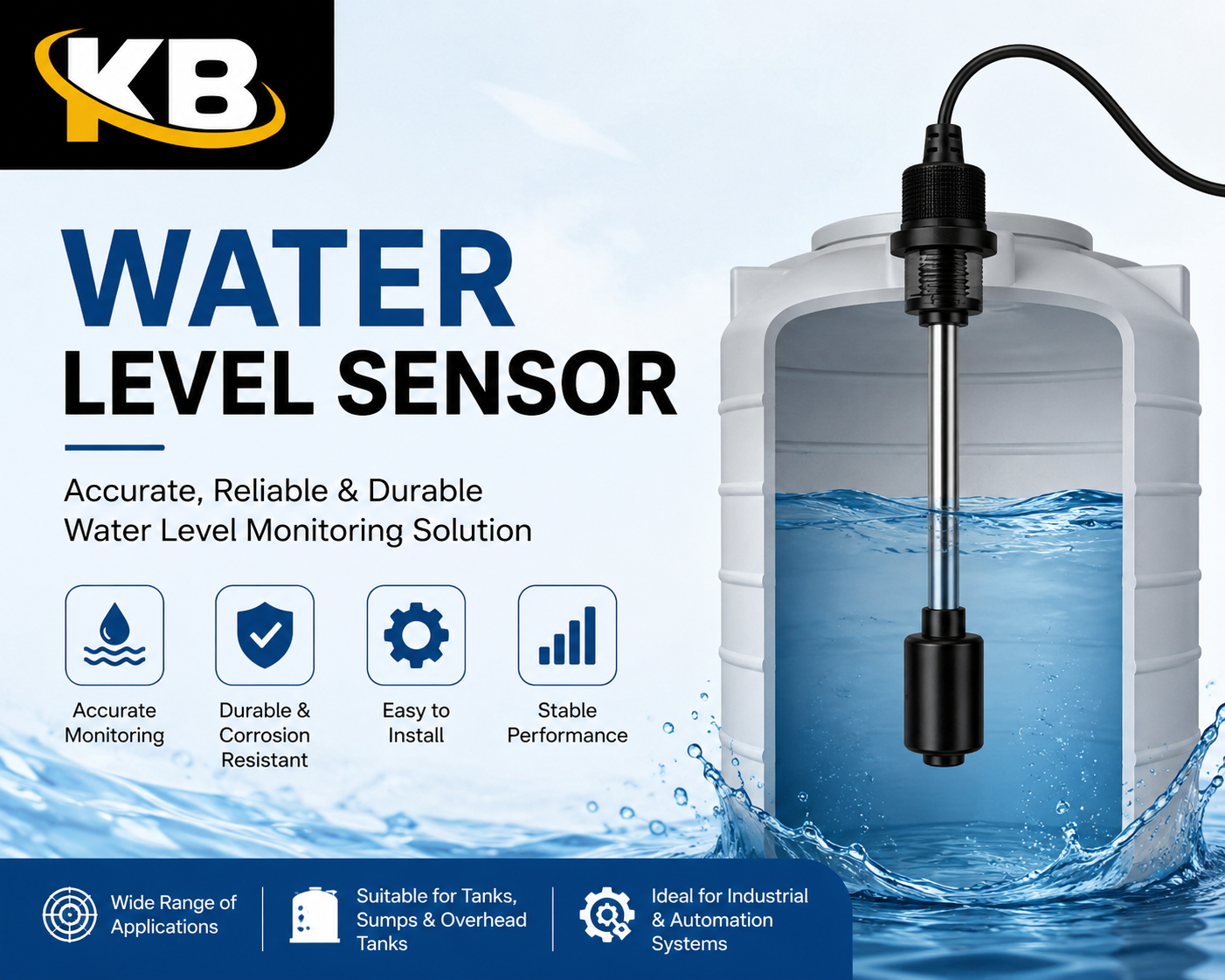
The criticality of proper management of water in homes, farms, industry, and commercial businesses is reflected in the need to manage the supply of water to ensure that it does not run out, become overflowed or incur any additional maintenance costs due to improper management of the supply of water to these businesses, as evidenced in the use of a water level sensor for monitoring the flow of water into and out from a water supply source.
For example, a water level sensor can be used to monitor the water level of a tank (e.g., borewell, pond, etc.), reservoir (e.g., river, lake, etc.) and industrial containers (e.g. silo, hopper, bin, drum). Depending upon the type of water level sensor being used, it will provide an accurate measurement of the level of water contained within the container and provide the ability to control the flow of water in an automatic manner. At this time, water level sensors are widely used for agricultural purposes, industrial purposes, water treatment plants and smart automation systems.
Companies searching for accurate and reliable water monitoring solutions can find the latest in advanced water level sensors at Sensor Mart, which provide long-term performance and can be used for efficient water monitoring applications in locations throughout India
What is a Water Level Sensor?
A water level sensor is an electronic device used to detect and measure the level of water or liquid inside a container, tank, or system. It helps users know whether the water level is low, medium, or full.
These sensors can work automatically and send signals to monitoring systems, alarms, pumps, or controllers. This reduces manual checking and improves water management efficiency.
Water level sensors are commonly installed in:
- Water storage tanks
- Underground tanks
- Borewells
- Overhead tanks
- Industrial liquid storage systems
- Irrigation systems
- Wastewater treatment plants
Why Water Level Sensors are Important
Many people still check water tanks manually, but this method is not accurate and wastes time. Water level sensors provide real-time monitoring and automatic control.
Stopping Water Ovelflow
Excess water use, excessive energy consumption, and overflowing water tanks are all negative effects of overflows of water tanks. Tank fullness will automatically trigger water level sensors to halt the pump.
Prevention of Low Pump Usages
Due to low water levels, the loss of use of the pump may mean that it has been ruined. The use of water pumps can be maintained with the use of water level sensors that can detect low water levels.
Saving Time & Labor
Users will no longer have to check tanks manually on a regular basis since the system is automated.
Improved Management Water
Industries and large agriculature type of customers can be better able to monitor the amount of water they are using and thereby reduce the amount of water being wasted.
Support Automations
There are many modern water pump level sensors that can connect with automation systems, IoT devices and smart controllers, which all support automation.
Types of Water Level Sensors
Different applications require different types of water level sensors. Choosing the correct sensor depends on liquid type, tank size, and environmental conditions.
Float Water Level Sensor
This sensor uses a floating object that moves with the water level. It is simple, affordable, and commonly used in household tanks.
Best For:
- Domestic water tanks
- Small water systems
- Basic automation setups
Ultrasonic Water Level Sensor
Ultrasonic sensors use sound waves to measure water levels without touching the liquid.
Benefits:
- High accuracy
- Non-contact measurement
- Suitable for dirty or chemical liquids
Applications:
- Industrial tanks
- Borewells
- Smart monitoring systems
Capacitive Water Level Sensor
These sensors detect liquid levels based on changes in capacitance.
Advantages:
- Good sensitivity
- Compact design
- Works with different liquids
Conductive Water Level Sensor
These sensors use electrical conductivity to detect water levels.
Common Uses:
- Water treatment plants
- Industrial liquid systems
- Automatic pump controllers
Pressure-Based Water Level Sensor
Pressure sensors calculate water level based on liquid pressure inside tanks or wells.
Suitable For:
- Deep water tanks
- Borewells
- Underground reservoirs
Applications of Water Level Sensors
Water level sensors are used in many industries and environments.
Agriculture and Irrigation
Farmers use water level sensors in irrigation tanks and borewells to improve water management and reduce wastage.
Benefits in Agriculture:
- Better irrigation control
- Water conservation
- Reduced manual monitoring
Residential Water Tanks
Homes use water level sensors to automatically control pumps and prevent tank overflow.
Advantages:
- Saves electricity
- Reduces water wastage
- Convenient daily operation
Industrial Applications
Industries use water level sensors for process control, chemical storage, cooling systems, and wastewater monitoring.
Industrial Benefits:
- Accurate monitoring
- Improved operational safety
- Reduced downtime
Water Treatment Plants
Water treatment facilities require continuous level monitoring for smooth operation.
Uses:
- Monitoring storage tanks
- Controlling treatment systems
- Managing wastewater flow
Smart Cities and IoT Systems
Modern smart cities use connected water level sensors for remote monitoring and automated water management.
Key Features of Modern Water Level Sensors
Modern sensors come with advanced features for better performance.
Real-Time Monitoring
Users can monitor water levels instantly.
High Accuracy
Advanced sensors provide reliable and precise measurements.
Durable Design
Industrial-grade sensors can work in harsh environments.
Remote Monitoring Support
Some sensors support IoT and wireless communication.
Easy Installation
Most water level sensors are simple to install and maintain.
How to Choose the Right Water Level Sensor
Choosing the correct sensor is important for accurate performance.
Tank Size and Depth
Deep tanks may require pressure or ultrasonic sensors.
Type of Liquid
Some sensors work better for clean water, while others are suitable for chemicals or dirty liquids.
Environmental Conditions
Consider temperature, dust, moisture, and outdoor exposure.
Accuracy Requirements
Industrial systems may require highly accurate sensors.
Automation Compatibility
Check whether the sensor supports controllers, PLCs, or IoT systems.
Benefits of Using Water Level Sensors
Installing water level sensors offers several long-term advantages.
Water Conservation
Prevents unnecessary water wastage.
Lower Maintenance Costs
Protects pumps and equipment from damage.
Improved Efficiency
Automation improves daily operations.
Better Resource Management
Helps industries and farms manage water more effectively.
Increased Safety
Prevents overflow accidents and equipment failure.
Why Choose Sensor Mart for Water Level Sensors?
Choosing a trusted supplier is important for long-term performance and reliability.
Wide Product Range
Sensor Mart offers different types of water level sensors for industrial, agricultural, and commercial applications.
Reliable Quality
The sensors are designed for durability, accuracy, and stable operation.
Technical Support
Customers receive guidance in selecting suitable sensors for their projects.
Affordable Pricing
Sensor Mart provides cost-effective sensor solutions without compromising quality.
Nationwide Supply
Products are supplied across India for different industries and applications.
Future of Water Level Monitoring in India
The demand for smart water management systems is increasing rapidly in India. Industries, agriculture sectors, and urban infrastructure projects are adopting automated monitoring systems to save water and improve efficiency.
IoT-based water level sensors, wireless monitoring systems, and smart automation technologies are expected to become more common in the future.
As technology continues to grow, companies like Sensor Mart are helping businesses and users adopt smarter and more efficient water monitoring solutions.
Conclusion
Water level sensors are becoming an essential part of modern water management systems. They help monitor water levels accurately, prevent overflow, protect pumps, and support automation in homes, farms, and industries.
Whether you need a simple tank monitoring system or an advanced industrial solution, choosing the right sensor can improve efficiency and reduce operational problems.
For reliable and high-performance water level sensors in India, Sensor Mart offers advanced solutions designed for accurate monitoring, durability, and long-term performance.
FAQs
1. What is a water level sensor used for?
A water level sensor is used to monitor and detect the level of water or liquid inside tanks, borewells, reservoirs, and industrial systems.
2. Which industries use water level sensors?
Water level sensors are used in agriculture, manufacturing, water treatment plants, residential buildings, and industrial automation systems.
3. Can water level sensors prevent tank overflow?
Yes, water level sensors can automatically stop pumps when tanks become full, preventing overflow and water wastage.
4. Which type of water level sensor is best?
The best sensor depends on the application. Ultrasonic sensors are popular for high accuracy, while float sensors are suitable for basic tank monitoring.
5. Are water level sensors suitable for smart automation?
Yes, many modern water level sensors support IoT systems, PLCs, and smart automation technologies.
6. Why choose Sensor Mart for water level sensors?
Sensor Mart offers reliable, accurate, and durable water level sensors with technical support and nationwide availability in India.



Leave a Reply