
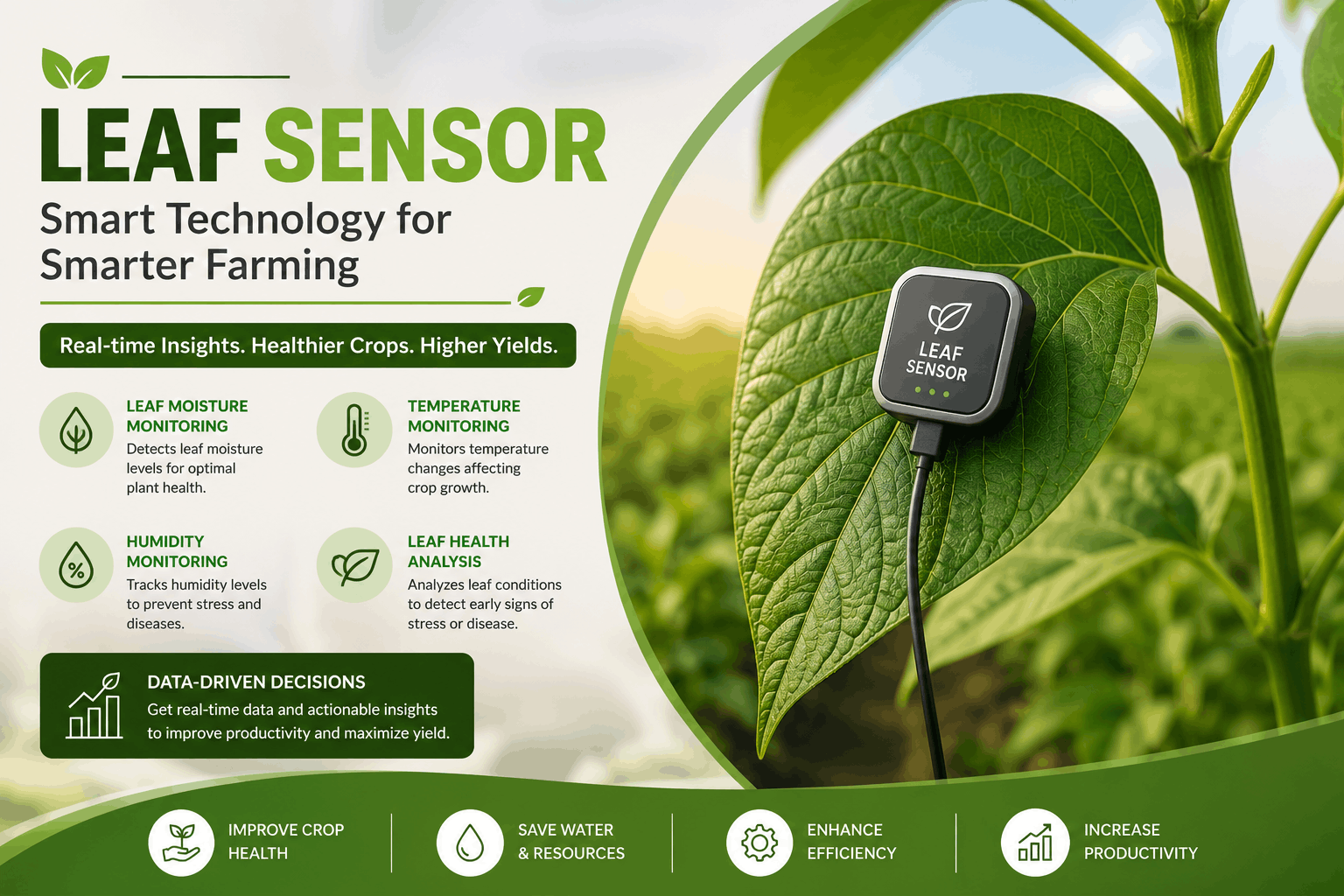
Plant health assessment via technology has become an ever increasing area of importance within modern agricultural methods and monitoring of the environment. Leaf Sensors have proven to be the most effective method of monitoring the health of a plant. In doing this, the Leaf Sensor provides a means for the farmer, researcher, or greenhouse operator to monitor the condition of their plants quickly and effectively, thus producing healthier crops and a higher quality product overall.
As technology continues to propel the demand for smart farming, the demand for quality and reliable products from Sensor Mart has increased from producers, businesses, and professionals alike. Leaf Sensors from Sensor Mart can be relied on for their high level of accuracy, reliability, and efficiency.
What Is a Leaf Sensor?
Leaf Sensors are designed to assist in monitoring the following conditions related to the leaves of plants: moisture content, wetness, temperature, and general health of the plant. With the help of Leaf Sensors, users can obtain real-time data to assist them in making decisions regarding irrigation, crop management, and disease prevention. Leaf Sensors are commonly used in:
- Smart agriculture
- Greenhouses
- Weather stations
- Research laboratories
- Precision farming systems
By monitoring leaf conditions accurately, growers can improve crop quality and reduce resource wastage.
How Does a Leaf Sensor Work?
A Leaf Sensor works by detecting environmental and physical changes on the leaf surface. Depending on the sensor type, it may measure:
- Leaf wetness
- Moisture levels
- Temperature
- Humidity impact
- Water presence
The sensor collects data and converts it into electrical signals that can be monitored through agricultural systems or automation platforms.
Modern Leaf Sensors often integrate with IoT-based farming systems, allowing farmers to track plant conditions remotely using smartphones or computers.
Why Is a Leaf Sensor Important?
Monitoring plant conditions manually can be time-consuming and inaccurate. A Leaf Sensor helps automate the process and provides precise information that improves crop management.
Key Benefits of Using a Leaf Sensor
Better Irrigation Control
Leaf Sensors help farmers understand when plants actually need water, reducing overwatering and underwatering issues.
Disease Prevention
Excess moisture on leaves can lead to fungal infections and crop diseases. A Leaf Sensor helps detect risky conditions early.
Improved Crop Yield
Healthy plants produce better-quality crops and higher yields.
Water Conservation
Efficient irrigation management reduces unnecessary water usage.
Real-Time Monitoring
Users can monitor plant health continuously without manual inspection.
Applications of Leaf Sensors
Leaf Sensors are widely used across multiple industries and agricultural environments.
1. Smart Farming
Precision agriculture systems use Leaf Sensors to improve irrigation efficiency and crop health management.
2. Greenhouses
Greenhouse operators use sensors to maintain ideal growing conditions for plants.
3. Weather Monitoring Systems
Leaf wetness data helps predict plant disease risk based on environmental conditions.
4. Agricultural Research
Researchers use Leaf Sensors to study plant behavior, growth patterns, and environmental effects.
5. Vineyard Monitoring
Wine producers use Leaf Sensors to protect grape crops from moisture-related diseases.
6. Horticulture
Nurseries and horticulture businesses use sensors for plant maintenance and efficient watering.
Why You Should Buy a Leaf Sensor
Investing in a high-quality Leaf Sensor can significantly improve farming efficiency and crop management.
Save Water and Reduce Costs
A Leaf Sensor helps optimize irrigation schedules, reducing water waste and lowering operational costs.
Protect Crops from Disease
Early moisture detection can prevent fungal infections and reduce crop damage.
Increase Productivity
Healthy plants grow faster and produce better-quality output, improving profitability.
Support Smart Farming
Modern agriculture is moving toward automation and data-driven decisions. A Leaf Sensor helps farmers stay ahead with smart monitoring capabilities.
Easy Integration
Many modern sensors can integrate with automation systems, weather stations, and IoT platforms.
For reliable and accurate sensing solutions, Sensor Mart offers advanced Leaf Sensors suitable for agricultural, research, and commercial applications.
How to Choose the Best Leaf Sensor
Selecting the right Leaf Sensor depends on your application requirements and environmental conditions.
Important Factors to Consider
Accuracy
Choose a sensor that provides stable and precise readings.
Durability
Outdoor agricultural environments require weather-resistant sensors.
Compatibility
Ensure the sensor can integrate with your existing monitoring system.
Response Time
Fast response sensors help detect changing conditions quickly.
Maintenance Requirements
Low-maintenance sensors reduce long-term operational effort.
Connectivity
Some advanced sensors support wireless and IoT-based communication for remote monitoring.
At Sensor Mart, customers can find dependable Leaf Sensors designed for long-term performance and accurate monitoring.
Advantages of Buying Leaf Sensors from Sensor Mart
Choosing the right supplier is just as important as selecting the right sensor.
Why Sensor Mart Is a Trusted Choice
- High-quality sensing solutions
- Accurate and reliable performance
- Durable products for agricultural use
- Competitive pricing
- Technical support assistance
- Sensors suitable for multiple applications
Whether you are managing a greenhouse, farm, or research project, Sensor Mart provides reliable Leaf Sensors to support efficient plant monitoring.
Future of Leaf Sensors in Smart Agriculture
As agriculture becomes more technology-driven, the role of Leaf Sensors is expected to grow significantly. Future sensors may include:
- AI-based crop analysis
- Wireless cloud monitoring
- Solar-powered operation
- Advanced disease prediction
- Fully automated irrigation integration
These innovations will help farmers increase productivity while reducing environmental impact.
Conclusion
The Leaf Sensor plays an important role in today’s world of agriculture by allowing users to better manage their plants, provide efficient delivery of irrigation water to the plant, identify disease before it spreads through the crop and increase productivity. Leaf Sensors are used in greenhouse and precision farming applications as part of the intelligent management process of the crop.
When you search for Leaf Sensors you want to ensure that the specific Leaf Sensors you select offer you the best quality and accuracy available today; at Sensor Mart you will find Leaf Sensors that have been developed specifically for both agricultural and environmental monitoring. An investment in the right sensor can help improve the health of your crops and minimize water waste, while also supporting the improvement of an intelligent farming system.
FAQs About Leaf Sensors
1. What is a Leaf Sensor used for?
A Leaf Sensor is used to monitor leaf moisture, wetness, and plant conditions to improve irrigation management and crop health monitoring.
2. How does a Leaf Sensor help in farming?
Leaf Sensors help farmers optimize watering schedules, prevent plant diseases, and improve crop productivity through accurate monitoring.
3. Can Leaf Sensors be used in greenhouses?
Yes, Leaf Sensors are widely used in greenhouses to maintain ideal environmental conditions for plant growth.
4. Are Leaf Sensors weather resistant?
Many modern Leaf Sensors are designed for outdoor agricultural use and come with weather-resistant protection.
5. Why should I buy a Leaf Sensor from Sensor Mart?
Sensor Mart offers reliable, durable, and accurate Leaf Sensors suitable for smart farming, research, and greenhouse applications.
6. What should I consider before buying a Leaf Sensor?
Before purchasing a Leaf Sensor, consider factors such as accuracy, durability, compatibility, response time, and connectivity options.




Leave a Reply