
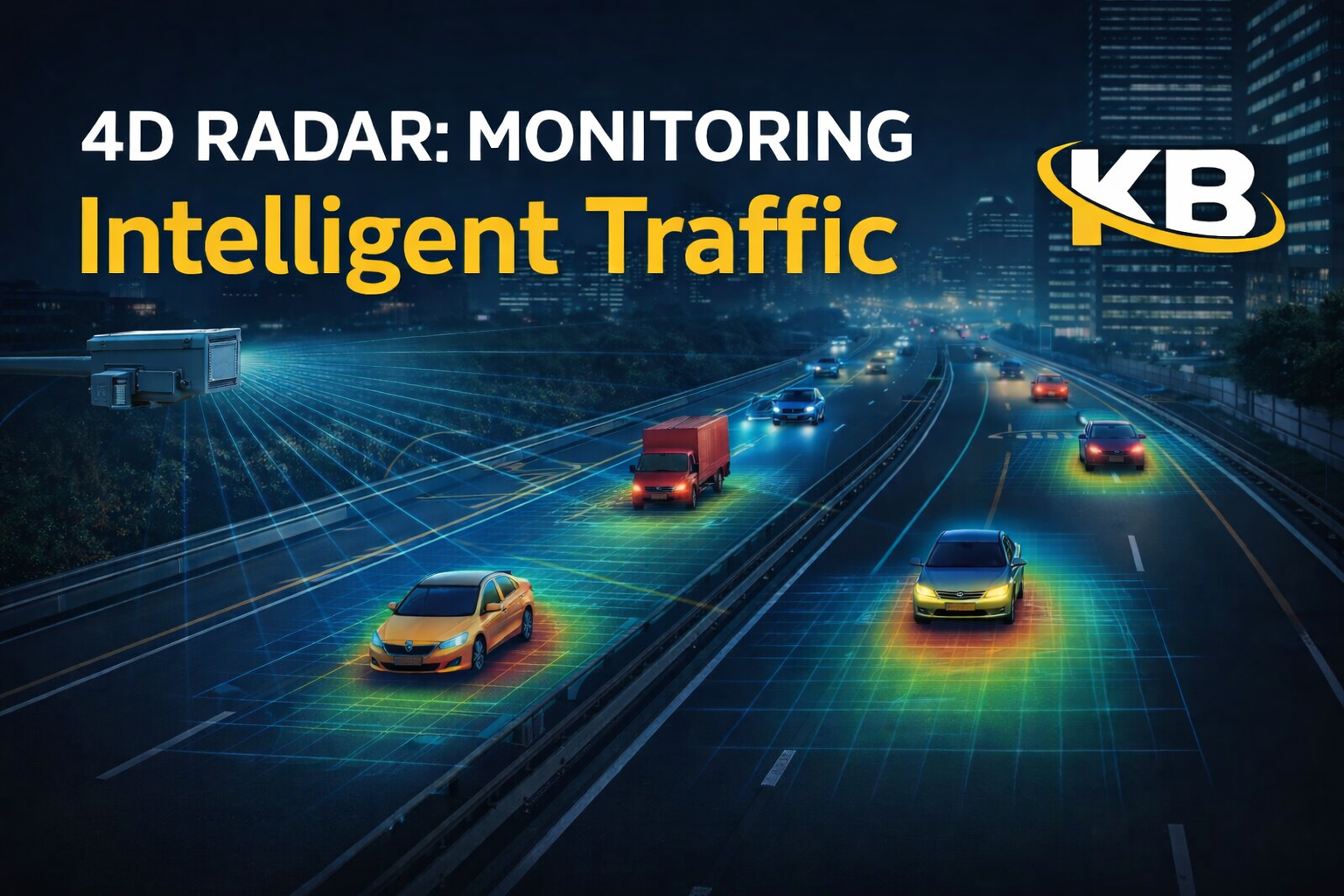
The transportation ecosystem is ever-changing. This has brought about the arrival of new technologies that are doing things automatically now (e.g. 4D Radar), as opposed to manually (e.g. sensors). The new technologies have improved how highways, expressways, smart cities and traffic authorities track the movement of vehicles from one location to another. As roadways continue to get congested, real-time data for better understanding traffic patterns and automobile movement through intelligent transportation systems (ITS) is becoming more important than ever. Therefore, the use of 4D Radar technology in traffic management is critical. Sensor Mart
At Sensor Mart, we are providing advanced method(s) of using 4D Radar within our applications to obtain data which allows for accurate measurements regarding the detection of above-mentioned situations. Through this document, we will discuss what 4D Radar technology is, its benefits, how it processes collected information and reasons it will serve as the future measurement tool(s) for managing traffic.
What is 4D Radar?
4D Radar is an advanced type of radar that can observe items in four dimensions: range (distance), azimuth (horizontal angle), elevation (vertical angle) and speed (using the Doppler effect). In contrast to past 2D and 3D types, 4D RADAR sensors will provide very precise and simultaneous positioning of both active and passive objects and velocity data. Because of these attributes, 4D RADAR is well suited for expressways, toll plazas, smart intersections, traffic enforcement systems and autonomous mobility infrastructure solutions.
How Does Radar Work?
Radar sensors working in four-dimensional space transmit radio frequencies and receive reflected waves from either moving or stationary objects such as vehicles, people, and obstacles. By processing these signals, the system can identify the following items with high precision:
– Where exactly is the vehicle located?
– What is the speed and direction of the vehicle?
– What is the height and lane location of the vehicle?
– How many targets are present at a given time? (i.e., multiple target tracking)
The advanced signal processing algorithms employed in radar systems provide for accurate tracking under difficult conditions such as rain, fog, dust, or low-light conditions, where cameras will often not provide the same level of performance.
At Sensor Mart we design our solutions using radar technology that operates under all weather conditions: providing continuous traffic surveillance throughout the day through 365 days a year, without interruption. Visit our Website
Key Features of 4D Radar
Here are the benefits of 4D Radar technology when compared to conventional traffic sensors:
1. High-Resolution Object Detection: 4D Radar can accurately detect vehicles on the roadway, with centimetre-level accuracy, regardless of the number of lanes separated by dividers.
2. Multi-Lane Coverage: By having one Radar radar unit covering several lanes, the investment in infrastructure can be reduced.
3. Real Time Speed Measurement: The use of Doppler-based measurement has provided accurately measured speeds for traffic enforcement, which is an important factor in such cases.
4. Vehicle Classification: The Radar system can detect how large each of the vehicles on a roadway is and classify them as either cars, buses, trucks and two wheelers based on how they reflect back to the sensor.
5. All Weather Performance: Unlike cameras, the radar technology doesn’t have any limitations on operating in any of the conditions found with rain, fog, snow or darkness.
6. Non-Intrusive Installation: 4D Radar sensors can be installed without having to cut into the concrete or install loops in the pavements; they can be installed at the side of the road or suspended from above.
Applications of 4D Radar
The applications of the radar system are expanding within both commercial and public sector solutions, thus there are many different uses.
Traffic Authorities will be able to monitor traffic congestion, detect traffic violations, and optimize signal operation using 4D radar traffic management systems.
High-Speed Corridors will be able to track and detect incidents for traffic on expressways or highways using accurate vehicle tracking provided by the traffic sensors from 4D radar.
Smart Cities can use 4D radar technologies to determine the density of vehicles on their roads and enable the implementation of an adaptive control system for traffic management purposes.
Automated Tolling: The automated tolling systems will utilize 4D radar technologies to detect and classify vehicles real-time.
Autonomous Mobility systems will have the ability to detect objects, avoid collisions, and navigate with the help of 4D radar sensors.
Sensor Mart is committed to supplying reliable solutions, using 4D radar technologies for expressways, urban roads, and Intelligent Transportation systems throughout India.
Why Choose Sensor Mart?
The selection of a qualified supplier is vital to the successful integration of 4D radar technology into your organisation. Sensor Mart has established itself as the premiere source of radar systems for the following reasons:
Supply of advanced and highly accurate radar sensors
Customisation of systems based on individual customers’ requirements – for example, highways and smart cities
Provision of technical support and guidance on system installation
Proven reliability in the Indian environmental context
Provision of competitive prices for large-scale applications
The Future of Radar Technology
The need for radar traffic sensors is increasing fast with governments developing smart infrastructure. When these radar systems use AI, Cloud, and Edge computing, they can also:
Predict traffic patterns
Detect accidents automatically
Work with V2X communication
Help create better safety.
So, as transportation networks go “Smart,” they will also have a major role in reducing congestion on roads, increasing safety on roads, and assisting with autonomous mobility.
Conclusion
The development of the 4D radar technology is changing the face of traffic management; improving smart mobility and the overall transportation system. The extremely accurate and reliable all-weather and multi-lane capabilities that the 4D radar sensors have become the backbone of modern day road infrastructures.
If you are about to upgrade your current traffic monitoring system consider utilizing the advanced 4D radar solutions offered by sensor mart. With our technical expertise, quality products, and ongoing support we are able to help keep your transportation infrastructure running smoothly and at a high level of efficiency throughout its life cycle. Sensor Mart
Count on Sensor Mart for your advanced radar traffic monitoring system as your source for high quality sensor technology.
FAQs
1. What makes 4D Radar different from 3D Radar?
4D Radar adds velocity detection using Doppler technology along with range, azimuth, and elevation. This provides more precise object tracking and real-time speed measurement.
2. Can 4D Radar work in heavy rain or fog?
Yes. One of the biggest advantages of 4D Radar traffic sensors is their ability to operate efficiently in poor weather and low-light conditions.
3. Is 4D Radar suitable for multi-lane highways?
Absolutely. A single 4D Radar system can monitor multiple lanes simultaneously, making it ideal for expressways and high-speed corridors.
4. Does 4D Radar require road cutting for installation?
No. Unlike inductive loop detectors, 4D Radar sensors are non-intrusive and can be mounted roadside or overhead.
5. How accurate is 4D Radar for speed detection?
4D Radar provides highly accurate Doppler-based speed measurement, making it suitable for traffic enforcement and speed monitoring.
6. Where can I buy reliable 4D Radar in India?
You can purchase high-quality 4D Radar solutions from Sensor Mart, a trusted provider of advanced traffic monitoring systems.


Leave a Reply