
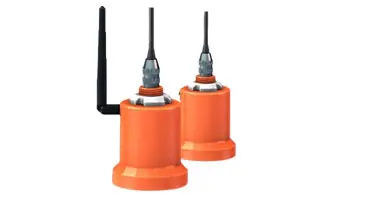
The Smart Solution for Precision Level Measurement
In the modern industrial era, accurate and reliable level measurement is imperative in various industry areas such as water resources management, chemistry, food & beverages, and power generation. Beginning with health and safety in storage tanks to other automated liquid control processes, quality level sensing solutions have the capability to be the deciding factor in all aspects. Among different available choices, radar level sensors have emerged as accurate, rugged, and versatile options.
In this blog, we will delve into what radar level sensors are, how these work, their superiority over conventional radar level measurement technologies, and why such sensors have become a preferred choice over others. Also, we will provide relevant pointers to SensorMart radar level sensor products and blogs.
What Is a Radar Level Sensor?
A radar level sensor is a type of device that employs the use of electromagnetic waves—radio detection and ranging specifically—to measure the level of a liquid or solids storage in a tank or a container. While some sensors make use of touching the substance or sound waves to measure the desired levels, radar level sensors involve the use of high frequency waves that are reflected back by the surface of the desired substance measured.
In the case of SensorMart, the technology is represented by FMCW Radar Level Transmitter (SHRD80G), which functions in the frequency band of 76-81GHz. This is a high frequency technology that offers good resolution in measurement, less blind zone zone angle, and better stability in complex environments.
How Radar Level Sensors Work
The basic working principle behind radar level sensors is quite simple:
The sensor sends a radar signal towards the surface of the material.
The electromagnetic waves propagate through the air and reach the surface.
The waves are reflected back to the sensor. Sensor Mart
The internal electronics are responsible for the time difference between the time of transmitting the data and the time the
This delay enables the sensor to calculate the distance to the surface and, by extension, the level of material in the container.
Almost all modern radar level gauging transmitters utilize a principle referred to as FMCW (Frequency Modulated Continuous Wave), whereby a wave with a constantly varying frequency is pulsed out. Because of this principle, this device can determine distance as well as sometimes velocity with very high accuracy.
Advantages of Radar Level Sensors
Radar level sensors have several key advantages over other conventional methods, such as ultrasonic, float, or pressure measurement systems. The reasons why radar sensors have become the preference of this industry can be listed below:
1. Non-Contact
In addition, radar sensors do not require make contact with the surface of material being measured and therefore find practical applications in hygienic and environments that contain a dangerous and sticky medium.
2. Unaffected by Environmental Conditions
These work well even at low temperatures, pressure change, dust, or steam and vapors. In contrast to ultrasonic sensors, humidity or temperature do not work as factors affecting radar measurements.
3. High Accuracy and Reliability
High frequency radar (76-81 GHz) provides high accuracy with millimeter-levelresolution. It also avoids interference caused by components of tanks such as ladders or agitators because of its angled narrow beam.
4. Maintenance-Free Operation
Radar sensors are non-moving and environmentally sealed, making them less in terms of the amount of restoration required compared to mechanical sensors.
5. Applicable Both to Liquids and Solids
Whether it is a water level in tanks or bulk materials in silos, radar technology is able to adjust to a variety of applications.
Typical Applications of Radar Level Sensors
The applications of radar level sensors in industries include:
1. Water and Wastewater – Water
Reservoir, tank, or basin levels can be continuously monitored to help the water utilities in managing the demand, avoiding overflows, and aiding in the treatment processes.
2. Chemical and Petrochemical Industry
Radar Technology can process corrosive liquids that are viscous and/or potentially hazardous with ease and with a less frequent cleaning/m
3. Food & Beverage Processing
Non-touch measurement guarantees hygienic conditions in the fermentation process, syrups storage, mixing tanks, and more.
4. Bulk Solids & Storage
It can well measure the amount of grain, powder, or pellets in a silo since dust may hinder the operation of the sensor.
5. Energy and Power Plants
Tanks in power plants can sometimes experience high temperatures or high pressure. The radar level sensors work accurately in situations where other sensors fail.
Choosing the Right Radar Level Sensor
When choosing a radar level sensor, keep in mind:
Frequency Bands: Bands of higher frequency (for example, 76GHz to 81GHz) offer improved accuracy and smaller beamwidths.
Range:
Make range of sensor compatible with height of tank.
Installation and Integration:
Verify compatibility with your process control systems (PLC and SCADA).
Material of Construction
Stainless steel or robust materials make them more durable in rugged conditions.
Output Options:
Look for common industrial interfaces such as 4–20 mA, Modbus, or HART for ease of interface.
A good example of advanced radar technology, combined with ease of installation and portability, can be seen in the FMCW Radar Level Transmitter of SensorMart.
Real-World Example: SensorMart Radar Products
SensorMart offers various radar and related sensing products. Although some products address radar distance measurement, in all of them, the basic technology remains the same, which utilizes electromagnetic waves for accurate and reliable detection. For instance, IDR-2050, a radar sensor, works at 60 GHz for accurate distance measurement and can be used for level monitoring applications in appropriate combinations.
Their radar blogs also encompass other issues such as radar sensor selection and applications of radar within various industries.
Their radar blogs also encompass other issues such as radar sensor selection and applications of radar within various industries.
Their radar blogs also encompass other issues such as radar sensor selection and applications
Conclusion
Radar level sensors have brought about a revolution in level measurement through non-contact levels that are very accurate. From water treatment plants to chemical storage systems or even the food industry, radar level sensors have proven to be more reliable than others.
Innovations in FMCW radar technology and advances in operating frequencies make radar sensors not only more precise but more cost-effective and simple to implement than ever. The cost implication of choosing to use radar level detection means improved process control, reduced maintenance, and enhanced safety for various applications.
FAQs
1. What is a radar level sensor used for?
A radar level sensor is also used to determine the level of liquids or solids in tanks, silos, and containers. It utilizes the electromagnetic radar waves to deliver precise, non-contact measurements, even in industrial conditions.
2. How does a radar level sensor work?
In operation, radar level sensors send high-frequency electromagnetic waves towards the surface of the material. Reflection of waves back to the sensor provides the time delay used to measure the distance and level of the material.
3. What are the main advantages of radar level sensors?
Key advantages include high accuracy, non-contact measurement, resistance to dust, steam, and temperature changes, low maintenance, and reliable performance in challenging conditions.
4. Can radar level sensors measure both liquids and solids?
Yes, radar level sensors are suitable for measuring liquids, powders, granules, and bulk solids, making them ideal for industries such as water treatment, chemicals, food processing, and agriculture.
5. How are radar level sensors different from ultrasonic sensors?
Unlike ultrasonic sensors, radar level sensors are not affected by humidity, vapor, foam, or temperature changes. This makes radar sensors more reliable in industrial environments with dust, steam, or turbulent surfaces.
6. Are radar level sensors suitable for harsh industrial environments?
Yes, radar level sensors are specifically designed for harsh conditions, including high temperature, pressure, corrosive media, and outdoor installations, offering long-term stability and minimal maintenance.


Leave a Reply