
Affordable Precision Farming for Every Grower
Farming and gardening nowadays are very much data-informed. In a conventional soil testing procedure, soil samples are sent to a lab and test results take a couple of days, whereas in today’s scenario, soil sensors have made it possible to understand the data right in the garden or farmland itself. Among all soil sensors, “Soil NPK Sensor” is a revolutionary tool in identifying soil fertility levels and using fertilizers in a better manner. In today’s blog, we will know about what is soil NPK sensor, its importance, how to buy a soil NPK sensor costing below ₹1000, and its implementation in everyday gardening or farming practices.
What is a Soil NPK Sensor?
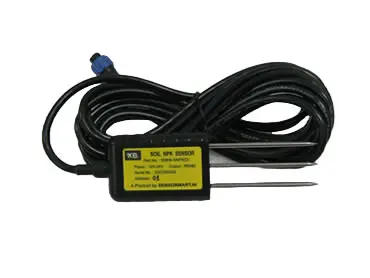
A Soil NPK Sensor is a tool used to detect the amount of three main nutrients in a soil. These nutrients include:
Nitrogen (N)
Phosphorus (p)
Potassium (K)
These three constituents are collectively known as NPK, and these are required for the growth of plants and have a direct effect on the plant’s health and development. The observation of the NPK levels will help the gardener understand the fertility of the soil.
Sensor Mart writes that the NPK sensor is designed to analyze and determine the levels of nitrogen, phosphorus, and potassium within soil so that one can assess its richness and act accordingly.
Why Soil NPK Matters for Your Plants
Soil fertility is important to bear in mind in order to keep crops healthy. Insufficient NPK causes deficiencies in crops, inhibiting their growth. However, excess NPK in the soil causes losses due to environmental pollution. There are many important benefits to using an NPK soil sensor:
1. Improved Fertilizer Management
Rather than trying to estimate how much fertilizer to use, you can adjust depending on what levels are present. Such approaches make farming or gardening more cost-effective.
2. Real-time Monitoring
The sensors will give you instant results regarding soil nutrients. Compared with doing soil tests in the lab, which would take days, the Soil NPK sensors will enable you to act immediately, which is important during the critical phase of growth.
3. Benefits of Precision Agriculture
In bigger fields, nutrient levels vary over the area. Nutrient mapping can be done through different locations where you apply the use of NPK sensors. This increases yield and reduces the cost of fertilizer.
4. Sustainability & Environmental Protection
Too much fertilizer can result in runoff and contamination of nearby water sources. This can be avoided by proper nutrient management.
How Does a Soil NPK Sensor Work?
Electrochemical sensors are commonly employed in the most inexpensive soil NPK sensors to objectively calculate the nutrient content. The sensors depend on electrical properties, which are affected by the ions in the nutrients.
The average installation entails:
Placing the probe of the sensor into the soil with the intended depth.
To allow it to stabilize for a few minutes.
Reading the output using either controller, microcontroller such as Arduino, or display. soil NPK sensor
Industrial units utilize communication protocols such as RS485 for data transmission to computers or monitoring systems.
Choosing an NPK Sensor
The price for high-range NPK sensors as well as soil stations may go up to several thousand rupees, but for the cheaper option, soil NPK sensors are available for under ₹1000. Here are a few things to look for in a cheap soil NPK sensor:
1. Accuracy and Reliability
If costing less than ₹1000, the accuracy assured by the NPK sensors may not be laboratory grade quality. Nevertheless, relative estimations may still be possible with the help of these sensors.
Tip: Check for sensors with a defined measuring range (e.g., 0-2000 mg/kg) and appropriate resolution (e.g., 1 mg/kg).
2. Build Quality
Even low-cost sensors should be robust to withstand use in the outdoor environment. Materials used in probes, such as stainless steel, along with waterproofing (commonly IP68), assure long life.
3. Communication and Compatibility
The majority of budget sensors are designed to supply an analog voltage (0-5V) or follow simple digital protocols. The capability to interface with microcontrollers (Arduino, ESP32) is an advantage if data needs to be logged or decisions automated.
4. Calibration & Support
Inexpensive sensors can also drift as time passes. It’s easy to find products that come with simple instructions for calibration or offer solutions from
Top Affordable Soil NPK Sensor Options (Approx.)
These are examples of NPK and other similar soil sensors that would or do fall within or around the affordable range (under ₹1000-₹1500 depending on offers):
Basic Soil NPK Probe Modules – can often be used with Arduino platforms for relative NPK value estimates.
Two-or-Three Electrode Sensors – provide approximate nutrient indicators. Two-or-Three Electro
DIY Sensor Kits
– integrate sensor with basic ADC and microcontroller.
Installing and Using Your NPK Sensor
To achieve accurate data from low-cost soil NPK sensors:
1. Prepare the site
Pick a typical area in your garden or field. This should be avoided in areas where the soil is rocky. Make sure that you drive the probe to the right depth.
2. Insert Carefully
Insert the sensor upward into the ground. Do not turn or sweep the sensor diagonally to avoid errors.
3. Stabilize Before Reading
Leave the sensor in the soil for a few minutes in order for it to adjust to the soil conditions.
4. Take Multiple Readings
Read values at intervals and take an average reading of the soil condition. soil NPK sensor
5. Fertilization
According to the trend and not magnitude, you will adjust your fertilizer application to promote soil nutrient balance.
Beyond Basic NPK: When to Upgrade
Although the basic NPK sensor can be useful for those who are beginning to cultivate or those who like to experiment in gardening, a professional farmer or agronomist may find a device that can determine the following values useful:
- pH
- Electrical Conductivity (EC)
- Moisture
- Temperature
These multi-spectral units give a comprehensive insight into the status of the soil, especially in precision farming.
Common Challenges and Misconceptions
“Cheapest Sensors Don’t Work at All”
Some hobbyists online argue that the low-cost probes are not very accurate since they estimate nutrient levels indirectly. This kind of feedback is common in DIY communities; it’s partly true—these sensors are less precise than lab equipment.
“NPK Sensors Replace Lab Tests”
While sensors provide fast and efficient reading, comprehensive soil analysis-especially when official agricultural decisions are involved-still benefits from periodic lab testing. Sensors perform best in tracking trends and conducting quick checks.
Conclusion
Absolutely—and this is particularly true if you aim to go beyond estimation and allow scientific understanding to guide your agricultural pursuits. The value of soil NPK sensors in the ₹1000 price range cannot be overstated, and this is true as long as absolute measurements are not the aim.
FAQs
1. What is a soil NPK sensor used for?
The soil NPK sensor is employed for measuring the Nitrogen (N), Phosphorus (P), and Potassium (K) content in the soil. The major constituents required by plants for growing are Nitrogen, Phosphorus, and Potassium, and measurement of their content helps in deciding fertilizers effectively.
2. How accurate are soil NPK sensors?
NPK sensors for soil are approximate and relative, especially for lower-end models. They are not necessarily as accurate as laboratory analysis, but they are great for trending and soil testing.
3. Can soil NPK sensors replace laboratory soil testing?
No, because soil NPK sensors do not fully replace lab tests. Lab tests should still be done for official agricultural analysis. Nonetheless, soil NPK sensors work best for monitoring and soil analysis done on a regular basis.
4. How does a soil NPK sensor work?
Most soil NPK sensors work using electrochemical or electrical conductivity principles. They detect changes in soil properties caused by nutrient ions and convert them into readable nutrient values.
5. Are soil NPK sensors suitable for home gardening?
Yes, soil NPK sensors are excellent for home gardens, lawns, and potted plants. They help gardeners avoid over-fertilization and ensure balanced nutrient supply for healthier plant growth.
6. Can I use a soil NPK sensor with Arduino or ESP32?
Yes, many soil NPK sensors support analog output or RS485 communication, making them compatible with Arduino, ESP32, Raspberry Pi, and other microcontrollers for IoT-based farming projects.



Leave a Reply