
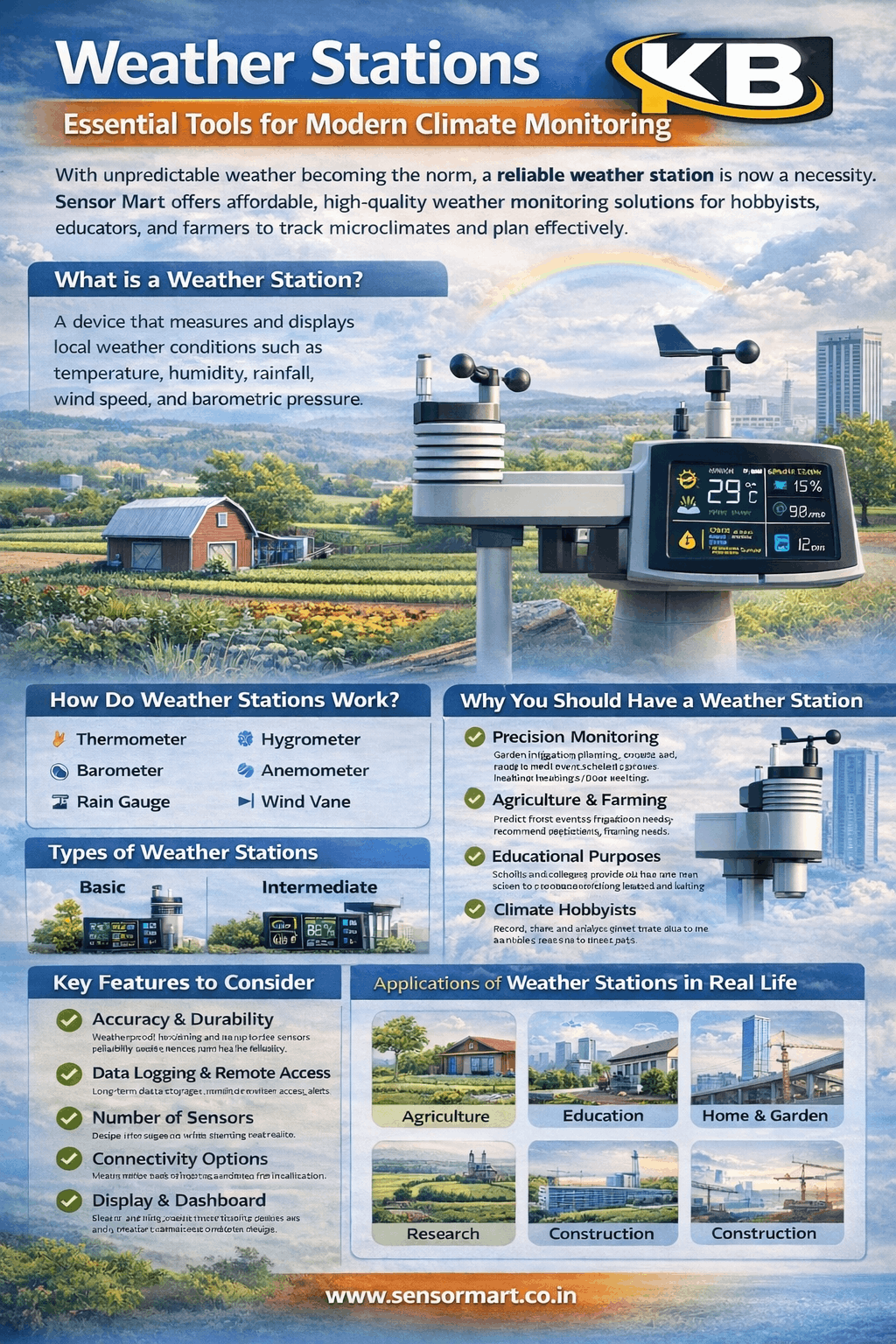
At the time when climate patterns are turning out to be more unpredictable, a weather station that one can rely on has become more of a necessity rather than a luxury nowadays. You might be a hobbyist and need to understand the micro climate in your garden, or you might be a teacher teaching physics at school, or you might also be a farmer who needs to know how to plant your crops at the most opportune time, a high quality weather station will provide you with the data you need, right at your fingertips.
At Sensor Mart we realize that there is a necessity to have correct cheap and easy to use weather monitoring tools. This blog will discuss what a weather station is, why it is important, how to select a weather station, the main characteristics that one should look after, the real life examples and the most common questions. Product page
What Is a Weather Station?
A weather station is an apparatus used to determine the weather conditions like temperature, humidity, rainfall, speed of the wind and barometric pressure. These devices measure weather and show the information in the immediate area or send it to an application, a web page, or a server. Sensor Mart
On the simplest level, weather stations can make you know what is happening in local weather. Sophisticated models can go to the extent of predicting the short term conditions based on sensors and algorithms.
How Do Weather Stations Work?
Weather stations have one or more sensors- each has a specific parameter of weather it measures:
Thermometer -Determines the temperature of air.
Hygrometer- Systems used to measure the level of humidity.
Barometer- Measures the atmospheric pressure.
Anemometer- Reads the speed of wind.
Rain Gauge -Measures rain.
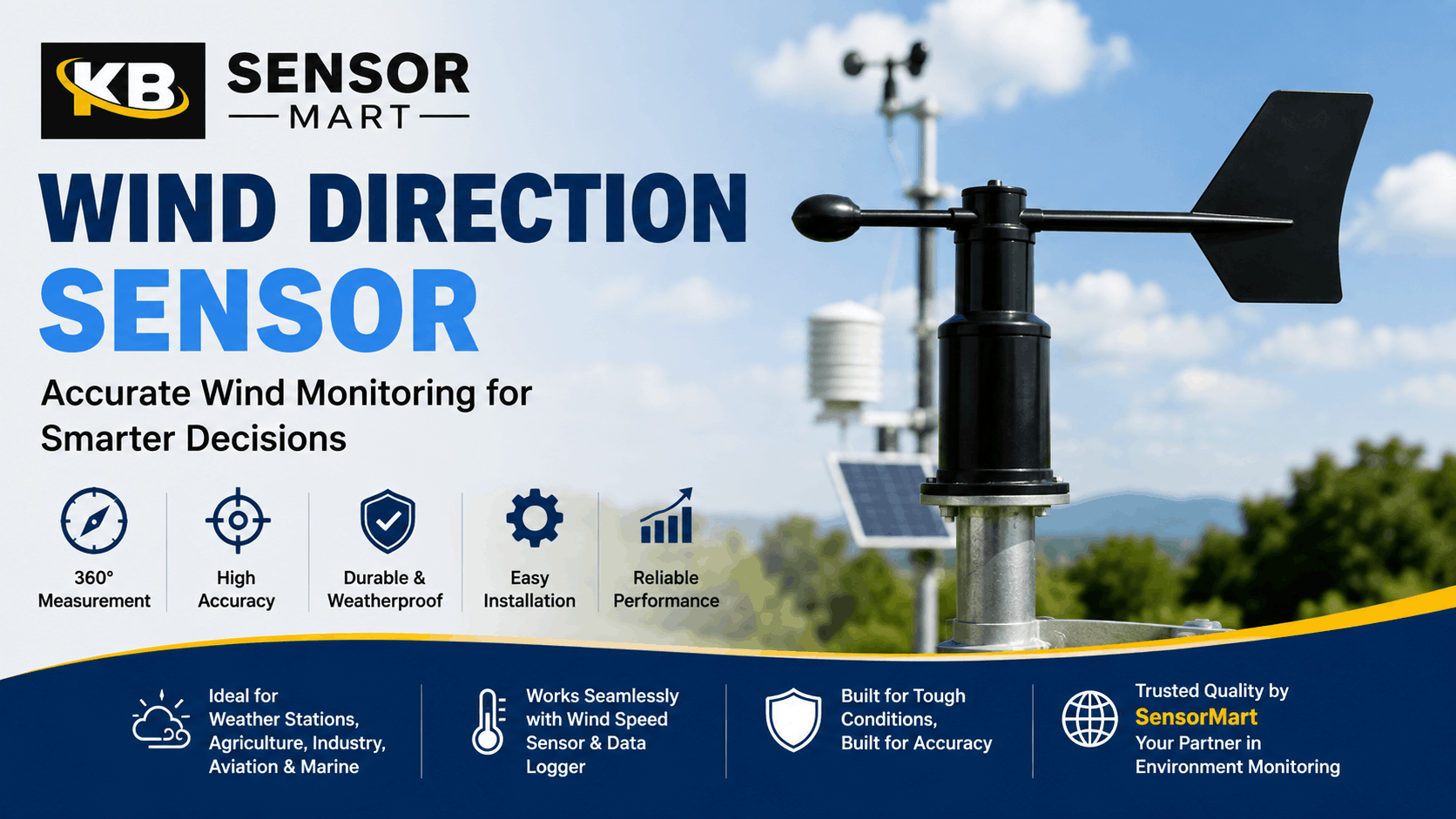
Wind Vane – Indicates wind direction.
These sensors measure information at a specific time at an even rate and transmit this data to a control unit. This information is often sent wirelessly by many modern weather stations to mobile applications or cloud dashboard to access it in real time and analyze it in the long run.
The Reason Your Home or Business Should have a Weather Station.
1. Weather monitoring follows the approach of precision.
The general weather forecasts of the public are helpful, but they are general regional. A personal weather station provides hyper local information, specific to your location. This data can be crucial for:
Garden irrigation planning
Outdoor event scheduling
Observing heating/ cooling needs.
2. Agriculture and Farming
Weather information is used by farmers in decision making concerning planting and irrigation and crop protection. A weather station can help by:
Predicting frost events
Irrigation Rain water monitoring.
Recommendation of pesticides/fertilizers timing.
3. Educational Use
The use of weather monitoring in science is becoming part of schools and college curricular efforts. The weather station will be used to gain practical experience and real-time data to support meteorology lessons and data analysis assignments as well as science fair projects.
4. The Climate-Lovers and Amateurs.
One of the most popular hobbies is weather tracking all over the world. Weather stations allow the amateurs to register and share their data, compare trends with time and even involve themselves in global climate platforms.
Types of Weather Stations
1. Basic Weather Stations
These detect critical measurements such as temperature and humidity. They are cost friendly, easy to install, and can be used at the home.
2. In between Weather Stations.
These include an addition of features such as the wind velocity, wind direction, and rainfall. They are fitted to small farms, agricultural monitoring and schools.
3. Weather Stations: Professional.
They are designed with high-precision sensors and advanced data logging as well as to be used by meteorological organizations and research institutions, although frequently incorporated into cloud platforms to get analyzed.
At Sensor Mart, we have quality weather sensors of various levels of entry and sophisticated to suit any requirements and financial capability.
Important Characteristics to consider Before purchase.
The following are some of the considerations when purchasing a weather station: Sensor Mart
1. Number of Sensors
The greater the number of sensors the greater the amount of weather information. Choose the required parameters of your application.
2. Accuracy and Durability
Seek stations that have weather proof housings and exact sensors in order to withstand the weather.
3. Connectivity Options
The modern weather stations are integrated with smartphones through Wi-Fi, Bluetooth or in-house applications. The benefits include real time alerts and remote monitoring.
4. Data Logging
Other models are able to store data over extended periods of time allowing trend-following of data, which is useful in climate studies and in long-range planning.
5. Display and Dashboard
The interface is clear and therefore simplifies the interpretation of data. There is enhanced accessibility with cloud dashboard support.
Advantages of Sensor Mart Cloud Weather Station.
1. Superior Quality
Sensor Mart offers weather sensors that are durable and high performance and are able to provide accurate information that is reliable in every day of the week.
2. Competitive Pricing
Sensor Mart has weather stations that suit your pocket whether you are a novice or need a professional installation purposely.
3. Easy Installation
The plug-and-use models of Sensor Mart involve the easy installation that does not require the services of a professional.
4. Real-Time Data & Alerts
Uninterrupted access to applications and dashboards will allow you to remain updated on the changes in the weather.
5. Excellent Support
Sensor Mart offers customer services and advice to assist their customers make the best choices and maintain their weather stations at the best.
Weather Station Applications in the real world.
Weather stations are not merely devices but they are useful devices that can improve decision-making:
Sector Application
Agriculture: Agro-planning, frost warning.
Education: Meteorology classes/scientific studies.
Home & Garden: Outdoor scheduling, plant care.
Research: Data collection and trend analysis of climate.
Construction: Weather based planning.
With a properly set up weather station, time may be saved, losses minimized, and planning in various industries enhanced.
The Uses of Weather Data to make better decisions.
With your personal weather station you can:
Regulate irrigation using actual rainfall information.
Provide defense against harsh weather.
Plan outdoor activities in a better way.
Keep track of microclimate change in your house.
Gather past information to use in planning.
And with all that is going on in the climate system in the world, the accurate data is the most important ever, and it is the weather station that provides you with the data directly.
FAQs
1. How can I monitor the weather at home in the cheapest way possible?
The cheapest option to begin with is a simple weather station that will be used to measure the temperature and humidity. The models are cost efficient and easy to install.
2. Are weather stations of Sensor Mart accurate?
Sensor Mart weather stations have high-precise sensors, which are built to provide dependable and precise data that can be used in homes, in schools and in workplaces.
3. Is the installation of weather stations professional?
The majority of consumer weather stations, particularly those of Sensor Mart, can be easily installed following easy guidelines. It does not normally require professional set up.
4. Is it possible to see my weather station information away?
Yes. Most weather stations in the modern world are wireless capable and can be used to remotely monitor and transmit data to mobile applications or dashboards.
5. Where can weather station sensors be found?
When well maintained, weather station sensors can last a few years. Sensor Mart units are offered on high durability even in extreme outdoor conditions.
6. Would weather stations be of benefit to farmers?
Absolutely. Weather stations are used to guide farmers in their irrigation arrangements, forecast frost and make informed decisions based on data that enhance crop yield and minimise losses.
Conclusion
Weather stations have become a most important device in the current dynamic climate environment. It could be that you are keeping an eye on your backyard, a farm, or even have a classroom of experiments, a well-built weather station will provide you with real-time data that can enable you to make smarter decisions.
Sensor Mart offers various weather sensors of different quality and at affordable prices to suit various needs. These weather stations are seasoned with durability, precision and connection that gives you performance you rely upon. More blogs


Leave a Reply