
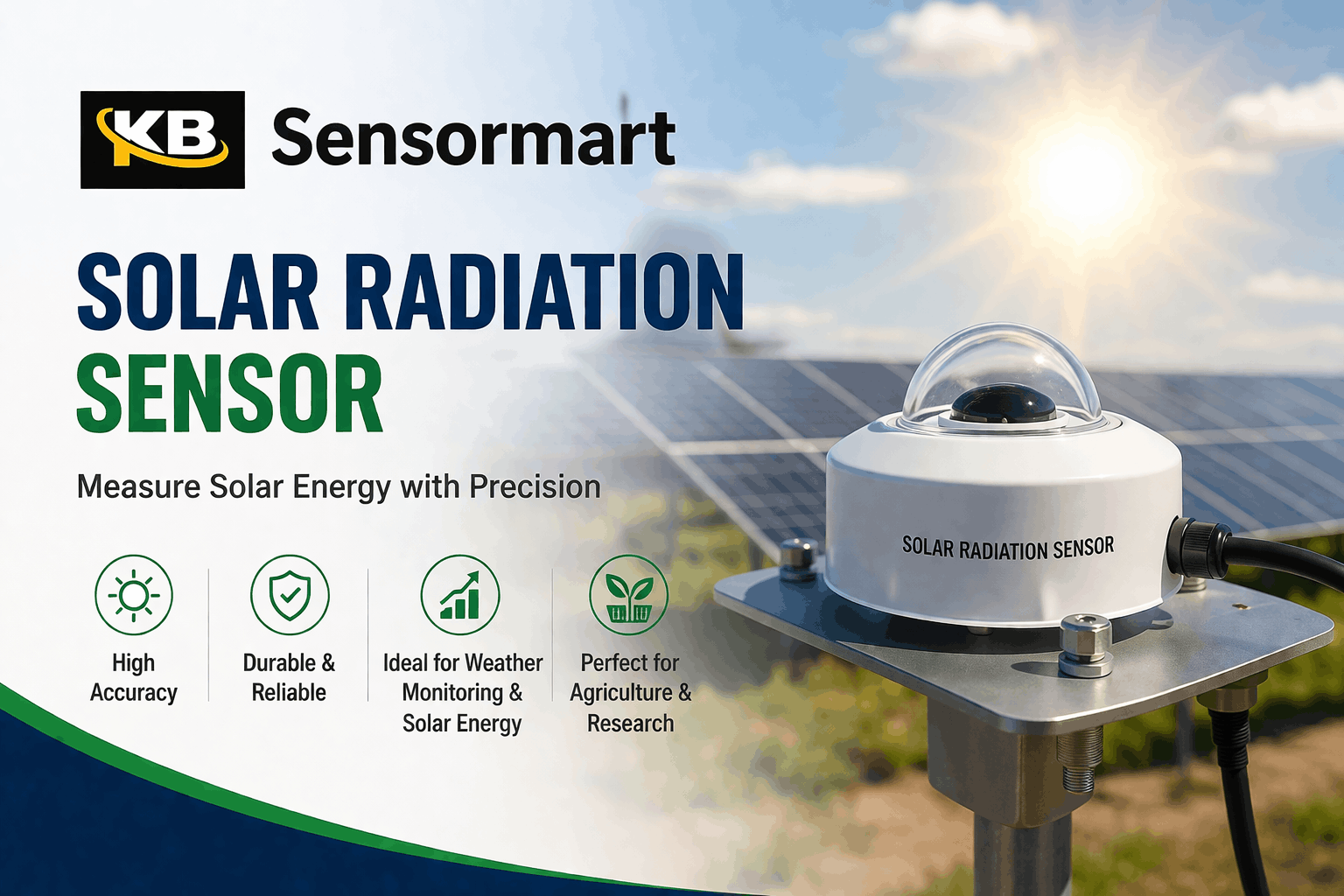
As the modern data-driven environment, the accurate measurement of sunlight is critical in such industries as the agricultural sector, solar energy, and environmental studies. A Solar Radiation Sensor is extremely important in the accurate recording of the solar energy data to enable businesses and researchers make sound decisions. In case you are seeking quality solutions, Sensor Mart has high-end solar radiation sensors that are aimed at providing accuracy, durability, and performance.
This is a detailed guide to what a solar radiation sensor is, the working principle, the applications of a solar radiation sensor and why the appropriate supplier such as Sensor Mart can really be the difference. More Blogs
What is Solar Radiation Sensor?
A pyranometer or Solar Radiation Sensor is an instrument that is used to measure the intensity of sun rays falling on a surface. It measures the solar irradiance, which is usually measured in watts per square meter (W/m²).
The sensors play a crucial role in measuring the amount of solar energy and are commonly utilized in weather stations, solar power systems and farm settings.
How does a Solar Radiation sensor work?
The Solar radiation sensors work by detecting the sunlight with a sensitive material which is typically a thermopile or a photodiode. This is a bare bones outline, in a nutshell:
- The sensor surface is exposed to sunlight.
- The radiation is absorbed by the sensing element.
- It transforms solar energy into electricity.
- The signal is then read out as data.
The Sensor Mart advanced models are highly accurate even in the changing weather, thus can be used outdoors in the long term.
Types of Solar Radiation Sensors
Learning the various types will allow you to select the correct type:
1. Pyranometer
Determines the total solar radiation (diffuse and direct sunlight). Perfect in weather measurements and solar energy.
2. Pyrheliometer
Solar radiation is measured by measures. Applied in research and high accuracy solar tracking systems.
3. Photovoltaic Sensor
Measures radiation using solar cells. Inexpensive and widely applied in simple solar applications.
Sensor Mart has a great variety of these sensors, so that you can find the ideal one to suit your application.
Some important features to consider.
When choosing a solar radiation sensor, take into consideration the following important features:
- High Accuracy & Sensitivity
- Weather Resistance (IP-rated housing)
- Wide Measurement Range
- Low Maintenance Design
- Simple interface with Data Loggers.
Sensor Mart ensures all these features are incorporated into their products, delivering reliable and consistent performance.
Uses of Solar Radiation Sensors.
The sensors of solar radiations find applications in different industries:
Agriculture
They are used by farmers to maximize irrigation, to check crop growth, and to enhance yield.
Solar Energy Systems
They help evaluate solar panel efficiency and maximize energy production.
Weather Monitoring
Necessary to meteorological stations to monitor climatic conditions.
Building Automation
Used in smart buildings to control lighting and HVAC systems.
Research & Environmental Studies
Funds climate studies and environmental analyses.
These applications are more efficient and data-driven with the advanced technology of Sensor Mart.
Advantages of Solar Radiation Sensor.
There are several benefits of investing in a good solar radiation sensor:
- Improved Energy Efficiency
- More Accurate Data to Make Better Decisions.
- Enhanced Crop Management
- Optimized performance of solar panels.
- Long-Term Cost Savings
Sensor Mart makes sure that each sensor is configured to provide these advantages with the accuracy and dependability.
Why Sensor Mart with Solar Radiation Sensors?
Selecting an appropriate supplier is equally crucial as selecting an appropriate sensor. This is why Sensor Mart is special:
High-quality, industry-grade sensors
Competitive pricing
Expert technical support
Reliable after-sales service
Broad line of products with many applications.
Sensor Mart can offer reliable solutions to your needs, whether you are in need of agriculture sensors, solar energy, or research.
Installation and Maintenance Hints.
To achieve optimum performance of your solar radiation sensor:
- Install in an open space without any impediments.
- Make sure that it is properly leveled to get correct readings.
- Wipe off sensor dome.
- Periodically calibrate to maintain accuracy.
The sensors of Sensor Mart are user friendly and easy to install with minimum maintenance taken, even by amateurs.
Future of Solar Radiation Sensors
Solar radiation sensors are getting advanced with the development of renewable energy and intelligent technologies. Connection to the IoT and real-time monitoring systems is changing the way data is gathered and utilized.
Sensor Mart is also innovative, providing new generation sensors that address the emerging requirements of the contemporary industries.
Conclusion
A Solar Radiation Sensor is a very necessary device of accurate measurement of sunlight and maximization of performance in different industries. These sensors offer key insights to move towards efficiency and sustainability in agriculture to solar energy.
Sensor Mart is the company you can depend on to provide high-performance solutions that are reliable. With advanced technology, expert support, and a commitment to quality, Sensor Mart ensures you get the best value for your investment. Product
FAQs
1. What does a solar radiation sensor do?
A solar radiation sensor is a sensor used to measure the intensity of sunlight to monitor the environment and optimize solar energy systems.
2. Where are solar radiation sensors typically used?
They have common applications in agriculture, weather stations, solar power stations and environmental research.
3. What is the accuracy of solar radiation sensors?
Quality sensors such as those of Sensor Mart have a high level of accuracy and good long term performance.
4. What do I do to keep a solar radiation sensor?
Cleaning, good installation and regular calibration of the equipment are the key to good performance.
5. Is it possible to combine solar radiation sensors with data loggers?
Yes, the majority of current sensor offerings of Sensor Mart are built to be easily integrated with data logging systems.
6. Why is Sensor Mart my choice?
Sensor Mart offers quality, durable and accurate sensors as well as professional assistance and reasonable prices, which is why it is a reliable decision on the market.



Leave a Reply