
Introduction to Soil pH Sensors
same Soil pH Sensor levels, how enables farmers and growers select correct materials for their soil based on crop production goals according to the type of soil they have, which will in turn provide them with optimal crops. For example, if an area is acidic, such as below pH 6.0, farmers may consider the type of crops to grow when they have been made aware to look for alternative types of fertilizers, etc to use instead of just what grows in their soil. If they have been using traditional types of fertilizers, they could have grown other crops.
It is important to take soil samples to obtain a true representation of its pH value if you want to verify the information you are receiving about the soil. You can then decide on the correct nutrient type to apply after obtaining pH results according to the type of crops you wish to produce.
Soil pH will give you the means by which to rightfully choose a suitable fertilizer for your specific application. Using the data received from the soil sensors will also help determine how well you will be able to produce crops as well as how much revenue you could potentially generate based on production yields and quality of produced crops.
All things being equal, there are advantages and disadvantages associated with using soil sensors to assist you with agricultural production, however the overall benefits greatly outweigh the disadvantages. Therefore, I recommend using Soil pH Sensors as part of your overall farming operation if you would like your operation to be as successful as possible.
What is a Soil pH Sensor?
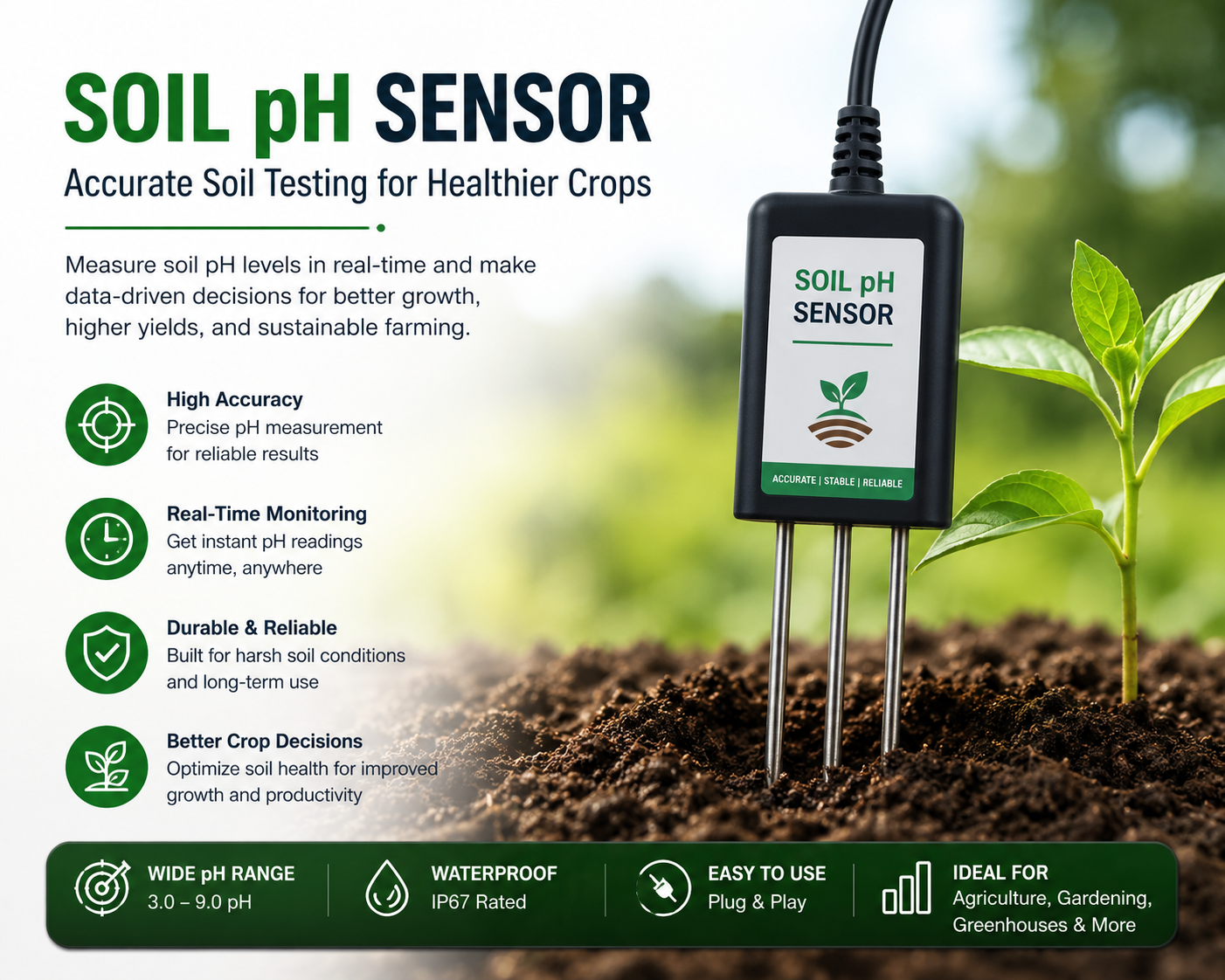
The Soil pH Sensor is an electronic sensor used to determine the pH value of the soil. A soil’s pH value can vary anywhere between 0 and 14. Below 7 pH shows acidic soil; 7 pH is neutral, while any value greater than 7 means alkaline soil.
Not all plants grow well at the same pH values. Therefore, using a Soil pH Sensor will help to achieve the ideal conditions for growing crops.
How Does a Soil pH Sensor Work?
This sensor is directly placed into the soil and senses the hydrogen ion activity in the soil to give us a pH value. This data can then be displayed on display monitors, data logging devices, or smart farming systems.
Modern Soil pH Sensors provide real-time monitoring of soil pH levels.
Key Features of Soil pH Sensors
Accurate Soil Analysis
The sensor provides precise pH measurements, helping users make informed agricultural decisions.
Real-Time Monitoring
Continuous monitoring allows users to track soil conditions without manual testing.
Durable Construction
Designed for outdoor environments, Soil pH Sensors can withstand harsh weather and challenging field conditions.
Easy Integration
These sensors can be integrated with IoT platforms, weather stations, and smart agriculture systems.
Low Maintenance
High-quality Soil pH Sensors require minimal maintenance while delivering long-term performance.
Applications of Soil pH Sensors
Precision Agriculture
Farmers use Soil pH Sensors to optimize soil conditions and maximize crop yield.
Greenhouses
Greenhouse operators monitor soil pH levels to maintain ideal growing conditions for plants.
Horticulture
Nurseries and landscaping professionals use pH sensors to support healthy plant growth.
Environmental Monitoring
Researchers use Soil pH Sensors to study soil quality and environmental changes.
Agricultural Research
Universities and agricultural institutions rely on accurate pH measurements for scientific studies and experiments.
Benefits of Using a Soil pH Sensor
- Improves crop productivity and quality.
- Helps optimize fertilizer usage.
- Reduces farming costs by preventing over-fertilization.
- Supports sustainable agriculture practices.
- Provides fast and accurate soil analysis.
- Enables data-driven farming decisions.
Why Choose Sensor Mart for Soil pH Sensors?
Sensor Mart has been delivering high quality sensor solutions throughout India since our inception. By manufacturing Soil pH Sensors, we are committed to providing products that meet your needs as a farmer, research scientist, greenhouse administrator or agriculturalist.
At Sensor Mart, we pride ourselves on providing exceptional technical support to our customers, and with our level of quality control, you can be confident that you will only receive superior agricultural output when using our cutting-edge sensor technology.
Conclusion
The Soil pH Sensor is one of the main devices used today in agriculture and environmental testing; it enables accurate and real-time measurements of soil pH, allowing for improved crop growth, greater efficiency in using fertilizers, and high productivity. If you are a farmer, scientist or greenhouse manager, using the Soil pH Sensor from Sensor Mart will assist you in making sound decisions!
The Soil pH Sensor is used to measure how acidic or alkaline your soil is. This will assist you in managing the appropriate growing conditions for both your plants and your crops! Why is soil pH important in agriculture?
Soil pH affects nutrient availability, plant growth, and crop yield. Maintaining the correct pH level ensures healthier plants and better productivity. More Blogs
FAQs
1. Can a Soil pH Sensor provide real-time data?
Yes, modern Soil pH Sensors offer real-time monitoring and can be connected to digital displays, data loggers, or IoT platforms.
2. Where can Soil pH Sensors be used?
They are commonly used in agriculture, greenhouses, horticulture, landscaping, environmental monitoring, and research projects.
3. How often should soil pH be measured?
The frequency depends on the application, but regular monitoring is recommended to maintain healthy soil conditions and optimize crop performance.
4. Why buy a Soil pH Sensor from Sensor Mart?
Sensor Mart offers accurate, durable, and reliable Soil pH Sensors backed by expert support and quality assurance for professional agricultural applications.



Leave a Reply