

In the realm of meteorology and environmental science, the accurate measurement of wind speed is a cornerstone of data collection. Devices designed for this purpose, known as anemometers, come in various forms, but one that stands out for its reliability and efficiency is the SMKB-CUP-ECO wind speed sensor. This instrument is a sophisticated yet user-friendly tool engineered to provide precise wind speed data across a multitude of applications. Its design and functionality reflect a commitment to both performance and sustainability.
What is the SMKB-CUP-ECO Wind Speed Sensor?
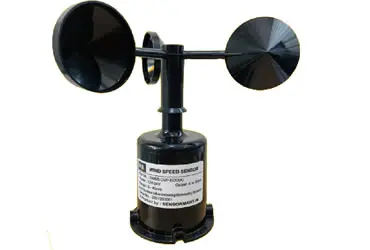
The SMKB-CUP-ECO is a specialized type of cup anemometer. It is meticulously engineered to measure horizontal wind speed by converting the rotational movement of its cups into an electrical signal. Unlike more complex or delicate sensors, it is built with a focus on robustness and ease of use, making it an excellent choice for a wide array of professional and educational contexts. The “ECO” in its name signifies its construction with durable, environmentally conscious materials, ensuring a minimal ecological footprint throughout its lifecycle. It’s a prime example of how functional design can harmonize with a sustainable ethos.
The Core Principles of Cup Anemometers
The operational premise of a cup anemometer is elegantly simple. Three or four hemispherical cups are mounted on a vertical axis. The force of the wind, acting upon the concave surfaces of these cups, causes the assembly to rotate. The speed of this rotation is directly proportional to the wind’s velocity. An internal sensor, typically a reed switch or an optical encoder, detects these rotations and generates a corresponding electrical pulse for each revolution. This pulse train is then processed by a connected data logger or microcontroller, which translates the frequency of the pulses into a quantitative measurement of wind speed, often in units like meters per second (m/s) or kilometers per hour (km/h). This mechanical-to-electrical transduction is a time-tested and reliable method.
Technical Specifications and Operational Excellence
The efficacy of any sensor is predicated on its technical prowess. The SMKB-CUP-ECO is distinguished by a set of specifications that underscore its professional-grade quality and dependability.
Key Features and Design
The SMKB-CUP-ECO features a tripartite cup configuration, which is the industry standard for optimal torque and consistent rotation. The cups themselves are crafted from a resilient, UV-resistant thermoplastic that withstands prolonged exposure to harsh weather conditions without succumbing to material degradation. The internal components are sealed within a corrosion-resistant housing, protecting the sensitive electronics from moisture, dust, and other environmental contaminants. Its low-friction bearings ensure a very low starting threshold, meaning it can accurately measure even the gentlest of breezes. This meticulous attention to component selection and assembly guarantees long-term accuracy and minimal signal drift.
Measurement Range and Accuracy
The sensor boasts a broad operational range, capable of measuring wind speeds from as low as a gentle zephyr to gale-force winds. The typical range is from approximately 0.5 m/s up to 60 m/s. This wide span makes it suitable for diverse meteorological conditions. Furthermore, its calibration ensures a high degree of metrological accuracy, with a typical margin of error of less than ±2%. This level of precision is paramount for applications where even slight inaccuracies can have significant implications, such as in climatological studies or wind turbine performance assessments. The linearity of its output signal across its entire measurement range simplifies data processing and ensures reliable readings.
Applications Across Diverse Sectors
The utility of a wind speed sensor extends far beyond the confines of a traditional weather station. The SMKB-CUP-ECO’s robust design and reliable performance make it a versatile instrument with a myriad of practical applications.
Environmental Monitoring and Research
For environmental scientists and climatologists, the SMKB-CUP-ECO is an indispensable tool. It can be deployed in remote locations to monitor atmospheric circulation patterns, track pollutant dispersion, and assess localized climate phenomena. Researchers use the data it provides to build predictive models, study microclimates in urban and rural settings, and understand the dynamics of air currents in specific geographical areas. Its low power consumption makes it ideal for use in solar-powered remote data acquisition systems, enabling long-term, continuous monitoring in hard-to-reach places.
Renewable Energy and Smart Agriculture
The renewable energy sector, particularly wind energy, relies heavily on accurate wind speed data to assess site viability for wind farms, optimize turbine placement, and monitor real-time performance. The SMKB-CUP-ECO is frequently used in these initial site assessments. In agriculture, a new field known as “smart agriculture” leverages such sensors to automate irrigation systems based on evapotranspiration rates, which are influenced by wind speed. Farmers can use this data to make more informed decisions about crop management, thereby conserving water and improving yields. This convergence of technology and agronomy highlights the sensor’s role in promoting sustainable practices.
Installation and Integration: A Seamless Process
Despite its sophisticated capabilities, the SMKB-CUP-ECO is designed for straightforward installation, making it accessible to both seasoned professionals and hobbyists.
Mounting and Physical Setup
The sensor features a standard mounting flange or bracket, allowing for easy attachment to masts, tripods, or other structures. For accurate readings, it is critical to mount the sensor in an open area, away from obstructions like buildings, trees, or other vegetation that could create turbulence and distort the wind flow. The recommended height for most meteorological applications is ten meters above ground level, as this height is a standard reference point for wind data. The lightweight yet sturdy construction simplifies the installation process, even in challenging environments.
Wiring and Data Interfacing
The SMKB-CUP-ECO typically comes with a pre-wired cable that simplifies its connection to a data logger, PLC (Programmable Logic Controller), or microcontroller. The sensor provides an output signal, usually a voltage pulse or a frequency, which is directly proportional to the rotation speed. Technicians or engineers can easily program their data acquisition systems to read and interpret this signal, converting it into a wind speed measurement using a simple calibration factor. The robust cabling is designed to resist weathering, ensuring a reliable connection over the sensor’s lifespan.
The Eco-Friendly Advantage and Longevity
Beyond its technical specifications, the SMKB-CUP-ECO sets itself apart through its design philosophy—one that prioritizes sustainability and durability.
Sustainable Design Philosophy
The choice of materials is a key aspect of its eco-friendly design. By utilizing high-quality, recyclable thermoplastics and minimizing the use of heavy metals, the sensor’s manufacturing process has a lower environmental impact. Its energy efficiency also contributes to its sustainability, as it consumes minimal power during operation. This focus on life-cycle analysis—from production to end-of-life—makes it an exemplary product in a market increasingly moving toward greener technologies.
Maintenance and Durability
The robust construction and minimal moving parts of the SMKB-CUP-ECO translate into very low maintenance requirements. The bearings are self-lubricating, and the sealed housing prevents the ingress of foreign particles, reducing the need for frequent servicing. Its resistance to extreme temperatures, UV radiation, and moisture ensures that it can operate reliably in a vast range of climatic conditions, from arid deserts to frigid arctic tundras. This durability not only extends its service life but also reduces the long-term operational costs and the need for frequent replacements, further contributing to its sustainability.


Leave a Reply