
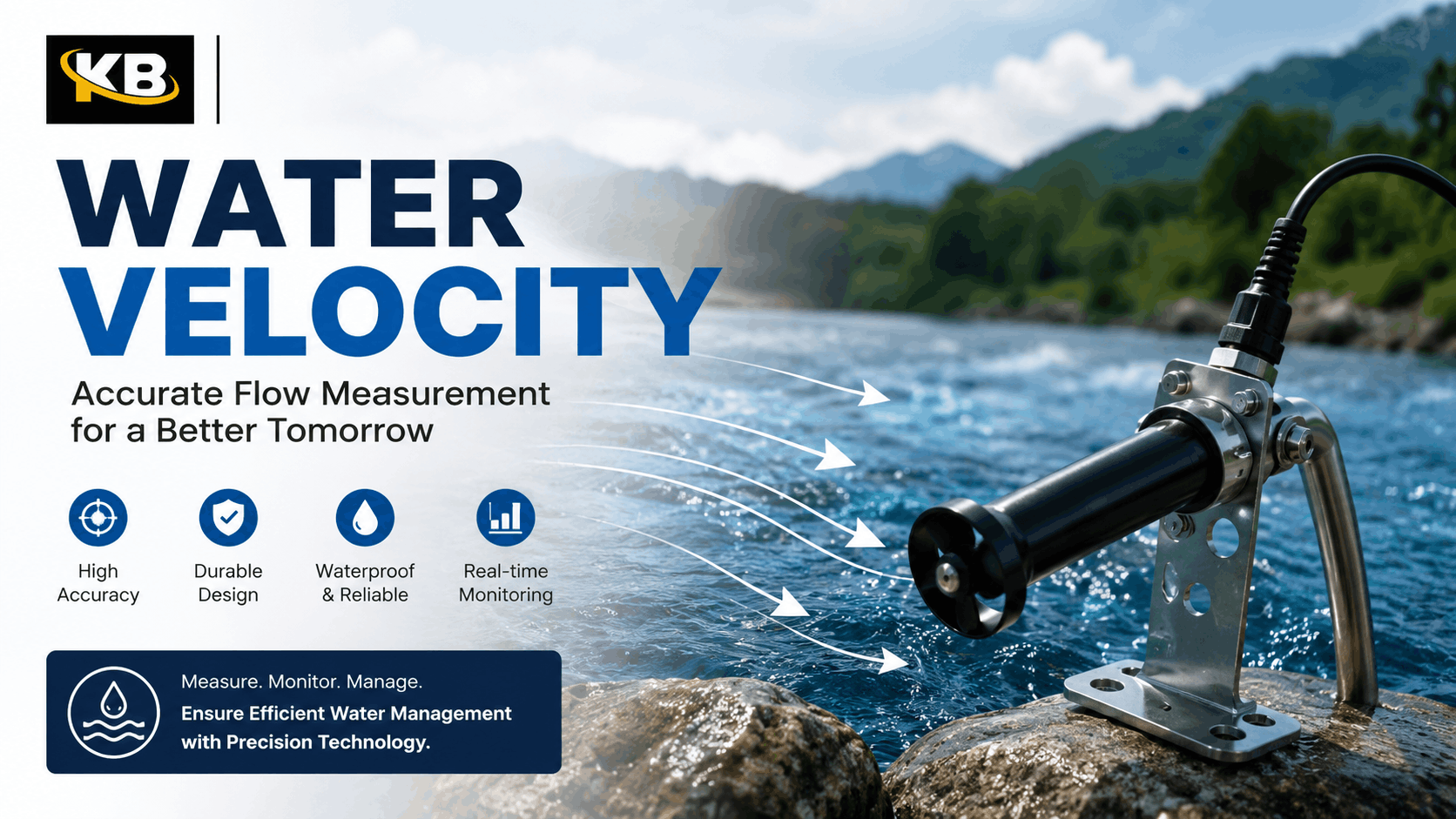
Water Velocity is one of the major parameters of water monitoring. It is one of the parameters which can provide information about the velocity of water flow in rivers, canals, pipelines, drainage, and open channels. The ability to measure water velocity allows experts from other disciplines to make better and more efficient decisions that are related to water management processes, flood control, irrigation and environmental monitoring.Water Velocity
Whether you are developing irrigation systems, conducting water monitoring on rivers, or designing an industrial water system, knowledge of Water Velocity can help you be more efficient. more blogs
What is Water Velocity?
Water Velocity describes the speed of the water at a particular spot. This usually is quantified in meters per second or feet per second.
To put it simply, Water Velocity indicates how quickly the water is transported from the certain location to others. Water Velocity can be used by water specialists to calculate water discharge, forecast flood-water levels and control water reserves.
Formula for Water Velocity
Water Velocity = Distance ÷ Time
For example, if water travels 20 meters in 10 seconds, the Water Velocity is:
20 ÷ 10 = 2 m/s
Although the formula is simple, modern projects use advanced sensors to measure Water Velocity with greater accuracy.
Why is Water Velocity Important?
Water Velosity is one of the key parameters measured in many other fields due to its benefits in planning, safety, and efficiency.
Some of the advantages include:
- Assists with determining flow rates of water.
- Helps with flood prediction and warning.
- Improves efficiency in irrigation.
- Helps to prevent river and canal erosion.
- Carries out research on environmental changes.
- Improves the use of water for various industries.
- Assists in the operation of dams and reservoirs.
- Helps with waste disposal.
If the Water Velocity is not measured correctly, it is impossible to measure the phenomena of water in different environments.
How is Water Velocity Measured?
Today, several technologies are available to measure Water Velocity depending on the application.
1. Electromagnetic Sensors
Electromagnetic sensors use magnetic fields to determine Water Velocity without moving parts. They provide accurate readings even in dirty or muddy water.
Advantages
- High accuracy
- Low maintenance
- Suitable for wastewater
- Long operational life
2. Ultrasonic Water Velocity Sensors
Ultrasonic technology measures Water Velocity by transmitting sound waves through flowing water.
Benefits include:
- Non-contact measurement
- High precision
- Suitable for rivers and canals
- Easy installation
3. Radar-Based Sensors
Radar systems measure surface Water Velocity without touching the water.
These sensors are commonly used for:
- Flood monitoring
- River observation
- Large drainage channels
- Remote monitoring stations
4. Mechanical Current Meters
Mechanical current meters use rotating blades to determine Water Velocity.
Although still used in some applications, they require regular maintenance and are gradually being replaced by digital sensors.
Applications of Water Velocity
Accurate Water Velocity monitoring supports numerous industries and government projects.
River Monitoring
Environmental agencies continuously monitor Water Velocity in rivers to understand seasonal changes and flood risks.
Flood Warning Systems
High Water Velocity often indicates rising flood conditions. Continuous monitoring helps authorities issue timely warnings.
Irrigation Management
Farmers and irrigation departments rely on Water Velocity measurements to distribute water efficiently across agricultural fields.
Water Treatment Plants
Water treatment facilities monitor Water Velocity to maintain smooth operations and improve treatment efficiency.
Hydropower Projects
Hydropower plants depend on accurate Water Velocity data to optimize turbine performance and energy production.
Drainage Systems
Urban drainage systems use Water Velocity monitoring to prevent overflow during heavy rainfall.
Environmental Research
Scientists study Water Velocity to understand river ecosystems, sediment transport, and aquatic habitats.
Factors Affecting Water Velocity
Several environmental and structural factors influence Water Velocity.
Channel Slope
Steeper slopes increase Water Velocity because gravity pulls water faster.
Water Depth
Deeper water often flows differently than shallow water, affecting overall Water Velocity.
Surface Roughness
Rocks, vegetation, and debris slow down Water Velocity.
Obstacles
Bridges, dams, and other structures can reduce or redirect Water Velocity.
Rainfall
Heavy rainfall usually increases Water Velocity, especially in rivers and drainage channels.
Benefits of Monitoring Water Velocity
Continuous Water Velocity monitoring offers several advantages.
Better Flood Management
Real-time data helps reduce flood damage by enabling faster response.
Improved Water Resource Planning
Authorities can allocate water more efficiently using accurate Water Velocity information.
Lower Maintenance Costs
Early detection of abnormal flow conditions prevents expensive repairs.
Environmental Protection
Monitoring Water Velocity helps preserve aquatic ecosystems.
Reliable Engineering Decisions
Engineers use Water Velocity data while designing bridges, canals, and hydraulic structures.
Choosing the Right Water Velocity Sensor
The selection of the water velocity sensor depends on the application.
While doing so, the following points might be taken into consideration:
- Range of measurement;
- Accuracy requirements;
- Type of installation;
- Quality of water;
- Frequency of maintenance;
- Protocol for communication;
- Environmental conditions.
Water velocity sensor solutions at SensorMart fit into any challenging environment from rivers to canals, factories to flood warning. The sensors do not need maintenance and provide accurate and reliable performance. Water Velocity
Why Choose SensorMart for Water Velocity Solutions?
It’s as important to select the right supplier as it is to select the right sensor.
SensorMart offers:
- Water Velocity sensors of good quality.
- Dependable performance
- Industrial-grade constructions
- Precise real-time monitoring
- Easy installation
- Technical support
- Affordable prices
- Environmental, industrial and agricultural applications solutions.
We manufacture our products for engineers, Government bodies, research institutes and companies seeking reliable Water Velocity monitoring systems.
Best Practices for Accurate Water Velocity Measurement
To obtain accurate results, use these methods:
- Install the sensors at appropriate locations.
- Periodically make adjustments to devices and equipment.
- Prevent sensors from getting dirt into them.
- Be vigilant and check on sensor readings regularly.
- Conduct periodic evaluations.
- Use good quality measuring tools.
- Utilizing these techniques may ensuring accurate measurements in the long run.
Future of Water Velocity Monitoring
Water Velocity measurement is evolving with the latest technologies, powered by cutting edge sensors, wireless communication, cloud supervision and IoT system.
- Systems of the future will offer
- Remote monitoring in real time
- The use of artificial intelligence in data analysis.Artificial Intelligence (AI) analysis of data.
- Automatic notification systems
- Storage in the cloud
- More reliable flood forecasts
- Improving water resource management
As a consequence of these innovations, We will be able to monitor Water Velocity more easily, accurately and efficiently.
Conclusion
Knowledge of Water Velocity is crucial for proper water use, environmental safeguard, flood control, irrigation and industrial activities. Proper Decision Making is achieved with Water Velocity measurement improving the Safety and Efficiency.
Businesses and public institutions can maximise their water management efficiency, reduce maintenance expenses and ensure top performance of their monitoring equipment thanks to SensorMart. Irrespective of the environmental elements measured, the needed data can be obtained by the right selection of Water Velocity sensor. wikipedia
Frequently Asked Questions (FAQs)
1. What is Water Velocity?
Water Velocity is the speed at which water flows through a river, canal, pipeline, or open channel. It is usually measured in meters per second (m/s).
2. Why is Water Velocity important?
Water Velocity helps calculate flow rates, predict floods, improve irrigation systems, manage water resources, and protect the environment.
3. How is Water Velocity measured?
It can be measured using ultrasonic sensors, electromagnetic sensors, radar sensors, and mechanical current meters, depending on the application.
4. Where is Water Velocity monitoring used?
Common applications include rivers, canals, dams, reservoirs, wastewater treatment plants, irrigation systems, hydropower stations, and flood monitoring projects.
5. What factors affect Water Velocity?
Factors include channel slope, water depth, rainfall, obstacles, surface roughness, and channel shape.
6. Why choose SensorMart for Water Velocity sensors?
SensorMart offers high-quality Water Velocity sensors with accurate measurements, durable construction, easy installation, reliable performance, and expert technical support for industrial and environmental applications.


Leave a Reply