
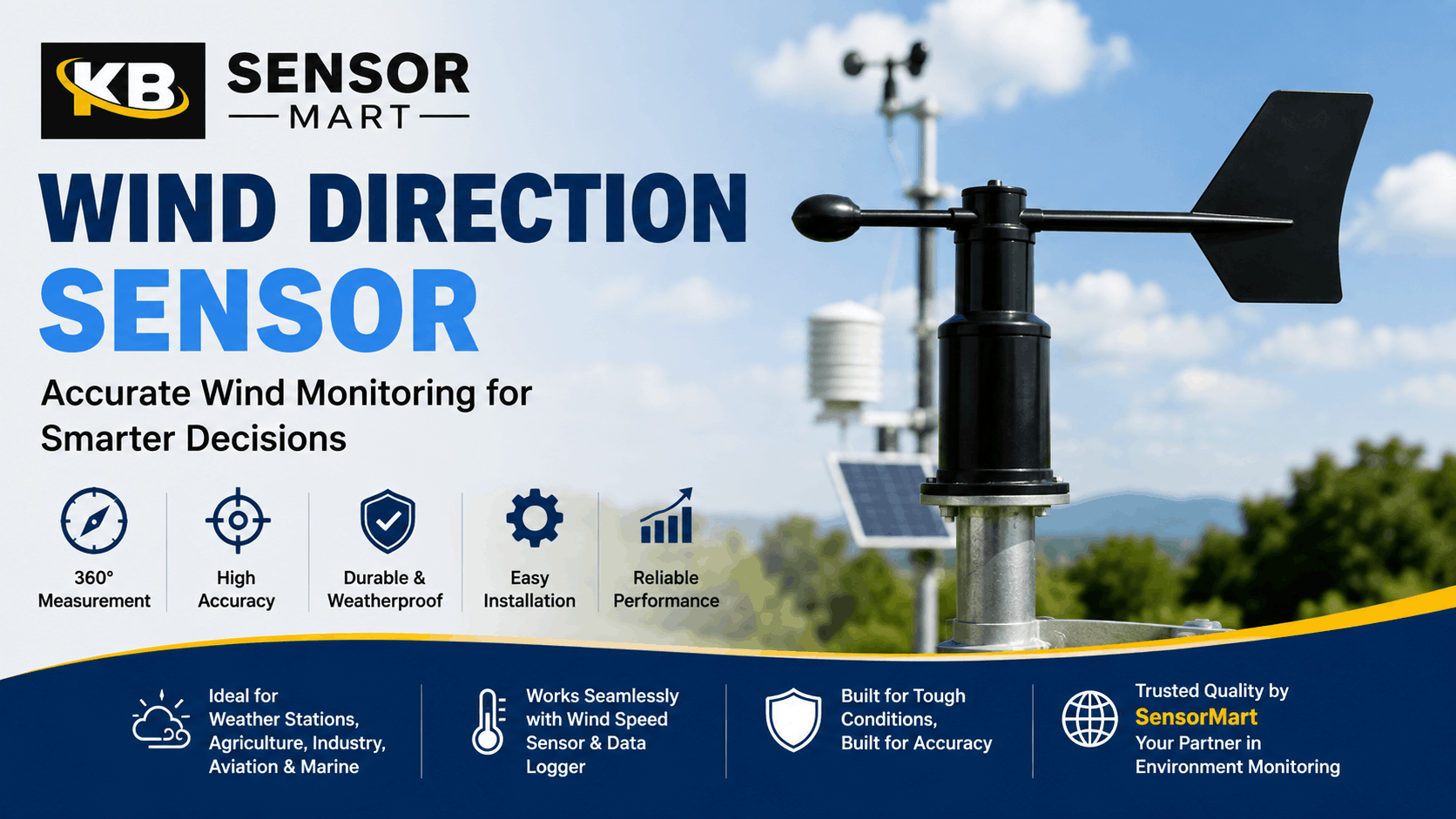
The significance of the role of wind in weather prediction, agriculture, use of renewable sources of energy, aviation processes, construction works, and other industrial activities is immense. It is important not only to know the wind speed, but also the wind direction.
Wind Direction Sensor, then, needs to know the direction of the wind. With the help of WDS one can know the precise direction of wind at any given moment of time ensuring better decision-making and safety. Therefore, selection of the correct type is an important issue when managing a wind farm, a forecasting station or the state of the environment.
Sensormart offers efficient and reliable weather monitoring systems. This guide covers working principle, varieties, applications, advantages, recommendations for use and choosing of the Wind Direction Sensor. water velocity
What is a Wind Direction Sensor?
The Wind Direction Sensor is a device that helps find out what direction the wind is coming from by converting the movement of the wind into an electric signal. This can then be displayed or recorded by a weather monitoring system.
Most of a modern weather monitoring system is based on using both a Wind Direction Sensor and a Wind Speed Sensor to provide complete wind information, i.e., to enhance the understanding of weather conditions.
How Does a Wind Direction Sensor Work?
- A Wind Direction Sensor makes use of a weather vane that is affixed to a rotating shaft. The wind direction follows the direction of the weather vane.
- The rotating shaft is then connected to an electronic sensing element which senses the angle of rotation. The data on the angle is then sent as digital or analog signals to the Data Logger for Weather Station.
- Contemporary sensors provide:
- Wind direction check in real-time.
- Accurate wind measurement
- Quick reading times for acquiring the readings
- Low maintenance costs
- Worked for many years.
Main Components of a Wind Direction Sensor
A high-quality Wind Direction Sensor generally includes the following parts:
Weather Vane
Captures wind movement and aligns with the wind direction.
Rotating Shaft
Transfers the vane’s movement to the sensing mechanism.
Sensor Element
Measures the rotation angle accurately.
Signal Output Module
Sends the measured data to a weather station or monitoring software.
Mounting Assembly
Keeps the sensor stable during harsh weather conditions.
Types of Wind Direction Sensor
Different industries use different types of Wind Direction Sensor depending on their requirements.
Mechanical Wind Direction Sensor
This traditional design uses a rotating vane connected to a potentiometer. It is widely used because of its simplicity and cost-effectiveness.
Ultrasonic Wind Direction Sensor
This advanced sensor has no moving parts. It measures wind direction using ultrasonic sound waves, making it highly accurate and suitable for harsh environments.
Digital Wind Direction Sensor
A digital Wind Direction Sensor provides electronic outputs such as RS485, Modbus, or SDI-12, making it ideal for automated monitoring systems.
Why is a Wind Direction Sensor Important?
A Wind Direction Sensor can provide valuable data in many applications of industry that are influenced by the weather.
This device has the following benefits:
- Correct weather monitoring
- Improved safety on the job.Better working conditions.
- Better farming
- Effective wind energy production
- Intelligent environmental monitoring
- Reliable data collection.
If wind direction is not measured properly, businesses operating outdoors have to face a number of challenges.
Applications of Wind Direction Sensor
The Wind Direction Sensor is widely used across various industries.
Weather Stations
Weather stations use wind direction data for forecasting and climate monitoring. Combined with an Atmospheric Pressure Sensor, temperature sensors, and rainfall instruments, it provides complete weather information.
Agriculture
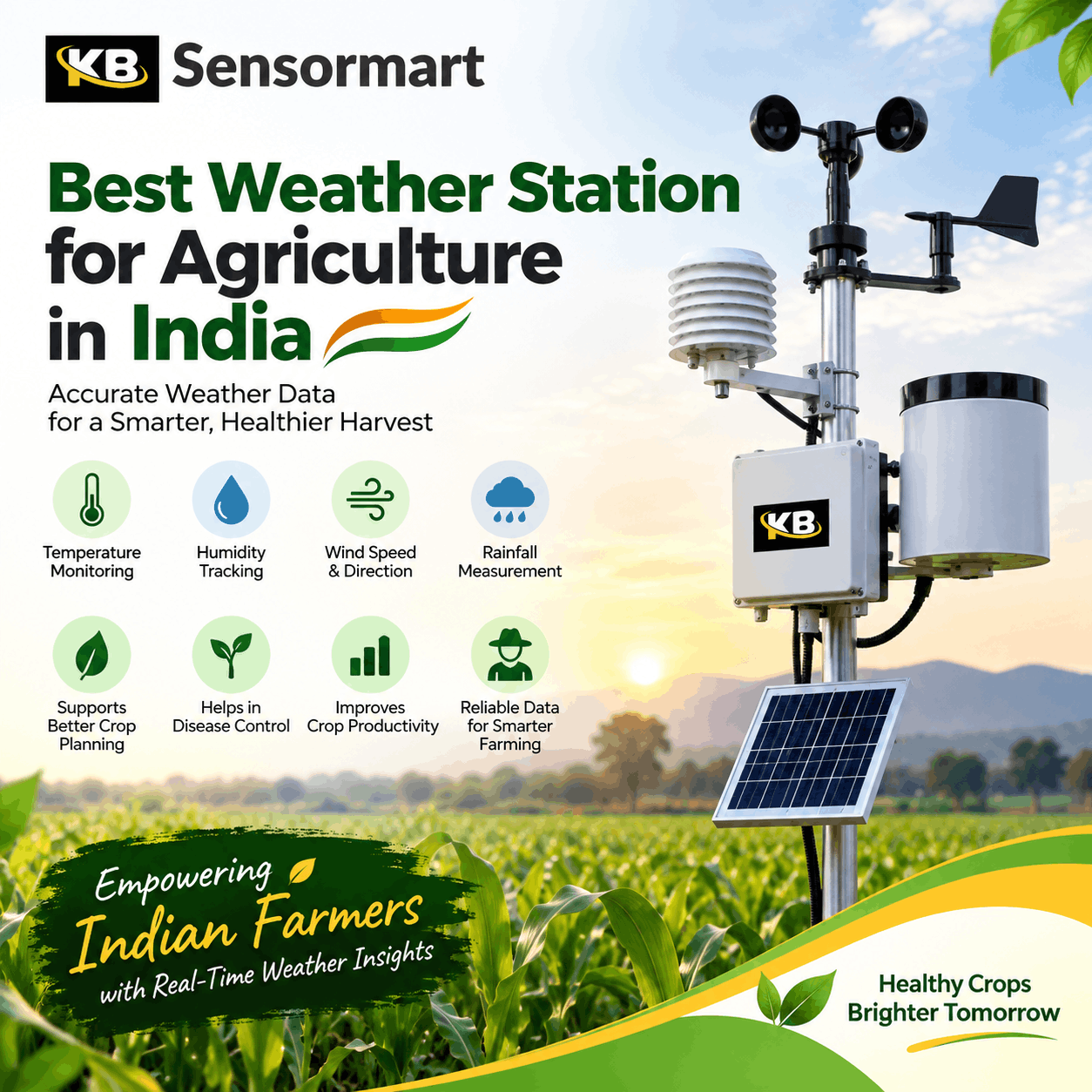
Farmers use wind direction data while spraying fertilizers and pesticides. Along with a Leaf Sensor and EC sensor, it helps improve crop health and precision farming.
Wind Energy
Wind farms continuously monitor wind direction to maximize turbine efficiency and energy generation.
Aviation
Airports rely on accurate wind direction information for safe aircraft take-off and landing.
Marine Industry
Ships and ports use wind monitoring systems for navigation and operational safety.
Construction Sites
Construction companies monitor wind conditions before operating cranes and heavy lifting equipment.
Environmental Monitoring
Government agencies and research organizations use Wind Direction Sensor data for pollution tracking and climate studies.
Key Features of a Quality Wind Direction Sensor
- When choosing the right sensor, it’s important to choose one that has the following characteristics:
- great accuracy
- rapid response
- durability
- corrosion-resistant materials
- water-resistance
- simple installation
- low maintenance level
- ability to communicate digitally
- wide range of operating temperatures
- long lifespan
Benefits of Installing a Wind Direction Sensor
Installing a reliable Wind Direction Sensor offers many advantages.
Better Decision Making
Real-time wind information helps industries respond quickly to changing weather.
Improved Safety
Workers can avoid hazardous conditions during strong winds.
Accurate Weather Forecasting
Weather professionals receive reliable data for forecasting.
Increased Equipment Protection
Sensitive outdoor equipment can be protected during adverse weather.
Higher Productivity
Industries can schedule outdoor activities more efficiently.
Long-Term Data Collection
Continuous monitoring helps identify seasonal weather patterns and improve planning.
How to Choose the Right Wind Direction Sensor
Before purchasing a Wind Direction Sensor, consider the following factors:
Measurement Accuracy
Choose sensors with high precision for reliable data.
Output Type
Ensure compatibility with your Weather Station or monitoring software.
Environmental Conditions
Select models that can withstand rain, dust, UV exposure, and strong winds.
Material Quality
Marine-grade aluminum and stainless steel offer better durability.
Communication Protocol
Modern industries often prefer RS485 or Modbus communication.
Maintenance Requirements
Choose sensors designed for long-term, low-maintenance operation.
Wind Direction Sensor Maintenance Tips
- The accuracy of the sensors can be maintained by regular maintenance.
- Regularly clean sensor.
- Remove leaves, dust and bird droppings.
- Check mounting bolts.
- Inspect wiring connections.
- Verify calibration periodically.
- Replace damaged parts in a timely manner.
- With good care you can extend the life of your monitoring system.
Why Choose Sensormart?
- Professional weather monitoring equipment is a trusted brand in India and is known as Sensormart.
- Solutions suitable for agriculture, industry, research, renewable energy and environmental monitoring that are reliable, accurate and durable.
- Sensormart offers you:
- Complete and accurate weather monitoring solutions.
- Accurate and reliable performance
- Durable outdoor designs
- It’s important to have professional technical assistance.Experienced people are needed to provide technical assistance.
- Materials that are suited for industrial and environmental applications.
From a complete Weather Station to Wind Speed Sensor, Siphon Rain Gauge, Atmospheric Pressure Sensor, to a reliable Wind Direction Sensor, Sensormart has all the necessary components to easily and precisely gather weather data.
Conclusion
Wind Direction Sensor is an important component of any weather monitoring system. It provides accurate wind direction information that can be beneficial to industries to improve safety, productivity, and efficiency in operations. more blogs
This sensor has a wide range of applications such as agriculture, aviation, renewable energy and environmental monitoring. It is used in conjunction with other devices like Wind Speed Sensor, Data Logger for Weather Station, Leaf Sensor, EC sensor, Atmospheric Pressure Sensor and Siphon Rain Gauge, to form a comprehensive weather monitoring system. see more
Frequently Asked Questions (FAQs)
1. What is a Wind Direction Sensor used for?
A Wind Direction Sensor measures the direction from which the wind is blowing. It is widely used in weather stations, agriculture, aviation, wind farms, marine applications, and environmental monitoring.
2. How does a Wind Direction Sensor work?
It uses a weather vane that rotates with the wind. The movement is converted into an electrical signal and sent to a weather station or data logger for analysis.
3. Can a Wind Direction Sensor work with a Weather Station?
Yes. Most modern Wind Direction Sensor models are designed to work seamlessly with a Weather Station and Data Logger for Weather Station.
4. Why is wind direction important in agriculture?
Wind direction helps farmers spray pesticides and fertilizers more effectively while reducing chemical drift and improving crop protection.
5. How often should a Wind Direction Sensor be maintained?
Basic inspection and cleaning every few months are recommended. Calibration should be checked periodically for the most accurate readings.
6. Why should I choose Sensormart for weather monitoring solutions?
Sensormart provides reliable, durable, and accurate weather monitoring equipment designed for industrial, agricultural, environmental, and research applications with dependable long-term performance.



Leave a Reply