
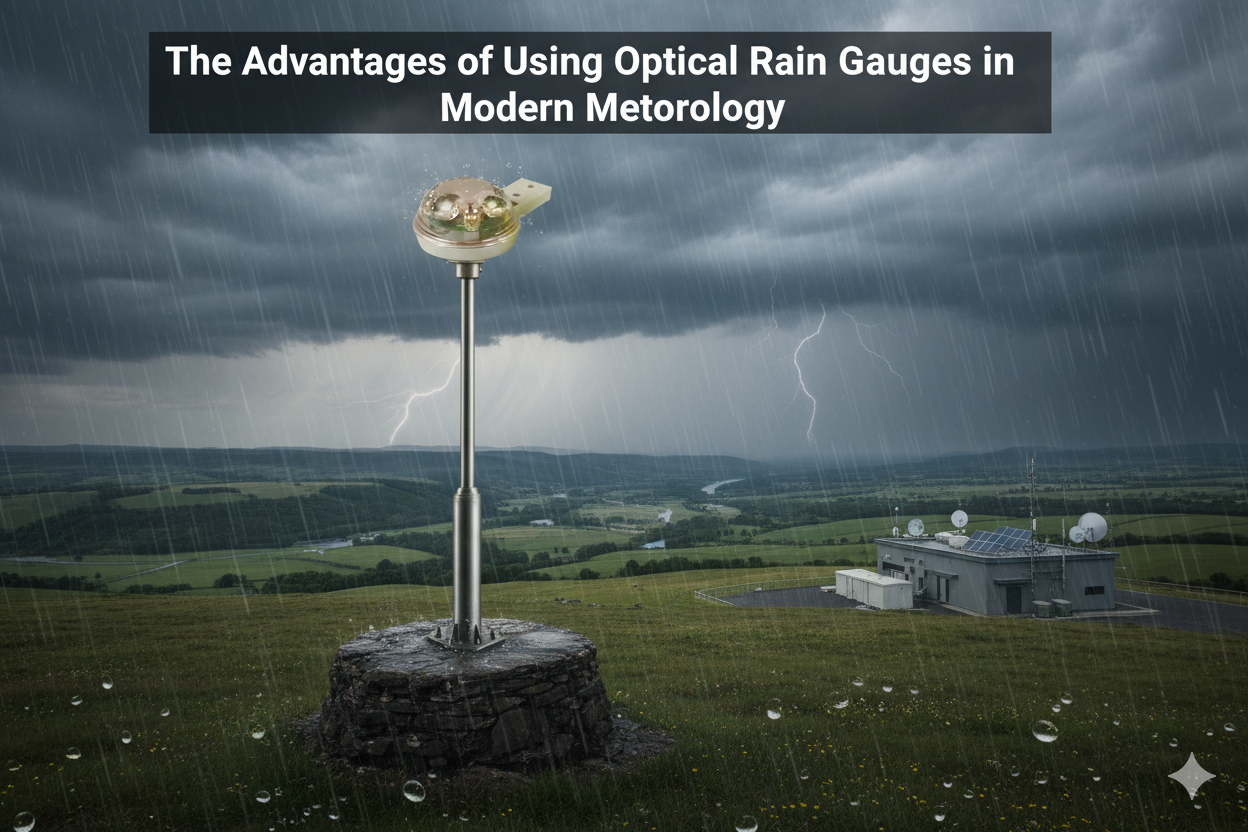
1. Introduction: The Evolution of Hydrometry
Optical Rain Gauge: Hello there! If you’ve ever paid attention to the weather, you know how critical accurate precipitation data is for everything from agriculture to flood prediction. The measurement of water in its various forms, a field we call hydrometry, has traditionally relied on deceptively simple mechanical devices. Yet, as our need for granular, real-time data intensifies, these historic instruments are showing their age. Meteorology demands superior tools.
From Tipping Buckets to Photometrics
For decades, the venerable tipping bucket rain gauge (TBRG) served as the industry workhorse. It collects an aliquot of water and records an event when a measured volume causes a small internal mechanism to tip. This process, while ingenious in its time, is fundamentally discontinuous. Enter the Optical Rain Gauge. These innovative instruments utilize advanced photometrics—the measurement of light—to detect and quantify precipitation. The optical sensor represents a monumental step forward, offering a completely new methodology that minimizes the deficiencies inherent in older mechanical systems.
2. Principle of Operation: Leveraging Light
The technology underpinning the optical sensor is elegantly simple, yet profoundly effective. Instead of collecting and dumping a physical volume of water, the optical gauge employs infrared light beams and detectors. This approach transforms the process of hydrometeor detection into an instantaneous, electronic event.
The Art of Scintillation and Optical Interruption
How does it work? Many modern optical rain gauges, such as disdrometers, rely on the principles of scintillation (the flickering or twinkling of light) or optical beam interruption. When a raindrop passes through the beam path, it momentarily obscures the light, causing a temporary dip in the signal received by the detector. This interruption is not just logged as “rain present.” Sophisticated algorithms analyze the duration and the magnitude of the signal dip. A larger drop creates a more significant, longer-lasting interruption than a small drop. This rapid, non-contact measurement is the bedrock of its superiority, providing far richer data than simple volumetric measurement.
3. Unrivaled Accuracy and Resolution
In the context of weather monitoring, accuracy is paramount. A small error in measuring a sudden downpour can lead to catastrophic underestimation of flood risk. Optical gauges elevate the standard for precision, particularly during rapidly changing weather events.
Continuous Measurement and Rapid Response
Unlike the TBRG, which only reports rain when the bucket tips (a process that can introduce temporal and intensity errors), the optical gauge provides a truly continuous measurement. It doesn’t rely on accumulated volume; it is constantly observing the passage of individual droplets. This allows the creation of extremely detailed hyetographs (graphs showing the distribution of rainfall over time) with high temporal resolution. The instrument’s ability to offer a response time measured in mere milliseconds means that sudden, intense rainfall—characteristic of modern mesoscale convective systems—is captured and reported with unprecedented fidelity.
4. Robustness and Low Maintenance
Mechanical instruments possess inherent weaknesses: they wear out, they break, and they require regular servicing. The optical gauge sidesteps these logistical headaches entirely, which is a massive advantage for remote installations.
Mitigating the Mechanical and Ingress Nuisances
Because there are no moving parts—no hinge, no pivot, no tipping mechanism—the optical sensor is inherently more reliable. It is impervious to the forces of wear and tear that plague mechanical gauges. Furthermore, its typical design involves a sealed, compact enclosure, largely eliminating the ingress nuisances like dust, debris, or insects that can clog a traditional funnel. This robust, self-contained architecture translates directly into lower operational expenditures and fewer site visits for corrective maintenance, enabling the deployment of reliable instrumentation in previously inaccessible or hostile environments.
5. Seamless Data Telemetry and Integration
Modern meteorological practice relies on the rapid aggregation of data from vast networks of sensors. The ease with which an instrument communicates its findings is almost as important as the quality of the data itself.
Digital Outputs for Synoptic Network Connectivity
Optical rain gauges are born digital. They produce instantaneous, standardized output signals (like RS-485 or 4-20mA current loops) that are perfectly suited for immediate telemetry. This facilitates their seamless integration into global Synoptic Networks and local data logging systems. The digital nature of the output minimizes signal degradation over long distances, ensuring the data received by meteorologists is clean and representative of the atmospheric conditions at the point of measurement, ready for immediate ingestion into numerical weather prediction models.
6. Versatility in Extreme Climatology
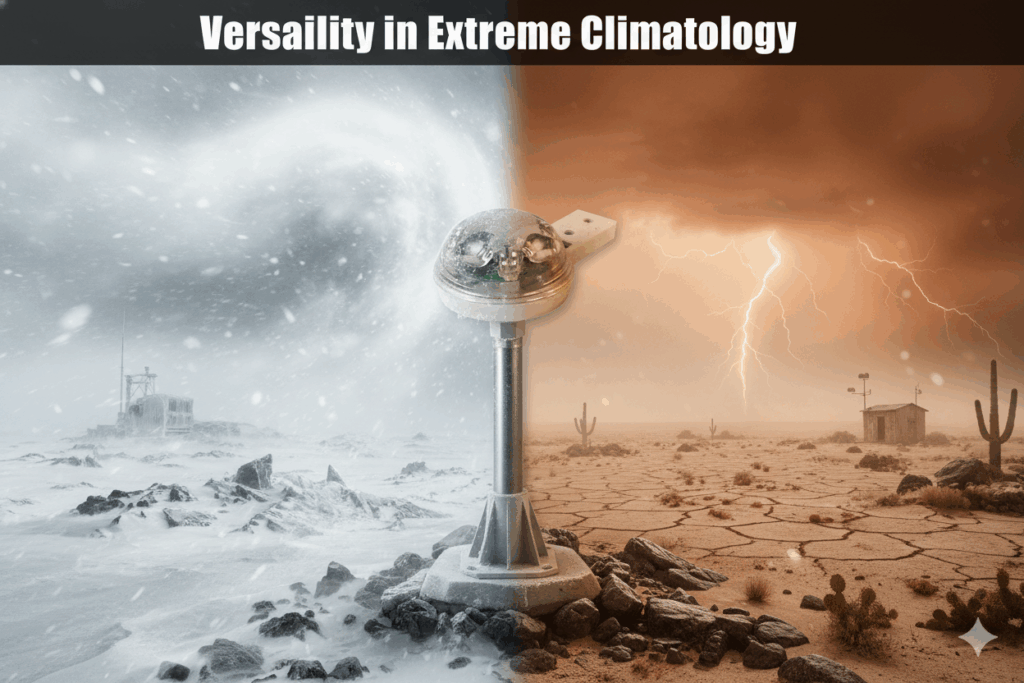
Nature is not always temperate. Weather stations must function reliably whether they are positioned on a scorching, arid plain or a snow-swept mountain peak. This is where the wide operational envelope of the optical sensor truly shines.
Performance in Cryogenic and Arid Zones
Many optical gauges are equipped with internal heating elements, allowing them to effectively analyze frozen hydrometeors (like snow or hail) by melting them before measurement, or by directly sensing the unique optical signature of solid precipitation. More importantly, the robust construction allows them to function flawlessly in cryogenic conditions down to −40∘C and handle the heavy dust loads found in arid zones. Traditional gauges often struggle with frozen rain or the buildup of dust on collection surfaces, but the sleek, sealed design of the optical gauge ensures continued, reliable operation.
7. Beyond Precipitation: Comprehensive Hydrometeor Analysis
The optical methodology offers far more than just a volume total. By analyzing the shape and intensity of the light interruption, these devices provide valuable microphysical insights into the precipitation event.
Inferring Drop Size Distribution and Kinetic Energy
The primary benefit lies in the ability to infer the Drop Size Distribution (DSD). By knowing the population of different drop sizes, scientists can calculate the precipitation’s kinetic energy—the impact force of the rain. This data is indispensable for studying soil erosion, modeling pollutant runoff, and improving the parameterization of clouds in advanced climate models. While a TBRG merely tells you how much water fell, the optical gauge tells you how it fell, offering a powerful layer of detail for advanced pluvionics research.
8. Conclusion: A Paradigm Shift in Hydrological Data
The optical rain gauge is not just an incremental improvement; it represents a fundamental advancement in the measurement of rain. Its precision, resistance to environmental challenges, and rich data output position it as the essential tool for modern meteorological and hydrological applications.
The Future of Operational Meteorology
By providing highly reliable, low-maintenance data from challenging locations, the optical sensor facilitates smarter infrastructure planning, more proactive flood defense systems, and ultimately, better forecasting. This technological leap ensures that the information flowing into our complex weather models is of the highest possible quality. Embrace the optical future—it’s clear, robust, and exceptionally smart!


Leave a Reply